

World Chain - When digital identity becomes the core asset of the AI economy
World (Worldcoin) is affirming a philosophy of building a global identity network combining biometrics and blockchain, when the whole world is turning to AI technology, real identity becomes a core asset in blockchain.
INSIGHTS
6/13/202625 min read

On-chain analysis week 23/2026: Short-term selling pressure from retail investors
Bitcoin briefly declined to the $60,000 price level, triggering a large-scale wave of leveraged liquidations across the derivatives market, but a significant number of whales are accumulating in this area.
Research • 13 June, 2026


The beginning of a journey
World (originally called Worldcoin) was initiated in 2019 by Sam Altman (OpenAI), Max Novendstern and Alex Blania, developed by the private company Tools for Humanity. The mission of the project is to create a "World ID" - a global digital passport to verify the uniqueness of each user and a global currency (WLD) to distribute the basic entry and promote transactions in this network. World uses a spherical device called Orb, which scans users' irises to generate anonymous identifiers and issue WLD tokens to them. Up to now, the project has raised about $250 million from Andreessen Horowitz, Khosla, Bain, a16z..., and collected another $135 million through the sale of individual tokens to a16z, Bain (late 2025).
In the beta phase (2019–2023) World tested in 24 countries and received more than 450,000 registered users for eye nail scans and continued to deploy 1,100 Orbs globally until mid-2023, reaching ~2 million registered users when officially launched WLD on 24/7/2023. In May 2025, World was officially entered the US market and launched in cities in the US (Atlanta, Austin, Los Angeles, Miami, Nashville, San Francisco) and listed on Coinbase.
In 2024, the project changed its brand to World Network and then simply World. Soon after, a series of technical improvements were upgraded to the entire ecosystem from World Chain (L2 Ethereum), anti-deepfake feature, additional Face Authentication option (Face Auth) to compete with Face ID. By the end of 2024, World has partnered with the governments of Taiwan and Malaysia on digital identity and verification research with passports instead of single iris. As of 9/2025, World recorded ~33 million app users (15 million verified).
About the WLD token of the project, which belongs to Layer-2 and has a large liquidity of billions of USD with a capitalization of ~$1.5 - 2 billion, ranked in the top 50 projects in the world. Although in the past time, WLD has been strongly influenced by general market sentiment and information related to Sam Altman/OpenAI such as OpenAI's cooperation with Oracle (09/2025) has caused WLD to increase >100% in just 1 week and Arthur Hayes (former CEO of BitMEX) selling WLD, causing a sharp drop in price in the past few weeks.
Orientation to expand the core ecosystem
Tokenomics and Governance of the project is WLD - belonging to the ERC-20 token (mainly used on Optimism) with a fixed total supply of 10 billion tokens, when it was launched, World has allocated 75% of the total supply of WLD to the community and most of it is a reward for users who have verified WorldID, 25% for investors and ecosystem development. For the project, after 15 years since the release, if the community agrees, the token contract allows the "minter address" to generate up to 1.5% WLD per year (for administration and sponsorship) and of course in the current period, no one will have the right to mint new, this mechanism emphasizes the original non-inflation strategy, focusing on distribution to users.
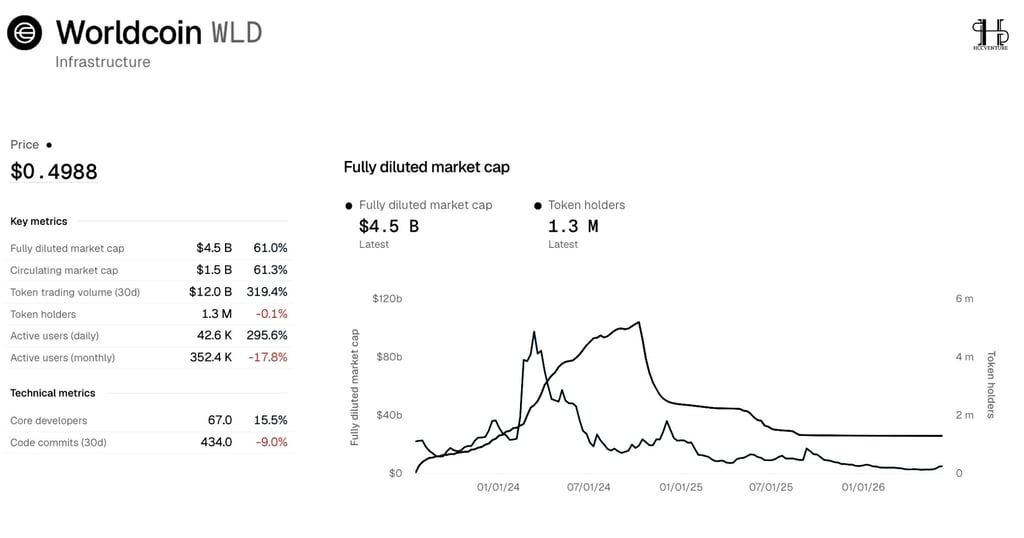
The 2026 goal has been announced by the team with a series of improvement and collaboration topics when the core value is World ID 4.0 technology will be added features such as account-based, rotating key encryption, multi-device support, SDK opening and launching a separate World ID application (beta). For programmers, launch AgentKit for AI agents to authenticate users; cooperate with Vercel (application host) and Okta (business authentication) to implement human proof (Human Principal) in application platforms. The project will announce cooperation with large units including:
Tinder (Match Group): Expanding dating integration with World ID verification (free verif badge + boosts for real users).
Razer: Integrated "Razer ID Verified by World ID" helps convert World ID into user identity in the game ecosystem.
Mythical Games: Link ID in the play-to-earn model.
Zoom: Support Deep Face for online verification (like Face ID) using Orb's iris scan when entering the meeting room.
Docusign (UNIFI): Use World ID to authenticate electronic signature transactions.
Concert Kit: Issue event ticket certificates (for example, DJ Peewee's performance, upcoming 30 Seconds to Mars) by World ID, anti-black market.
These applications help increase the demand for WLD (for transactions in apps, premium services) and strengthen the goal of "verifying real people". As of April 2026, World announced that there are ~18 million verified people in over 160 countries and the network is expanding from Asian/European markets (Philippines, Indonesia, Thailand...) to the Middle East and Africa (exploring many countries to develop digital identity).
However, there are still many legal issues about identity in different countries, although World still actively transfers iris data to the MPC encryption system and deletes the original to comply with GDPR, regulations on biometric data in many countries can become stricter. It is likely to have to adjust the verification method (increase legal control, security protocol). In addition, the fact that Sam Altman is the "locomer" not only brings positive effects (AI technology trust, name), but it can also be distracting when he has to run both OpenAI and other efforts. However, Sam has emphasized his commitment to developing safe technology, and is currently the President of Tools for Humanity with CEO Alex Blania.
On the other hand, the continuous unlocking WLD token will gradually increase the supply in the market and if the speed of network expansion and the demand for WLD do not keep up, the price may be under great selling pressure (as the analysis shows), so managing inflation and building new utilities for WLD (finance, governance...) are key factors.
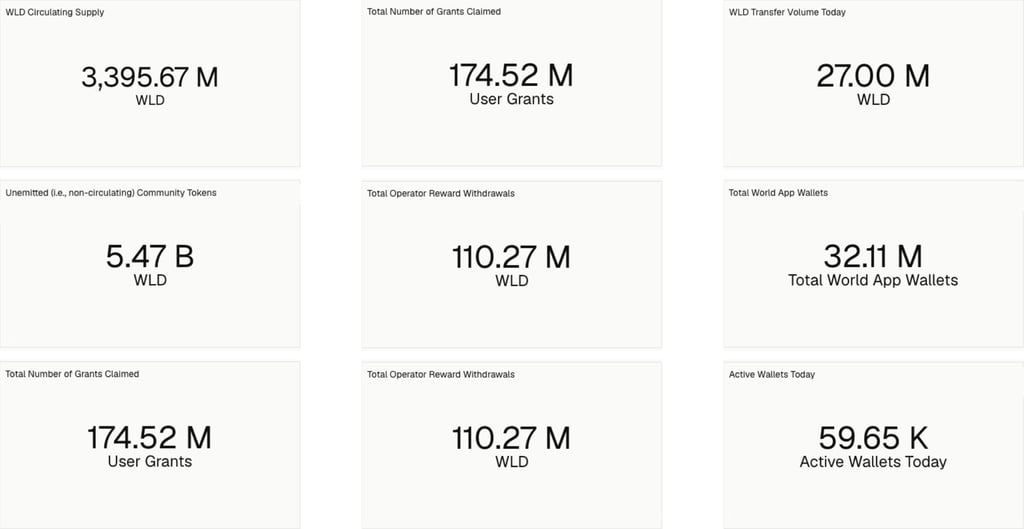
However, the World project (Worldcoin/WLD) is one of the boldest efforts in the field of blockchain and digital identity today. The combination of biometrics and cryptocurrencies, with Sam Altman's global vision, has attracted great attention, in just the past 12 months, World has made significant progress in technology and partnerships, but also faces significant regulatory and social challenges. In general, World has high development potential thanks to the AI trend and the need for real-human verification, but the success also depends on whether this project can be expanded sustainably and safely or not. The recommendations in this report aim to provide a balanced and timely view of both opportunities and risks, helping investors and partners make appropriate decisions.
World chain blockchain is silently accumulating
Among the assets with a large unlock schedule of the crypto market, Worldcoin (WLD) is one of the few projects entering an important transition stage of the circulating supply structure. According to the data we collected and this model is showing that the dilution pressure from the new supply is decreasing over time, while the proportion of supply that has been unlocked and is in the hands of investors is increasing. According to the HCCVenture research team, this change reflects the transition from the "supply expansion" stage to the "market absorption" stage, where price dynamics are no longer dominated mainly by unlocks but more on holding behavior and market demand.
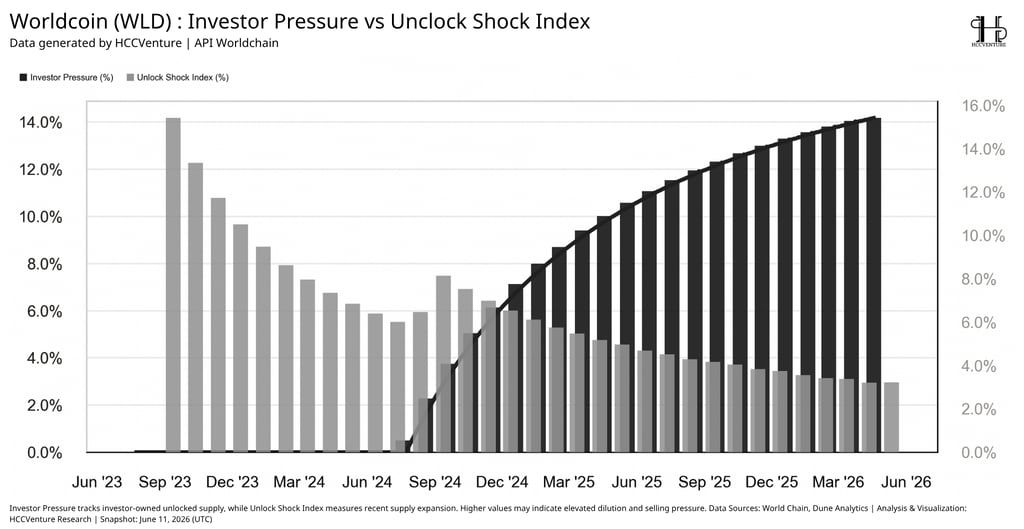
Unlock Shock Index represents the short-term supply expansion rate that has decreased from a peak of about 14.2% in September 2023 to nearly 3.0% in June 2026 - equivalent to a decline of nearly 79%.
Investor Pressure reflects the rate of unlocked and owned supply of investors that has continuously increased to over 14.2% in June 2026, marking the highest level in history.
The community is always concerned about the continuous pumping of new supply into the market, creating a great dilution pressure on the value of each circulating token, and it is this pressure that is one of the reasons why WLD continues to have difficulty maintaining long-term uptrends despite many periods of speculative cash flow returning to the AI market and blockchain infrastructure.
However, from the fourth quarter of 2024 onwards, the supply structure began to change significantly when the Unlock Shock Index decreased from about 7.5% to less than 3%, showing that the speed of new supply expansion is slowing down markedly. In other words, the amount of new tokens put into circulation each month is currently only about 21% compared to the peak period in 2023, which is causing the dilution pressure, which is the biggest barrier to WLD in the first two years, which is gradually losing its dominant role.
According to data from HCCVenture, the Bitcoin Bull Market Correction Drawdowns indicator shows that the maximum drawdown of the current cycle fluctuates around -25% to -30%, significantly lower than previous bull cycles where Bitcoin frequently experienced corrections of -35% to -60% before completing a long-term uptrend. Using the current drawdown of approximately -25% to -30% as a benchmark, Bitcoin is currently at the lowest end of the dynamic range of historical bull cycles.
The 2011–2013 cycle frequently saw drawdowns exceeding -40%.
The 2015–2017 cycle saw several corrections ranging from -35% to -40%.
The 2018–2021 cycle saw periods of decline exceeding -50% and even approaching -60%.
Meanwhile, the current cycle has yet to see any corrections of a similar magnitude. This confirms that current volatility remains within the historical limits of a long-term bull market and has not yet created signs of structural recession like those seen at true cycle peaks.
Although Bitcoin has surged from its lows of around $15,500 to over $120,000, representing a gain of over 670%, corrections throughout the cycle have been relatively limited. Most drawdowns have ranged from -10% to -25% , with the deepest drop only around -30%.
In other words, much of the gains from the growth cycle have been preserved. Compared to previous cycles, where prices typically lost 50-70% of their gains during intermediate correction phases, the current decline is still relatively limited.
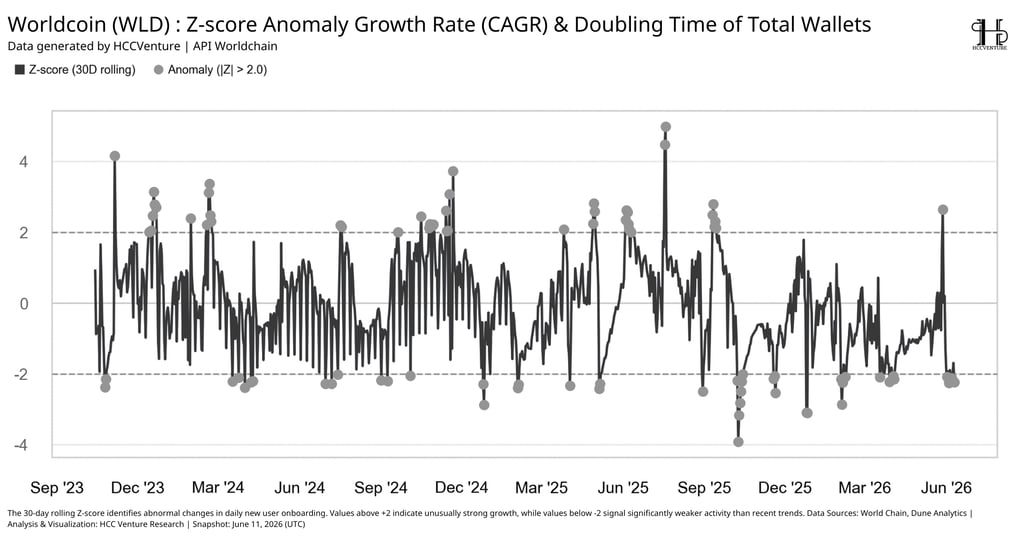
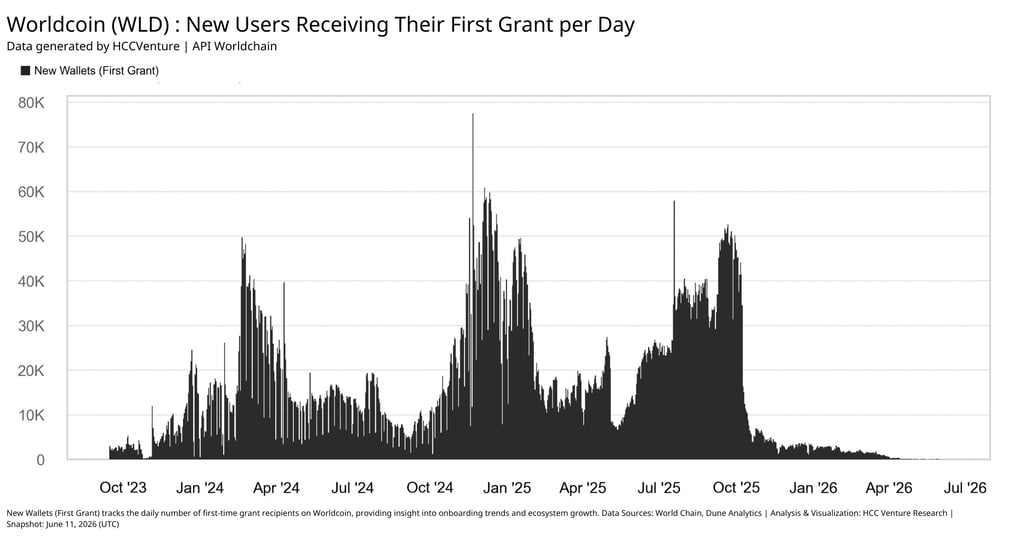
In blockchain network analysis, HCCVenture has discovered that the user growth rate is often more important than the absolute user size, because this is an indicator that directly reflects the scalability of the ecosystem in each stage, the Z-score Anomaly Growth Rate is built based on the growth rate of new wallets and the time required for the total number of wallets on the network to double (Doubling Time).
Anomaly Growth Rate is a statistical measure that helps identify periods of abnormal growth or decline compared to historical trends.
Z-score above the +2 threshold represents a growth rate far beyond the average of the network, often appearing during periods of strong user expansion or large-scale onboarding campaigns.
Z-score below -2 reflects a significantly lower growth rate than normal, implying a weakening of the new user flow or an abnormal length of time for the network to continue to scale.
From the end of Quarter III/2025, Z-score quickly reversed and formed a prolonged series of negative signals. The data shows that many times the index fell below the -2 threshold and even touched the -4 area by the end of 2025, marking the lowest level in the entire history of observation. The consecutive appearance of negative anomalies shows that the time it takes for the number of wallets on the network to double is significantly prolonged, reflecting a sharp decline in user scaling performance compared to previous periods.
In blockchain ecosystems, when the user expansion process approaches saturation, the growth rate often decreases faster than the growth rate of network size, which causes growth momentum indicators such as Z-score to gradually shift from positive to negative in the long run. In other words, the deceleration of Z-score is not a random phenomenon but a direct result of the new user flow slowing across the network.
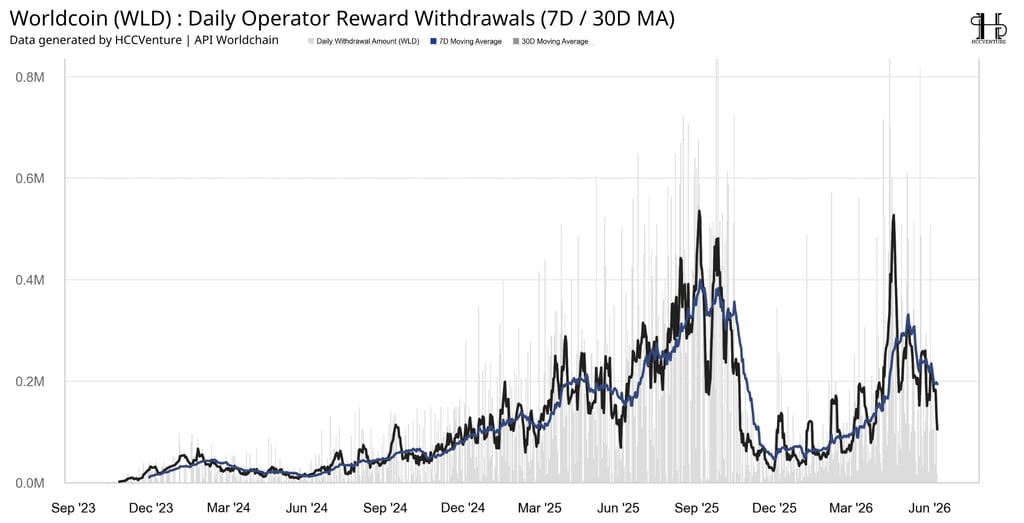
The sharp increase in Operator Reward Withdrawals reflects the pressure to distribute supply in the historical highlands. In the Worldcoin ecosystem, Operator Rewards is a mechanism to encourage Orb operators to participate in identity verification and expand the global user network, most of the rewards are paid in WLD, the amount of tokens withdrawn by Operators from the system becomes an important indicator to assess the actual supply pressure arising in the market. Unlike fixed-scheduled unlocks, Operator Reward Withdrawals directly reflect the amount of tokens received and are ready to participate in circulation, thereby creating pressure to sell or re-allocating supplies in the ecosystem.
In the third quarter of 2025, this index reached a historical peak when the average withdrawal amount exceeded 350,000 to 400,000 WLD/day, about 8 times higher than the bottom in 2024. At the same time, many sessions recorded actual withdrawals exceeding 700,000 to 800,000 WLD in a day, setting the highest levels since Worldcoin's launch, the peak period of Operator Reward Withdrawals coincided with the period when Worldcoin recorded the fastest user expansion rate in history.
If in 2023 and early 2024, the number of tokens withdrawn was very low, now even after a strong adjustment, the average withdrawal volume is still many times higher than the historical level. On the other hand, this shows that Worldcoin has entered a phase with a significantly larger operating scale, and the duration of WLD distributed through the reward mechanism continues to play an important role in the expansion of the ecosystem.
Research and Analysis
The beginning of a journey
Orientation towards expanding the core ecosystem.
The World Chain blockchain is quietly accumulating assets.
Unlock Shock Index & Investor Pressure
First Grant Recipients
Z-score Anomaly Growth Rate
Operator Reward Withdrawals
Average Transfer Size
Activity Intensity
Worldcoin Cost Basis Distribution
Wallet Sizes
Investor Pressure Index
The Worldchain ecosystem is expanding rapidly.
% cohort
Active Addresses và Bridge Deposits
TVL and Active Users
TVL by Chain
Transaction Count By Project
Active addresses by Project
The "digital identity infrastructure" plan for the AI era.
Expanding the World ID global human identification network.
Become the Super App for Internet users.
Blockchain infrastructure for real people.
The long-term strategic focus is “AI and Human Verification”.
Project summary and evaluation
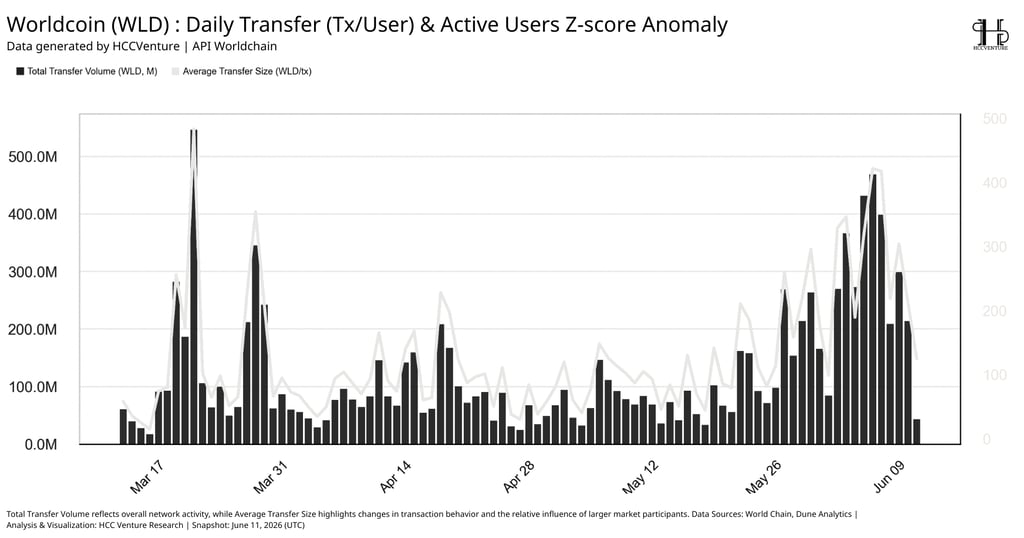
The total transfer volume according to statistics from HCCVenture in the period from mid-March 2026 to mid-June 2026 shows that WLD trading activity has increased significantly, ranging from 50 to 150 million WLD for most of the time of the second quarter of 2026. Of course, many major surges have appeared in a row, in which the highest level of the whole period of about 550 million WLD was recorded at the end of March 2026.
After the adjustment period in April and the first half of May, network activity continued to accelerate sharply from the end of May to the beginning of June 2026. Notably, the daily transfer volume regularly maintains above 200 million WLD, and many sessions exceed 300 - 450 million WLD. Compared to the base area below 100 million WLD in April, the current capital turnover has increased from 3 to 5 times.
For most of the time from March to the beginning of May 2026, Average Transfer Size fluctuates mainly in the range of 50 to 150 WLD per transaction. However, from the end of May to the beginning of June, this index increased sharply to over 300 WLD/transaction and peaked at nearly 430 WLD/transaction, the highest level in the entire analysis period.
If only the transaction volume increases but the average transaction size does not change, the motivation usually comes from the number of more users. On the contrary, in the current case, both indexes increase sharply at the same time, showing that there are not only more transactions but the value of each transaction is also significantly greater. According to the HCCVenture team, this phenomenon often reflects the process of position restructuring, liquidity turnover between large entities or the stronger participation of institutional capital flows and wallets that own a significant amount of WLD.
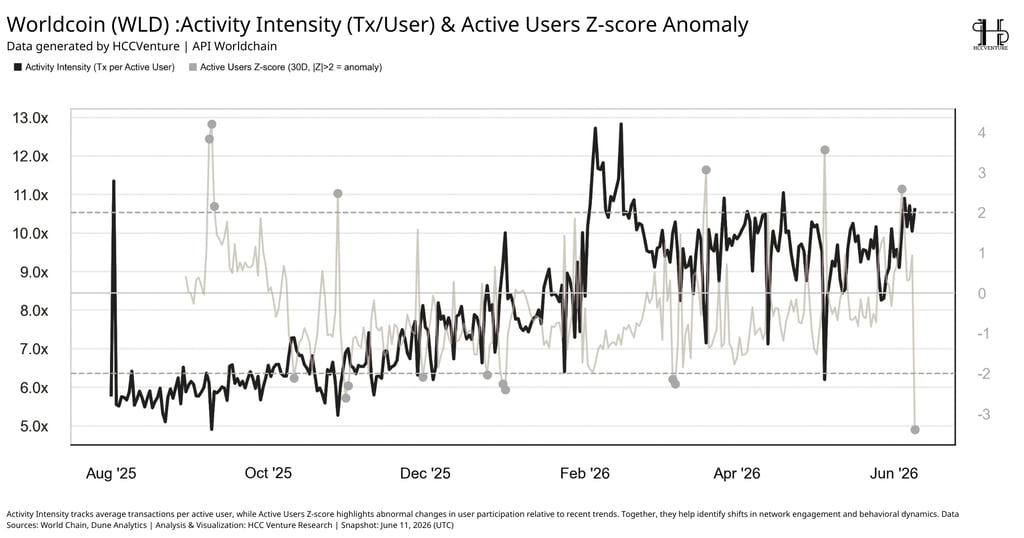
In the process of assessing the health of a blockchain network, the number of users is not the only factor determining the quality of growth. A mature ecosystem is often characterized by the increasing engagement of existing users, rather than relying solely on the speed of expanding the number of new wallets. The data shows a significant structural change in network usage behavior since the second half of 2025.
Currently, Activity Intensity has exceeded the threshold of 12 transactions/user and set a historical peak of nearly 12.8 times, about 130% higher than the bottom at the beginning of the period, although after the peak of February 2026, there were some short-term adjustment rhythms, Activity Intensity still remained stable in the area of 9 to 11 transactions per active user.
During the observation period, positive abnormal signals above the +2 threshold appear relatively limited and momentary, with some peaks reaching around +4 by the end of 2025 and early 2026. In contrast, most of the time of the Z-score fluctuates around the neutral or slightly negative zone. In particular, the latest data recorded a strong negative anomaly near -3, the lowest level in recent months. In other words, World Chain no longer depends mainly on attracting new users but is creating more economic activity from the existing set of users.
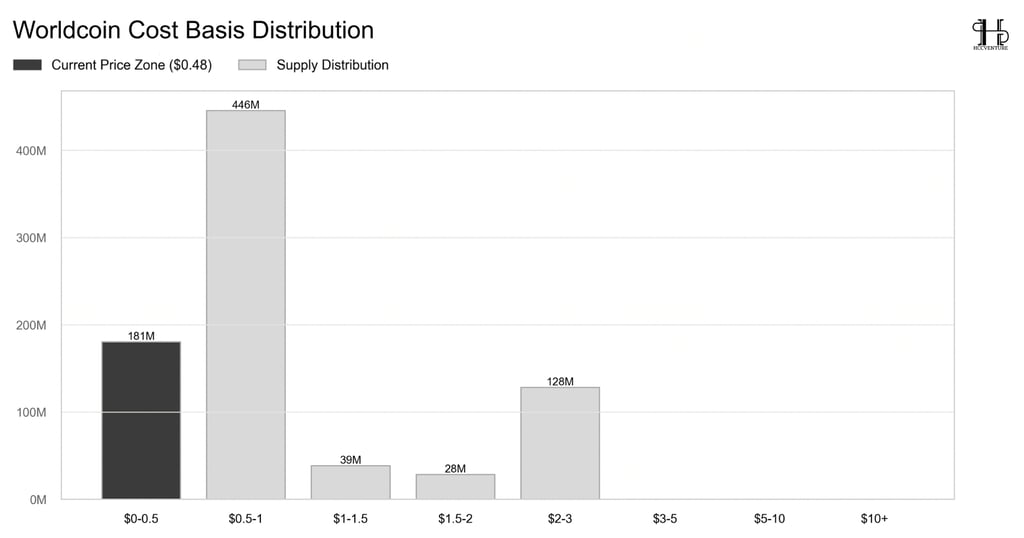
The majority of investors are holding WLD at unrealized losses, while only a small portion of the supply is accumulating at prices lower than the current level. According to our data, the largest cost cluster in the entire ecosystem is concentrated in the $0.50 to $1.00 range – where approximately 446 million WLD are accumulated. Compared to the supply held below $0.50 (around 181 million WLD), the amount of tokens accumulated in the $0.50 - $1.00 range is about 146% higher.
As the price approaches this area again, a significant portion of investors tend to break even or reduce their positions after a prolonged period of downward pressure. Therefore, the $0.50 - $1.00 range is currently the largest supply resistance cluster across the entire Worldcoin network.
Furthermore, data shows that the higher cost clusters have significantly lower supply densities. The $1-$1.5 USD range recorded only about 39 million WLD, the $1.5-$2 USD range about 28 million WLD, while the $2-$3 USD range reached approximately 128 million WLD. Notably, there was almost no significant supply in the areas above $3 USD.
In other words, the majority of the circulating supply remains in a state of unrealized losses, a characteristic often seen near the end of long-term bear cycles, when market prices trade significantly below the average cost basis of most investors. Historically, in the crypto market, periods where the proportion of unrealized supply predominates are often accompanied by a gradual exhaustion of selling pressure, as most of those intending to sell have already completed their distribution.
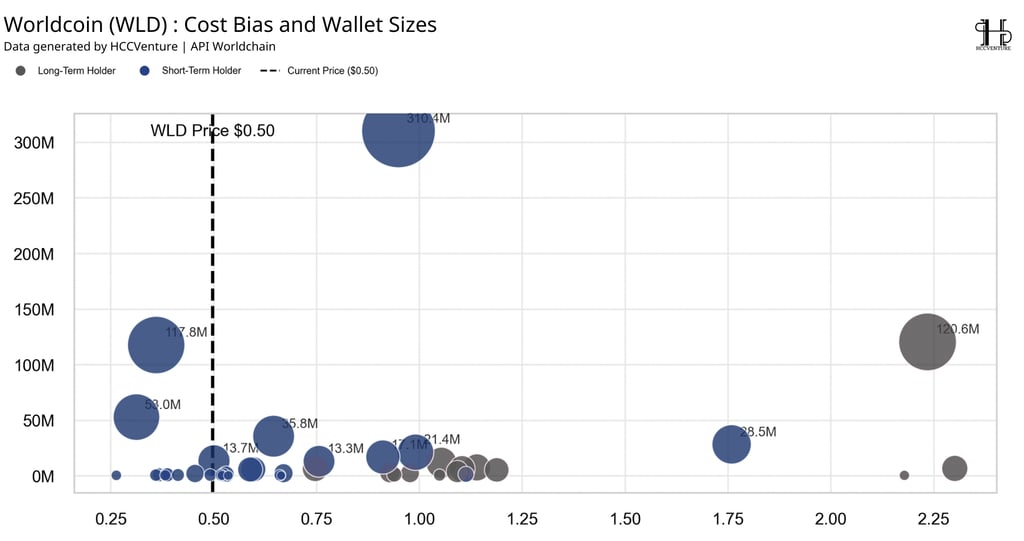
The cost basis structure indicates that the redistribution process is complete and short-term selling pressure has significantly decreased. Using an average price of $0.5 USD/WLD to calculate the cost basis data against wallet sizes, it's noteworthy that the majority of the ecosystem's largest supply is no longer held by long-term investors but is concentrated among short-term holders (STH). This reflects a significant shift in ownership structure compared to the early stages of the cycle, when the majority of the supply was held by wallets with longer storage periods.
Data shows that the largest supply cluster across the network is currently located at a cost basis of approximately $0.95 , where a group of short-term investors holds around 310.4 million WLD . This is the largest amount of tokens in the entire distribution structure and significantly higher than any other holding cluster.
Beyond the main cluster at $0.95, short-term investors are also concentrating a large amount of supply at lower price levels. Approximately 117.8 million WLD are held around $0.36, 53 million WLD at $0.31, and about 35.8 million WLD around $0.65. Notably, the 117.8 million WLD and 53 million WLD holdings are currently trading below market price, meaning they remain in an unrealized profit position. These areas absorbed most of the supply during sharp corrections in WLD and are now acting as important support levels for the market.
If we combine the largest STH clusters, we can see that over 500 million WLD are concentrated in the cost range of $0.3 - $1.0, indicating that a strong redistribution of supply has occurred throughout the recent price decline cycle. Instead of remaining in the hands of early project investors, a large portion of WLD has been transferred to new investors at significantly lower cost prices.
Meanwhile, the structure of the Long-Term Holders (LTH) group shows a distinct characteristic: the largest supply cluster in this group is around $2.24 , with approximately 120.6 million WLD . This group is considered to be incurring the largest unrealized losses in the entire market, as the current price is about 78% lower than the average cost basis.
During prolonged downtrends, long-term investors who continue to hold despite significant losses often represent the group with the lowest probability of selling. Conversely, actual trading pressure usually comes from short-term investors. However, current data suggests that much of the short-term supply has also been repositioned to significantly lower price levels than before.
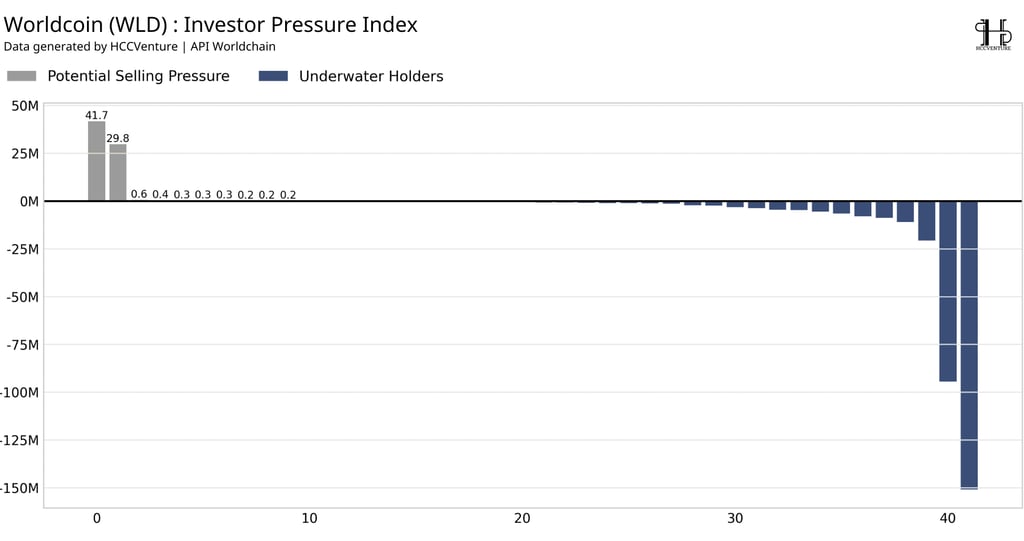
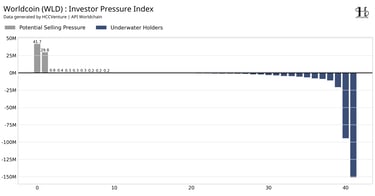
The Investor Pressure Index indicates that actual selling pressure is low, while the majority of supply remains at a loss. By analyzing over 100 top WLD holding wallets, we quantify the statistics to determine if short selling pressure is occurring. It's noteworthy that the total supply is in a relatively limited profit zone, while the majority of circulating supply is still held by investors whose cost basis is higher than the current market price.
This characteristic typically emerges after prolonged adjustment periods, when the asset revaluation process occurs faster than the adjustment rate of the network-wide average cost basis.
Observing the chart reveals that the largest clusters of selling pressure are currently concentrated in two main profit groups, with sizes of approximately 41.7 million WLD and 29.8 million WLD . These are mostly investors holding unrealized profits and are likely to create supply pressure if prices continue to rise. However, outside of these two clusters, the remaining profit-taking positions are relatively small, mostly ranging from 0.2 to 0.6 million WLD , reflecting that the number of investors capable of taking profits is no longer significant compared to the overall network size.
In particular, the two largest clusters recorded supply losses of approximately WLD 95 million and WLD 150 million , significantly larger than any profit cluster on the chart. These two groups alone represent approximately WLD 245 million sitting below cost, more than three times the total supply across the two largest profit-taking clusters.
Most investors have not yet reached a sufficiently high profit level to create widespread selling pressure; instead, the majority of supply remains in a state of waiting for a price recovery to return to the break-even point. Underwater holders are spread across various cost basis ranges, with their size increasing as cost basis rises and supply has accumulated over different phases of the downtrend cycle.
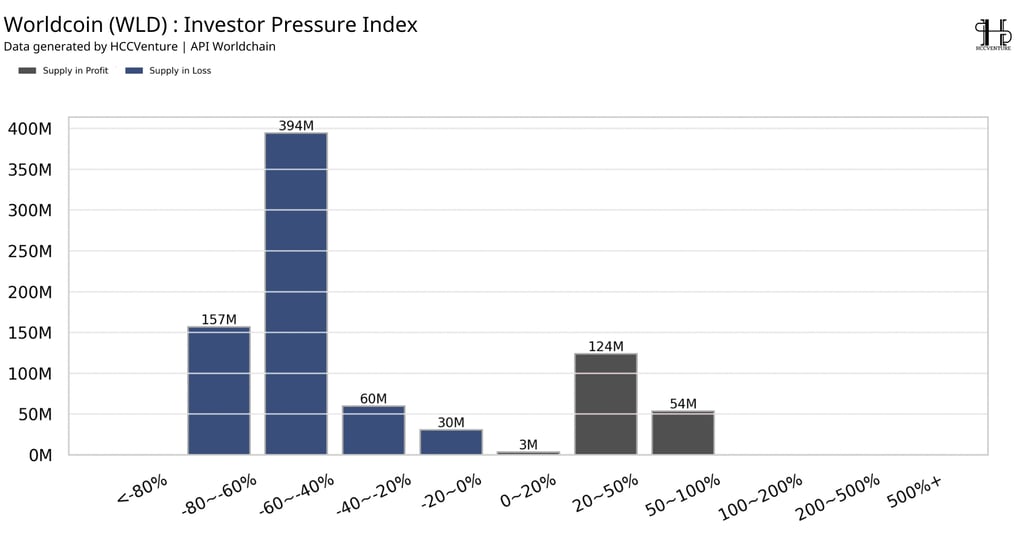
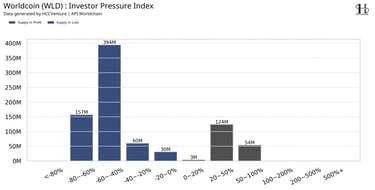
In digital asset cycles, the profit/loss distribution structure of supply often directly reflects the market's position within the investor sentiment cycle, and is an effective measure to determine whether the market is in a distribution or accumulation phase. Current data shows that the majority of WLD supply remains in an unrealized loss state. The total supply in the loss-making categories is approximately 641 million WLD , while the profitable supply is only about 181 million WLD , with nearly 78% of the analyzed supply currently in a loss state , while only about 22% is maintaining a profit .
When the majority of supply is incurring losses, active selling pressure tends to decrease over time. This is because investors experiencing significant losses are less motivated to sell at low prices, instead tending to wait for a market recovery to return to the break-even point. Meanwhile, the group capable of taking profits currently accounts for only a small proportion of the total supply and is mainly concentrated among investors who accumulated WLD during the lowest price phase of the cycle.
This suggests that WLD has not yet entered the euphoric phase of the market cycle, where most investors record high returns and profit-taking pressure typically increases sharply. Instead, the current structure reflects a market still recovering from a deep revaluation phase, where most supply has not yet escaped a loss-making state.
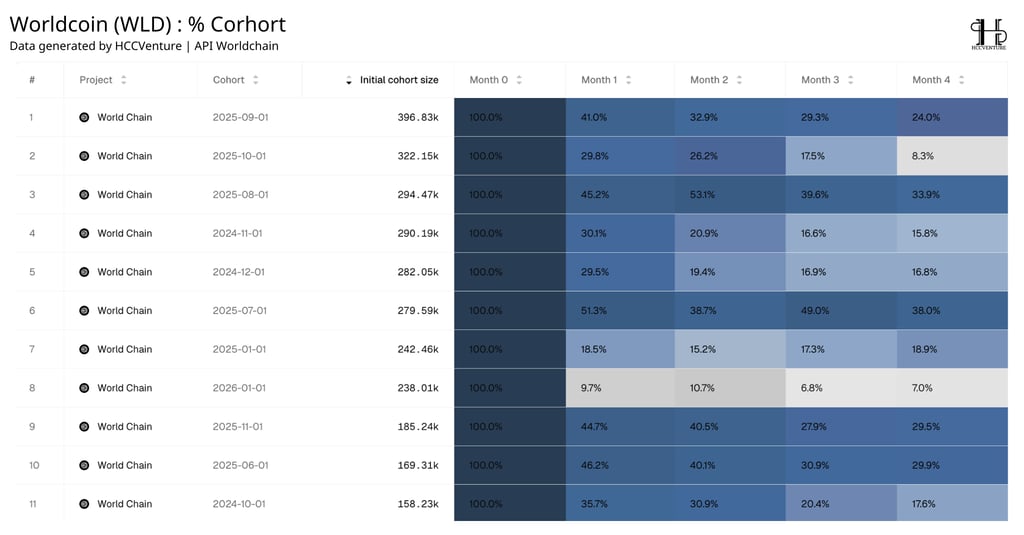
World Chain data shows that the period from mid-2025 to the end of 2025 recorded the highest user quality since the network began its global expansion. Cohorts formed during this period were not only large in size but also maintained superior user retention rates compared to previous periods.
Most notably, the July 2025 cohort , with an initial size of approximately 279,590 users , recorded a retention rate of 51.3% after one month , the highest in all observed data. According to current statistics, this cohort still retains 38.0% active users. Even so, the cohort size is still very high for a consumer blockchain ecosystem, indicating that the majority of users not only joined to receive initial rewards but also continue to interact with the network over the long term.
However, it's important to note that declining retention doesn't equate to a decline in the entire network, as recent Activity Intensity and Transfer Volume data actually show a significant increase in activity among remaining users. World Chain may be entering a structural transition phase, where network value increasingly depends on the core user base rather than mass user expansion as in the previous phase.
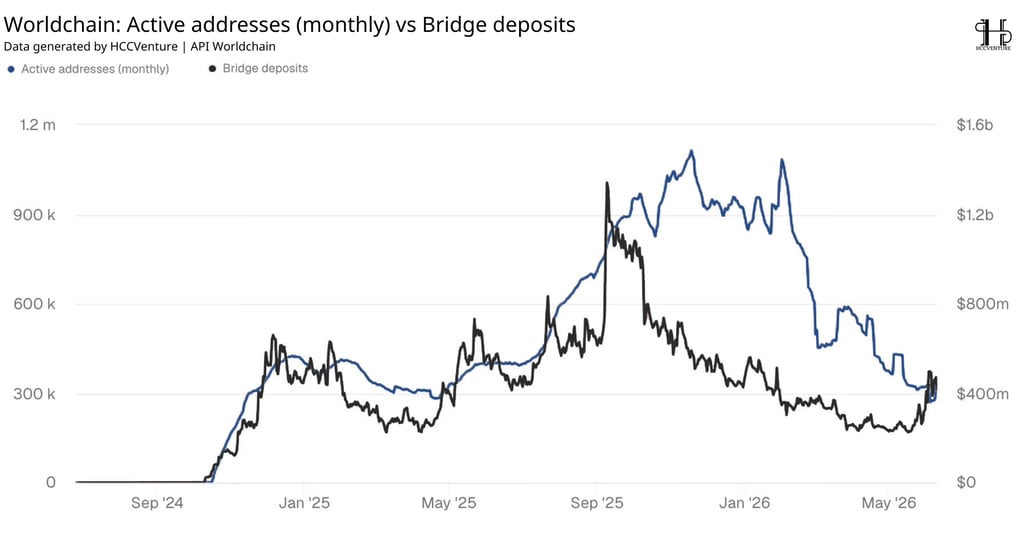
Active Addresses and Bridge Deposits indicate that World Chain experienced its strongest growth phase in history in 2025, with the number of active addresses reaching nearly 1.1 million per month and bridge deposits exceeding $1.4 billion . However, after this peak expansion, both indicators corrected sharply by approximately 70% , reflecting the ecosystem's natural rebalancing process after an overly rapid growth cycle.
After peaking at the end of 2025, Active Addresses have declined from their peak to approximately 300,000-350,000 addresses currently, and Bridge Deposits have also fallen to around $400-450 million , losing nearly 70% of their value in less than a year.
This indicates that World Chain's adjustment process stems not only from a decrease in new users but also reflects a weakening of capital flow within the ecosystem. In sustainably growing blockchain networks, capital flow typically outpaces the rate of user decline. Conversely, the sharp decline in both indicators suggests the network is undergoing a rebalancing process after a period of excessively rapid growth in 2025.
The peak growth of 2025 may have ended, but the network size is still significantly larger than at the beginning of the cycle. In our view, much of the growth achieved in 2025 has not been completely erased but is being repositioned to a lower but more stable operating level, although the number of active users has decreased sharply, the intensity of use by the remaining users has increased significantly.
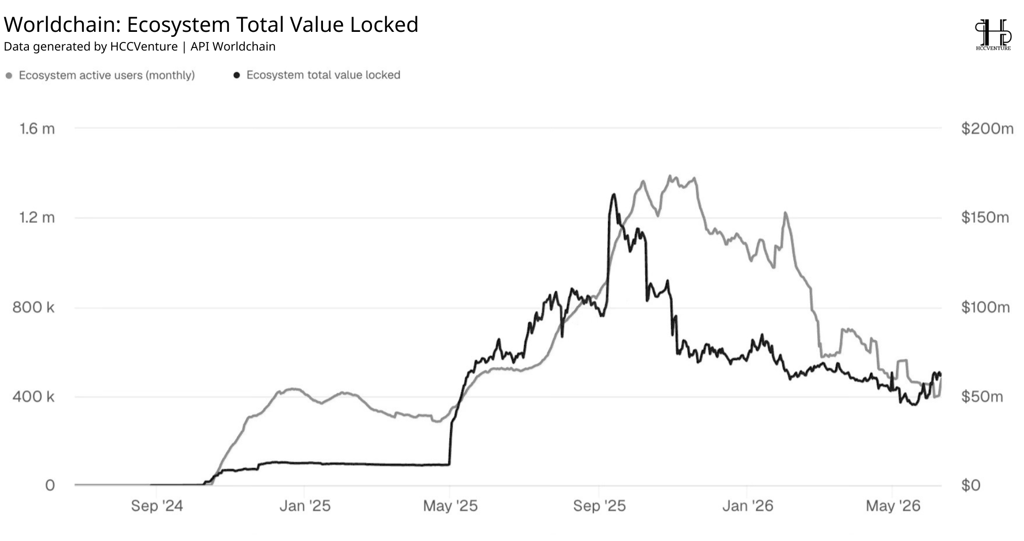
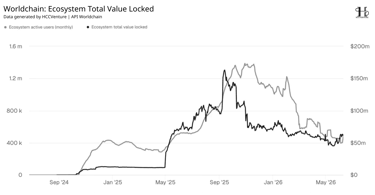
TVL and Active Users data show that World Chain experienced its strongest growth phase in history in 2025, with the number of active users reaching nearly 1.4 million per month and TVL exceeding $160 million . However, after peaking, the ecosystem entered a deep correction cycle, with TVL falling to around $55-60 million and Active Users decreasing to approximately 450,000-500,000 .
During growth phases, TVL typically acts as a leading indicator because cash flow usually precedes user activity expansion. Conversely, during correction phases, TVL is often the first indicator of weakness as investors withdraw capital before users leave the ecosystem.
Although TVL is currently about 65% lower than its historical peak, the capital size is still many times higher than in early 2025, and the stabilization of both TVL and user numbers in recent months suggests that the ecosystem's rebalancing process is gradually being completed.
The growth drivers in the next cycle will no longer depend on expanding the user base through short-term incentive programs, but rather on the ability to retain capital, increase the efficiency of asset utilization within the ecosystem, and enhance the economic value generated per unit of existing TVL on the network.
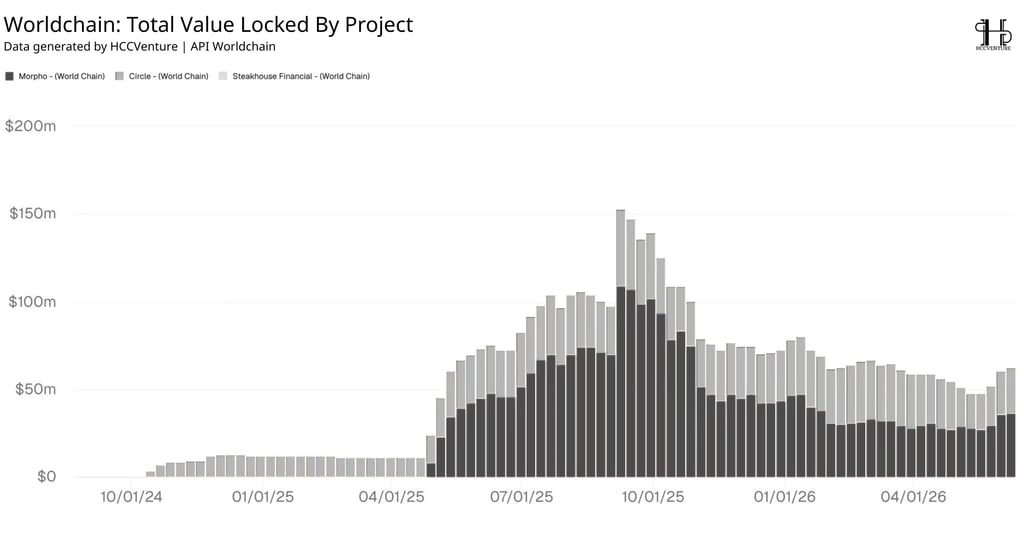
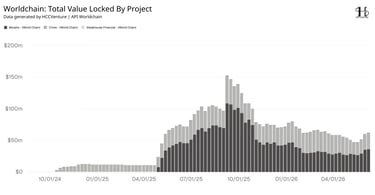
World Chain's protocol-based TVL data shows that capital growth occurred in two distinct phases. During the period from Q4 2024 to early Q2 2025, the total TVL of the entire ecosystem remained around $8-12 million , primarily driven by underlying stablecoins and early-stage financial products.
In less than 5 months, the total TVL increased from approximately $12 million to a peak of nearly $150-155 million , equivalent to a growth of over 1,100% . This is considered the fastest expansion period in World Chain history and also the time when the ecosystem attracted the largest amount of capital since its launch.
The most notable aspect of the chart is Morpho 's dominant role in the overall liquidity structure. At its peak in Q3 2025, Morpho's TVL exceeded $100 million , accounting for approximately 70-75% of the ecosystem's total TVL . Beyond verifying real users, the majority of capital flowing into World Chain was concentrated in lending and the credit market, rather than being broadly distributed across various DeFi sectors. Meanwhile, Circle and Steakhouse Financial served as supplementary liquidity layers. Their combined TVL fluctuated around $40-50 million at its peak, equivalent to approximately 25-30% of the ecosystem's total TVL .
After a period of rapid growth, TVL (Total Liquidity) has corrected by approximately 65% , currently fluctuating around $55-60 million USD . However, the current liquidity level remains many times higher than before the boom and is showing initial signs of recovery. In the context of a market correction, stable liquidity tends to perform better than cyclical lending products.
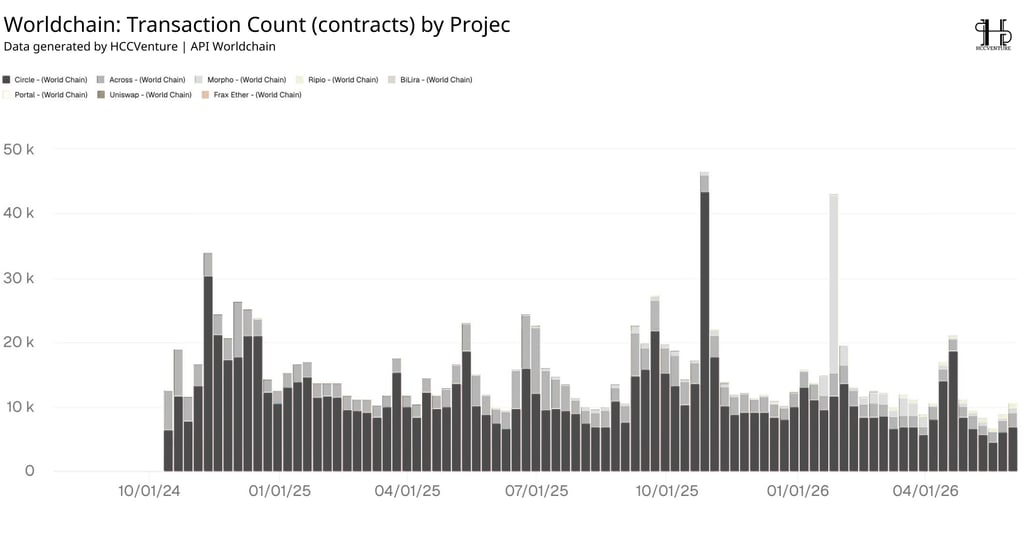
Entering 2025, along with the strong expansion of Active Users and TVL, the number of contract transactions increased significantly. Many periods recorded activity levels exceeding 20,000–25,000 transactions/day , while peak periods reached over 30,000 transactions/day . The historical peak occurred around Q4/2025 when the total number of contract transactions exceeded 45,000 , approximately 350% higher than the base level at the beginning of the cycle.
For most of the observation period, Circle was the protocol with the largest share of total transactions. At many stages, Circle alone contributed over 60-70% of the total contract activity of the entire network. Besides Circle, protocols such as Across , Morpho , Portal , Uniswap , Ripio , BiLira , and Frax Ether played a role in supplementing liquidity and expanding the functionality of the ecosystem. Although the share of each individual protocol is not very large, together they form a secondary layer of economic activity that reduces absolute dependence on a single protocol.
Although these surges were short-lived, they reflected the network's ability to still attract large-scale campaigns or centralized liquidity events, but they also showed that World Chain's infrastructure was still in use and had not yet entered a state of structural decline.
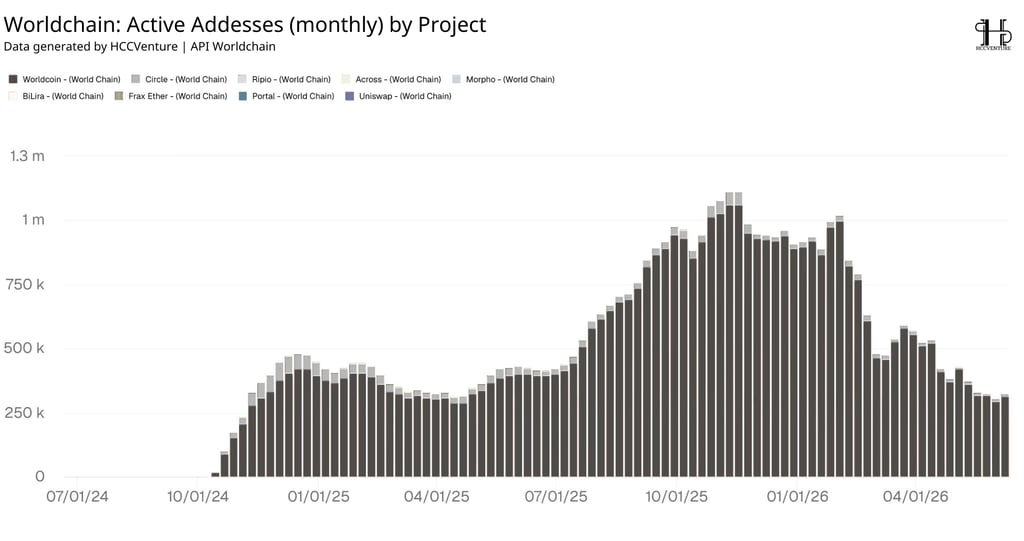
For most of the time observed, the Worldcoin App accounted for almost all of the ecosystem's active addresses. Protocols like Circle, Morpho, Across, Portal, Uniswap, Ripio, and Frax Ether contributed only a very small fraction of the total user base. This reflects that the majority of World Chain's growth is still driven by Worldcoin's identity verification and user distribution product, rather than by a diverse decentralized application ecosystem like other mature blockchains.
When combined with the previously analyzed Transaction Count and Activity Intensity data, it can be seen that although the number of active addresses has decreased sharply, the total number of transactions on the network has not decreased proportionally, meaning that the average number of transactions per user is increasing significantly. In other words, World Chain is losing some low-engagement users but is retaining a group of more active users.
The "digital identity infrastructure" plan for the AI era.
Expanding the World ID global human identification network.
The biggest focus in the coming years is scaling World ID from its current tens of millions of users to hundreds of millions and, beyond, billions of users globally. With AI increasingly capable of creating content, accounts, and interacting like humans, World views demonstrating "humanity" as the most crucial infrastructure layer of the next generation of the Internet.
World's strategy is no longer solely focused on distributing WLD tokens through Orb as in the early stages; the current ecosystem is shifting towards building a global digital identity standard, where World ID can be directly integrated into social media applications, AI platforms, digital financial systems, and online services to verify that users are unique individuals. If this strategy is successful, World ID could become an infrastructure layer similar to email or phone numbers in the early internet era.
Become the Super App for Internet users.
Under its new direction, World App is no longer being developed as a traditional crypto wallet but is being positioned as an "Internet application for people." The long-term goal is to transform World App into a central hub for interaction between users and financial services, AI, and digital identity. Instead of just storing assets, World App will act as a gateway to the entire World ecosystem.
In the future, users can use World App to verify their identity via World ID, access AI applications, or make cross-border stablecoin payments. Additionally, users can interact with other Web3 DApps within the ecosystem to gain closer access to new digital services globally.
Blockchain infrastructure for real people.
World Chain is designed with a different goal than most current Layer-2 platforms. Instead of optimizing for bots or high-frequency trading applications, World Chain prioritizes the experience for verified World ID accounts. According to its announced strategy, World Chain will continue to expand by increasing transaction processing capacity, reducing transaction costs for verified users, attracting DeFi and payment protocols, and building large-scale consumer applications rather than focusing on speculative activities.
Current on-chain data shows that the ecosystem's TVL is heavily focused on Morpho, Circle, and stablecoin protocols. This aligns with World's direction of prioritizing the development of a payment and credit economy rather than becoming a purely DeFi ecosystem.
The long-term strategic focus is “AI and Human Verification”.
The World Foundation is building its development strategy on a clear macro premise: artificial intelligence will become the most important technological driver for decades to come. As AI models become increasingly capable of generating content, digital identities, and automated agents on a scale of billions of entities, the internet will face a fundamental problem: “how do we distinguish between real humans and machines?”
World is positioning World ID as a solution to this problem, rather than directly competing in the traditional blockchain or DeFi market. The project aims to build a global digital identity verification standard, allowing users to prove they are unique individuals while ensuring privacy. This approach has a significantly larger market scale than the pure crypto sector, as the need for identity verification will emerge in most digital industries as AI becomes increasingly prevalent.
If World ID achieves widespread acceptance and becomes the standard for identity verification on the Internet, the value of WorldChain will no longer be defined by traditional blockchain metrics but by the scale of its verified user network. At that point, WLD could be seen as an economic asset tied to one of the most critical infrastructure layers of the future digital economy.
Project summary and evaluation
While the 2023–2025 period was characterized by user growth through incentive mechanisms and the expansion of the identity verification network, the current phase reflects a shift towards an ecosystem focused on practical use value, financial infrastructure, and a digital identity layer for the AI era. WorldChain is entering its most crucial transformation phase since its launch.
Although the number of monthly active addresses has decreased significantly from a peak of over 1.1 million to around 300,000-350,000, the network's activity quality is clearly improving. The Activity Intensity metric has nearly doubled compared to its peak growth period, indicating that the majority of remaining users are interacting more frequently, generating more economic activity, and contributing more substantial value to the ecosystem.
From a capital flow perspective, although TVL has corrected by more than 60% from its historical peak, the current liquidity size is still many times higher than in early 2025. More importantly, WorldChain's capital structure is gradually shifting from speculative activities to credit protocols, stablecoins, and payments like Morpho or Circle. This shows that the ecosystem is no longer entirely dependent on short-term cash flow but is gradually building a financial platform capable of generating more sustainable demand in the long term.
Over 80% of the analyzed tokens are in unrealized loss positions, while active selling pressure is concentrated on a relatively small proportion of the supply, which typically occurs in the later stages of re-accumulation, when most of the weak supply has been absorbed and the market begins to form a more stable price base. Simultaneously, the sharp decline in the Unlock Shock Index while Investor Pressure continues to increase indicates a significant improvement in the market's supply absorption capacity compared to previous periods.
More importantly, World's development strategy is becoming increasingly clear: building a human identity layer for the AI era. If World ID achieves widespread acceptance and becomes the standard for identity verification in the digital economy, WorldChain could become one of the few blockchain ecosystems possessing a structured and irreplaceable network advantage.
WLD is not a DeFi thesis, nor is it a Layer-2 thesis; it's a thesis about digital identity, AI infrastructure, and its potential to become the human verification layer of the next-generation internet. This is what gives WLD its greatest potential for revaluation in the next decade, making it one of the most attractive risk-reward assets at the intersection of AI and blockchain.
Disclaimer: The information presented in this article is the author's personal opinion in the field of cryptocurrency. This is not financial or investment advice. All investment decisions should be based on careful consideration of your personal portfolio and risk tolerance. The views expressed in this article do not represent the official stance of the platform. We recommend that readers conduct their own research and consult with experts before making any investment decisions.
References: Data and information presented in this report are cited from official World sources (world.org, whitepaper), reputable news sites (CoinDesk, Yahoo Finance, CoinGecko, CoinCheckup), and Sam Altman/OpenAI coverage (Wall Street Journal, Reuters, IAPP). Market data is updated as of early June 2026.
Compiled and analyzed by HCCVenture
Join the HCCVenture organization here: https://link3.to/holdcoincventure
Explore HCCVenture group
HCCVENTURE QUANT JSCO
© 2026 HCCVENTURE. ALL COPYRIGHTS RESERVED.


Connect with us
Popular content
Contact to us
Address: 8th Floor, Bach Dang Complex Building, 50 Bach Dang Street, Hai Chau Ward, Da Nang City, Vietnam.
Phone: 1900 1509
Gmail : sp_contact@hccventure.com
Disclaimer: The information on this website is for informational purposes only and should not be considered investment advice. We are not responsible for any risks or losses arising from investment decisions based on the content here.
TERMS AND CONDITIONS • CUSTOMER PROTECTION POLICY
ANALYTICAL AND NEWS CONTENT IS COMPILED AND PROVIDED BY EXPERTS IN THE FIELD OF DIGITAL FINANCE AND BLOCKCHAIN BELONGING TO HCCVENTURE ORGANIZATION, INCLUDING OWNERSHIP OF THE CONTENT.
RESPONSIBLE FOR MANAGING ALL CONTENT AND ANALYSIS: HCCVENTURE FOUNDER - TRUONG MINH HUY
Read warnings about scams and phishing emails — REPORT A PROBLEM WITH OUR SITE.