

Visa expands stablecoin payments to 9 leading blockchains
Visa has expanded its stablecoin payment program by adding five new blockchains: Base, Polygon, Canton Network, Arc, and Tempo, bringing the total number of supported networks to five.
4/29/20263 min read


Multi-blockchain payments
Visa Inc. announced the addition of five new blockchains to its global stablecoin payments pilot program, significantly expanding payment options for issuers, acceptors, and partners. The new blockchains—Arc, Base, Canton, Polygon, and Tempo—bring the total number of blockchains supported by Visa to nine, including Avalanche, Ethereum, Solana, and Stellar, which were previously added.
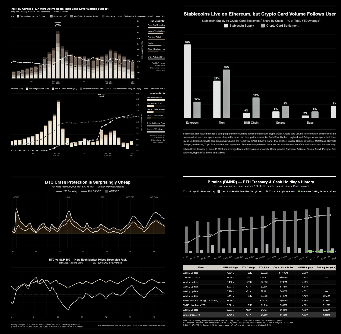
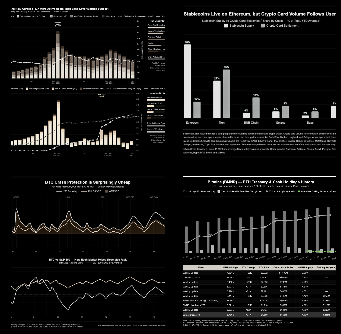
This expansion comes as Visa's stablecoin payments program reached an annualized revenue of $7 billion, up 50% from the previous quarter, demonstrating the rapid growth of institutions in using stablecoins for real-world payments and treasury cash flows.
From Single-String Experiment to Multi-String Reality
Visa's initial stablecoin pilot projects were limited to a few networks such as Ethereum and Solana. The addition of five new blockchains reflects a shift in thinking.
Arc: Circle's open Layer-1 blockchain, built specifically for programmable money and on-chain operations for organizations.
Base: Coinbase's high-performance Ethereum L2 architecture, optimized for fast, low-cost payments and agent-based trading.
Canton: A privacy-focused organizational network (with Visa now acting as Super Authentication), ideal for encrypted banking and finance.
Polygon: A leading Ethereum scaling solution with strong adoption for DeFi and payments.
Tempo: A high-throughput chain focused on efficient payments and practical asset use cases.
Instead of betting on a single dominant chain, Visa is moving toward a multi-chain financial system where liquidity, users, and applications are distributed across different ecosystems. Supporting multiple networks allows partners to choose the most efficient payment layer depending on cost, speed, and regulatory requirements. This is not just expansion, but an acknowledgment that the future of payments will not be built on a single chain, but on interoperability between multiple chains.
Each blockchain plays a different role.
The newly added networks are not interchangeable; they are designed for different use cases within the payment system. Base and Polygon focus on high-speed, low-cost transactions, suitable for large-scale payment flows. Canton introduces configurable security features, making it more suitable for institutional and tightly regulated environments. Arc, developed by Circle, is built specifically for large-scale stablecoin payments, while Tempo focuses on real-time liquidity movement.
This segmentation shows that Visa is not only integrating blockchains, but is also building a layered payment architecture where each network contributes a specific function.
This expansion occurred as Visa's stablecoin payment volume reached $7 billion annually, increasing by approximately 50% each quarter. This level of activity indicates that stablecoins are moving from pilot programs to real-world use. At this stage, the question is no longer whether stablecoins can work, but how widely they can be deployed.
Connecting Traditional Finance and On-Chain Systems
Visa's role in this ecosystem is not to replace existing payment systems, but to connect them.
By enabling organizations to issue and accept debt payments on-chain while maintaining the existing card network experience, Visa is acting as a bridge between traditional finance and blockchain infrastructure. This hybrid model allows organizations to adopt stablecoins without disrupting their current operations, accelerating adoption by minimizing barriers to entry.
Assessment and Conclusion
With stablecoin payments now spread across nine blockchains and growing rapidly, Visa is positioning itself at the heart of the on-chain payments revolution. As more banks and businesses adopt stablecoins for treasury management, clearing, and payments, this infrastructure will become increasingly crucial.
Visa is focusing heavily on stablecoins and blockchain-based clearing. By adding Arc, Base, Canton, Polygon, and Tempo, the company is creating one of the most comprehensive on-chain payment networks in the industry, a clear signal that stablecoins are moving from the experimental stage to essential infrastructure in global finance.
Disclaimer: The information presented in this article is the author's personal opinion in the field of cryptocurrency. This is not financial or investment advice. All investment decisions should be based on careful consideration of your personal portfolio and risk tolerance. The views expressed in this article do not represent the official stance of the platform. We recommend that readers conduct their own research and consult with experts before making any investment decisions.
Compiled and analyzed by HCCVenture
Follow HCCVenture here: https://link3.to/holdcoincventure
Explore HCCVenture group
HCCVENTURE QUANT JSCO
© 2026 HCCVENTURE. ALL COPYRIGHTS RESERVED.


Connect with us
Popular content
Contact to us
Address: 8th Floor, Bach Dang Complex Building, 50 Bach Dang Street, Hai Chau Ward, Da Nang City, Vietnam.
Phone: 1900 1509
Gmail : sp_contact@hccventure.com
Disclaimer: The information on this website is for informational purposes only and should not be considered investment advice. We are not responsible for any risks or losses arising from investment decisions based on the content here.
TERMS AND CONDITIONS • CUSTOMER PROTECTION POLICY
ANALYTICAL AND NEWS CONTENT IS COMPILED AND PROVIDED BY EXPERTS IN THE FIELD OF DIGITAL FINANCE AND BLOCKCHAIN BELONGING TO HCCVENTURE ORGANIZATION, INCLUDING OWNERSHIP OF THE CONTENT.
RESPONSIBLE FOR MANAGING ALL CONTENT AND ANALYSIS: HCCVENTURE FOUNDER - TRUONG MINH HUY
Read warnings about scams and phishing emails — REPORT A PROBLEM WITH OUR SITE.