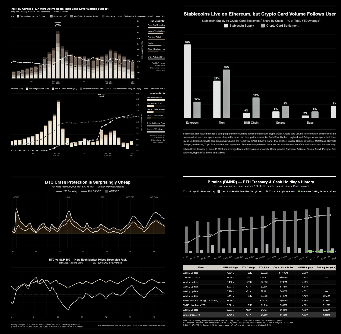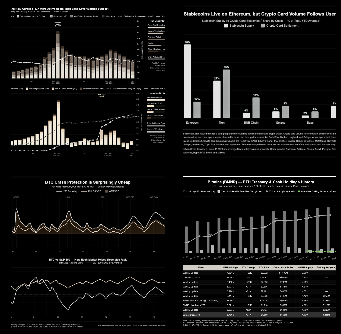


Venture capital investment in cryptocurrencies surged to $1.2 billion in just one week
In recent weeks, venture capital funding for cryptocurrency and blockchain startups has reached approximately $1.2 billion, marking the highest single-week total since the peak.
3/23/20263 min read
Venture capital flows back to Blockchain
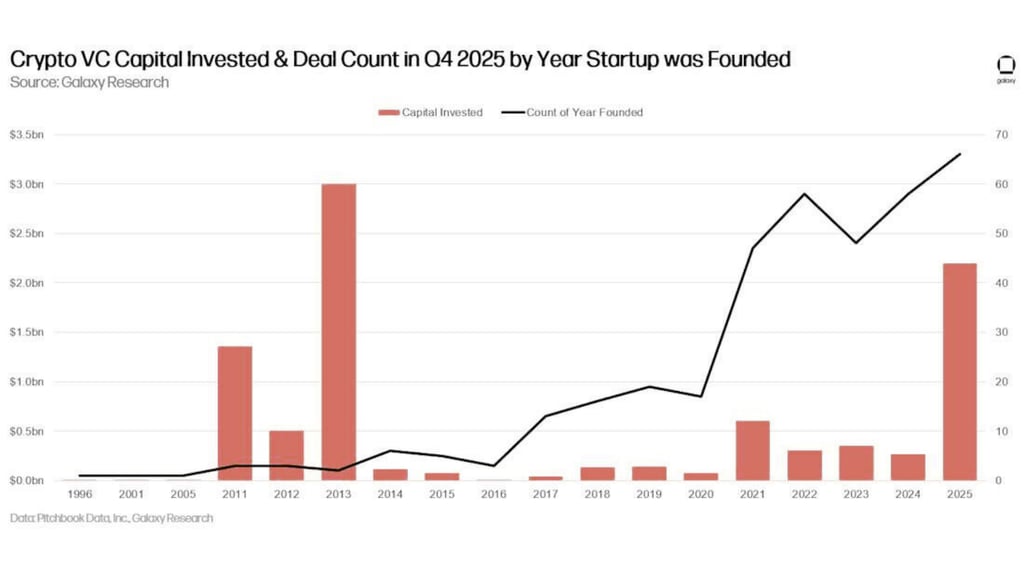
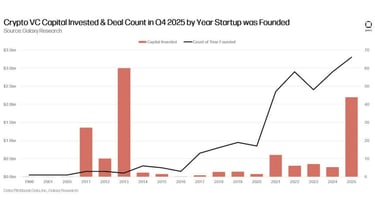
Venture capital activity in cryptocurrencies has surged, with $1.2 billion poured in in just one week, according to recent reports. This spike marks one of the strongest short-term inflows in recent months, suggesting investor interest in digital asset products is recovering after a period of caution.
The biggest deals:
A Series C funding round of $400–450 million for a tokenized real asset infrastructure (RWA) platform (rumored to be an extension of Centrifuge or Ondo Finance).
The Series B funding round is worth $220–280 million for a centrally managed stablecoin issuer focused on cross-border payments and for institutions (potentially a follow-up to Circle or new investors).
Initial funding round of $180–210 million for a decentralized AI agent orchestration protocol (a multi-agent framework built on Solana or Ethereum L2).
A growth funding round of $150–190 million for a cryptocurrency wallet and custody infrastructure provider (enterprise-level, potentially a competitor to Coinbase Custody).
Distribution by sector (approximately):
Real Assets (RWA) Tokenized & Real Finance: ~38–42%
Infrastructure (Censorship, e-wallets, oracles, bridges): ~22–25%
Artificial intelligence and the agent economy: ~18–20%
DeFi & yield protocols: ~10–12%
Other (games, social media, compliance tools): ~8–10%
More importantly, this growth is not simply about capital—it reflects a growing belief that the industry is entering a new phase of sustainable growth, driven by infrastructure, real-world use cases, and organizational consensus.
Why is venture capital making a comeback?
The return of venture capital funding is closely tied to improved conditions across the entire cryptocurrency sector. Several factors are contributing to this shift.
First, regulatory clarity is gradually improving in key jurisdictions, reducing uncertainty for long-term investors. Second, market stability after previous volatility has created more attractive entry points. Third, narratives surrounding stablecoins, tokenization, and the convergence of AI and cryptocurrencies are providing clearer investment arguments than in previous cycles.
Together, these factors are encouraging venture investors to shift from a defensive to an active approach. Unlike previous cycles dominated by speculative tokens and consumer-oriented applications, current capital is increasingly focused on infrastructure and utility sectors.
Venture capital as a leading indicator
Venture capital funding often serves as a leading indicator of an industry's future growth. Unlike the public stock market, venture investors commit capital years in advance, betting on where adoption and revenue will emerge. In this sense, the surge reflects confidence toward the future, rather than simply a reaction to current conditions.
Startups receiving funding today are fundamentally different from those in previous cycles. There is now a greater emphasis on regulatory compliance, sustainable revenue models, and use cases within the business or organization.
This shift indicates that cryptocurrencies are moving from an experimental phase to becoming a functional part of the global financial system.
Potential risks beneath the growth trajectory
Despite the surge, risks remain. Venture capital can be cyclical, and short-term spikes don't guarantee sustainable growth. If macroeconomic conditions tighten or regulatory developments become negative, capital deployment could slow down.
Furthermore, competition for high-quality deals can drive up valuations, increasing the risk of overinvestment without corresponding execution.
Even with these risks, the $1.2 billion invested weekly is a strong signal that the cryptocurrency industry is accelerating its recovery. Capital is not only returning but is also being deployed in a more focused, disciplined, and strategically targeted manner.
This suggests that the next phase of growth may be less focused on rapid speculation and more on building sustainable infrastructure and practical applications.
Disclaimer: The information presented in this article is the author's personal opinion in the field of cryptocurrency. This is not financial or investment advice. All investment decisions should be based on careful consideration of your personal portfolio and risk tolerance. The views expressed in this article do not represent the official position of the platform. We advise readers to conduct their own research and consult with experts before making any investment decisions.
Compiled and analyzed by HCC Venture
Follow HCCVenture here: https://link3.to/holdcoincventure
Explore HCCVenture group
HCCVENTURE QUANT JSCO
© 2026 HCCVENTURE. ALL COPYRIGHTS RESERVED.


Connect with us
Popular content
Contact to us
Address: 8th Floor, Bach Dang Complex Building, 50 Bach Dang Street, Hai Chau Ward, Da Nang City, Vietnam.
Phone: 1900 1509
Gmail : sp_contact@hccventure.com
Disclaimer: The information on this website is for informational purposes only and should not be considered investment advice. We are not responsible for any risks or losses arising from investment decisions based on the content here.
TERMS AND CONDITIONS • CUSTOMER PROTECTION POLICY
ANALYTICAL AND NEWS CONTENT IS COMPILED AND PROVIDED BY EXPERTS IN THE FIELD OF DIGITAL FINANCE AND BLOCKCHAIN BELONGING TO HCCVENTURE ORGANIZATION, INCLUDING OWNERSHIP OF THE CONTENT.
RESPONSIBLE FOR MANAGING ALL CONTENT AND ANALYSIS: HCCVENTURE FOUNDER - TRUONG MINH HUY
Read warnings about scams and phishing emails — REPORT A PROBLEM WITH OUR SITE.