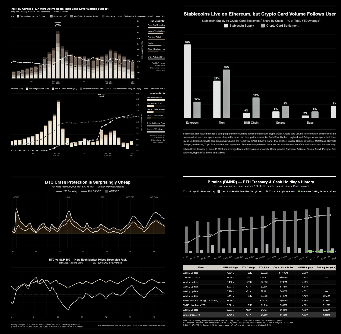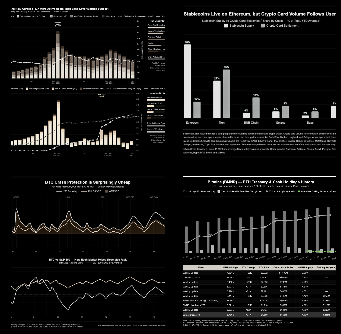


USDT on TRON reached an all-time high of $89 billion, and TRON earned $89 million in fees
The TRON network report for Q2 2026 noted two remarkable coincidences in the same figure: the circulating supply of USDT on TRON reached a new record high of over $89 billion.
7/24/20264 min read


A market capitalization of 89 billion USDT.
The 89 billion USDT held on TRON represents approximately 47% of the total circulating USDT, at $184 billion, indicating that nearly half of the world's largest stablecoin by market capitalization is operating on a single network that most Western institutional investors don't use as their primary blockchain environment. This concentration reflects a use case shaped by TRON's cost and speed characteristics rather than by its institutional product design: a USDT transfer transaction on TRON is completed in about three seconds with TRX fees ranging from $1.00 to $3.50, making it the fastest and lowest-cost dollar transfer option available on a large scale among stablecoin storage networks.
These cost and speed characteristics shape TRON's user base in ways that differ from Ethereum's institutional DeFi ecosystem or Solana's high-frequency trading and consumer application layer. TRON's USDT trading volume is heavily concentrated in small-scale transactions: The proportion of TRON's USDT transactions with transaction values under $1,000 among chains with native USDT issuance increased from 43% in Q1 2026 to 52% in Q2 2026, indicating TRON increasingly serves the small-value, high-frequency segment of the stable remittance market. These transactions include remittances, peer-to-peer payments, deposits, and withdrawals from users in emerging markets, where fees of $1 to $3 per transfer are significant relative to the amount transferred but considerably cheaper than traditional banking methods.
TRON's revenue model
TRON's $89 million in Q2 fees represents the real money earned from the network's dominant position in stablecoin storage through transaction fees paid by millions of users making stablecoin transfers. The competitive context of this figure is noteworthy: Hyperliquid generated $199 million in protocol revenue in Q2 through transaction fees on perpetual futures contracts, while TRON, with $89 million, ranked second among all blockchain networks in fee generation, surpassing Ethereum, Solana, and every other network despite TRON having lower public recognition within the Western institutional and developer community compared to those competing networks.
The fee generation model shows how TRON converts volume into revenue even with low transaction fees. If TRON processed approximately $1 trillion in USDT volume in Q2 with an average fee of around $1.50 per transfer, then $89 million would correspond to approximately 59 million transactions in the quarter, consistent with the network's reported processing rate of over 12.7 million transactions per day during peak periods. The specific transaction fee may vary depending on network congestion and the TRX price at the time of the transaction, but the total quarterly fees demonstrate that processing large volumes with low fees generates significant revenue for the protocol at TRON's transaction scale.
USDT trading volume from the beginning of the year to date
Token Terminal data shows that TRON leads in USDT transaction volume year-to-date with approximately $4.2 trillion, demonstrating the true scale of stablecoin payments on which TRON's fee revenue is based. $4.2 trillion USDT in the first half of 2026 is equivalent to an annual rate of nearly $8 trillion USDT transferred across a single network, a figure that highlights TRON's role in global digital dollar payments on a scale far exceeding conventional blockchain adoption metrics.
Tronscan data confirms that USDT on TRON is paid out at approximately $12 billion per day and over $160 billion per week, spread across tens of millions of holder accounts. These throughput figures demonstrate that TRON's USDT payment activity has reached a scale comparable to major traditional payment systems, not in terms of theoretical blockchain capacity but rather measured throughput across actual ongoing transactions.
As of July 2026, a total of 392 million user accounts on TRON were recorded, spanning over 14 billion transactions throughout its lifetime, forming the foundation for those transfer figures. The number of user accounts is an accumulated figure from the past, not an indicator of active users, but its scale reflects TRON's sustained growth as a starting point for accessing blockchain-based financial services for first-time users of digital dollar transfers through a combination of low costs, fast payment speeds, and TRON's extensive exchange integration capabilities.
Assessment and Conclusion
The coincidence of USDT on TRON reaching $89 billion and TRON's Q2 transaction fees reaching $89 million at the same time accurately reflects TRON's business model structure: the network has found a way to translate its dominance in stablecoin storage into fee revenue with an annual return of approximately 0.1% on stored assets, generating institutional-scale revenue from a user base transferring small amounts of funds rather than high-value institutional products. This revenue model is more sustainable than alternatives that rely on speculative trading or venture-backed protocol incentives, because the underlying demand for cheap digital dollar transfers in emerging markets is driven by real economic needs, not profit-seeking or speculation.
Within the broader stablecoin market, total USDT holdings reach $184 billion, with TRON holding $89-90 billion, while USDC, at $73 billion, has rapidly expanded through institutional deployments on Ethereum and Solana, establishing a de facto market segmentation between the two dominant stablecoins. USDT and TRON together dominate the retail transfer segment in emerging markets. USDC and institutional platforms are collectively dominating the institutional payments, DeFi lending, and crypto asset segments in developed markets. Whether these segments remain stable or converge as stablecoin regulations under the GENIUS Act clarify which issuers can participate in the US market will significantly shape TRON's competitive position through 2027 and beyond.
Disclaimer: The content in this article is for informational, research, data analysis, and reference purposes only regarding the cryptocurrency market. All opinions, assessments, forecasts, or opinions reflect the author's perspective at the time of publication and do not constitute investment advice, solicitations for buying or selling, trading recommendations, advertising, marketing, or promotion of any financial products, services, or cryptocurrencies. Mentions of projects, tokens, protocols, exchanges, wallets, or cryptocurrency service providers (CASPs) are for research, analysis, or informational purposes only and should not be construed as endorsements, recommendations, or guarantees in any way. HCCVenture does not broker, advertise, market, promote, or connect users in Vietnam with any cryptocurrency services from CASPs. HCCVenture does not accept asset custody, investment mandates, manage assets, or execute transactions on behalf of clients. All investment decisions are made entirely through the reader's own research (DYOR), evaluation, and responsibility; HCCVenture is not liable for any losses or damages arising from the use of or reliance on the information presented in this article.
Compiled and analyzed by HCCVenture
Join our information channels: https://link3.to/holdcoincventure
Explore HCCVenture group
HCCVENTURE QUANT JSCO
© 2026 HCCVENTURE. ALL COPYRIGHTS RESERVED.


Connect with us
Popular content
Contact to us
Address: 8th Floor, Bach Dang Complex Building, 50 Bach Dang Street, Hai Chau Ward, Da Nang City, Vietnam.
Phone: 1900 1509
Gmail : sp_contact@hccventure.com
Disclaimer: The information on this website is for informational purposes only and should not be considered investment advice. We are not responsible for any risks or losses arising from investment decisions based on the content here.
TERMS AND CONDITIONS • CUSTOMER PROTECTION POLICY
ANALYTICAL AND NEWS CONTENT IS COMPILED AND PROVIDED BY EXPERTS IN THE FIELD OF DIGITAL FINANCE AND BLOCKCHAIN BELONGING TO HCCVENTURE ORGANIZATION, INCLUDING OWNERSHIP OF THE CONTENT.
RESPONSIBLE FOR MANAGING ALL CONTENT AND ANALYSIS: HCCVENTURE FOUNDER - TRUONG MINH HUY
Read warnings about scams and phishing emails — REPORT A PROBLEM WITH OUR SITE.