

The U.S. government is raising money to help pay off the $39 trillion debt
The U.S. Treasury Department operates a long-standing voluntary donation program called the “Debt Reduction Gift Program,” which allows individuals and organizations to contribute money toward reducing the national debt.
4/28/20262 min read
A symbolic gesture in a structural problem.
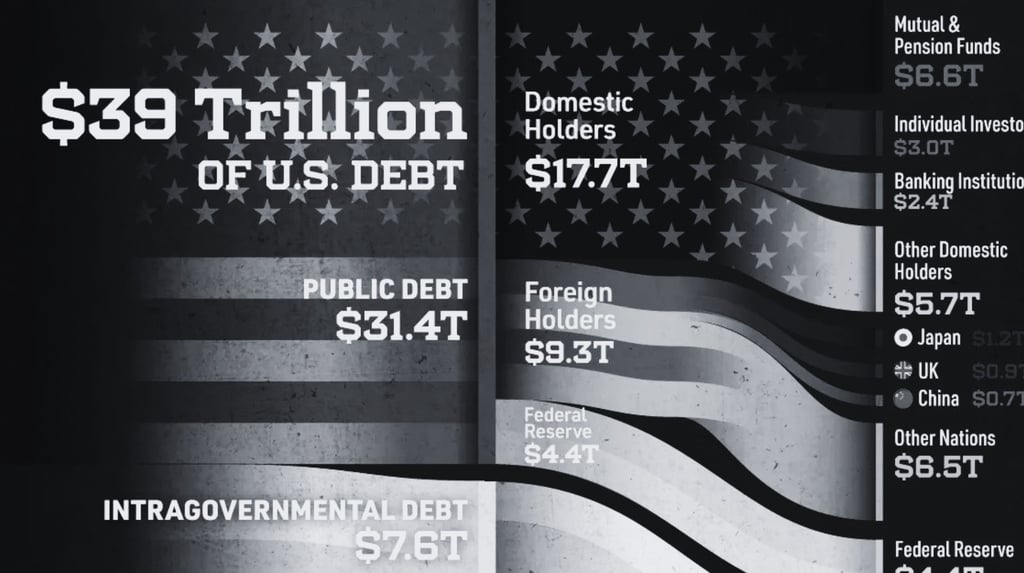
The U.S. Treasury Department operates a long-standing voluntary donation program called the “Debt Reduction Donation Scheme,” which allows individuals and organizations to contribute money toward reducing the national debt. As of April 2026, total federal debt is estimated at approximately $39 trillion, of which about $31.4 trillion is publicly held.
Donations can be made via bank account (ACH), PayPal, Venmo , debit/credit card , or by mail check.
Donations are only accepted on the condition that they are used exclusively to reduce publicly held debt.
Annual contributions are relatively modest. Historical data shows the program has raised approximately $67-70 million over the past 29 years — averaging around $120,000 per month in recent years. In 2024, the program received approximately $2.7 million.
The Financial Services Bureau of the Ministry of Finance administers the program and publicly monitors contributions. Donations are entirely voluntary, with no goods, services, or tax incentives offered in return (apart from standard charitable deductions, if applicable).
This program, authorized under Section 3113 of the U.S. Criminal Code (31 USC § 3113), has existed for decades (formalized in its current form since 1961, with origins dating back to 1843). Recently, it has resurfaced, drawing renewed attention through viral social media posts alleging the government is actively " collecting donations " to address its massive debt burden.
Actual impact on national debt
Although the program reflects patriotic sentiment, its actual impact on the $39 trillion debt has been underestimated. Even if contributions reached $10 million per month (far higher than the historical average), it would take centuries to produce significant change. The debt increases by trillions of dollars each year due to structural deficits, interest rates, and spending.
This program serves as a symbolic channel for citizens who want to contribute directly rather than as a serious financial tool. As debt increases, the interest payments themselves become a larger part of federal spending, creating a feedback loop that rapidly increases the total obligation over time. This is a macroeconomic problem, not one that can be solved through incremental contributions.
Market perspective: Debt as a systemic characteristic
From a market perspective, U.S. debt is not simply a debt but a fundamental component of the global financial system. It serves as a risk-free benchmark asset, supporting global liquidity and acting as collateral in financial markets. This dual role complicates matters. Reducing debt is not just a financial issue but also impacts global financial stability and liquidity.
Donation initiatives may also reflect a shift in how governments communicate about financial challenges. By expressing debt in more concrete terms, policymakers can make abstract numbers more understandable, highlighting the scale of the problem and influencing public opinion. However, this also risks oversimplifying a complex issue, where solutions involve policy trade-offs rather than voluntary action.
Assessment and Conclusion
The U.S. government's acceptance of donations to pay off debt is unlikely to change the financial outcome. But it reflects something more important: Debt is no longer an abstract concept confined to policy discussions. It is becoming part of public consciousness. And as that consciousness grows, so does the pressure to address the structural elements behind it – through policy, not through charity.
Disclaimer: The information presented in this article is the author's personal opinion in the field of cryptocurrency. This is not financial or investment advice. All investment decisions should be based on careful consideration of your personal portfolio and risk tolerance. The views expressed in this article do not represent the official stance of the platform. We recommend that readers conduct their own research and consult with experts before making any investment decisions.
Compiled and analyzed by HCCVenture
Follow HCCVenture here: https://link3.to/holdcoincventure
Explore HCCVenture group
HCCVENTURE QUANT JSCO
© 2026 HCCVENTURE. ALL COPYRIGHTS RESERVED.


Connect with us
Popular content
Contact to us
Address: 8th Floor, Bach Dang Complex Building, 50 Bach Dang Street, Hai Chau Ward, Da Nang City, Vietnam.
Phone: 1900 1509
Gmail : sp_contact@hccventure.com
Disclaimer: The information on this website is for informational purposes only and should not be considered investment advice. We are not responsible for any risks or losses arising from investment decisions based on the content here.
TERMS AND CONDITIONS • CUSTOMER PROTECTION POLICY
ANALYTICAL AND NEWS CONTENT IS COMPILED AND PROVIDED BY EXPERTS IN THE FIELD OF DIGITAL FINANCE AND BLOCKCHAIN BELONGING TO HCCVENTURE ORGANIZATION, INCLUDING OWNERSHIP OF THE CONTENT.
RESPONSIBLE FOR MANAGING ALL CONTENT AND ANALYSIS: HCCVENTURE FOUNDER - TRUONG MINH HUY
Read warnings about scams and phishing emails — REPORT A PROBLEM WITH OUR SITE.