

The UK is setting new regulations for Bitcoin and cryptocurrencies
The UK is expected to enact comprehensive new legislation to regulate cryptocurrencies and digital assets starting in October 2027, under the supervision of the Financial Conduct Authority (FCA).
12/15/20252 min read

Separate from the MiCa alliance
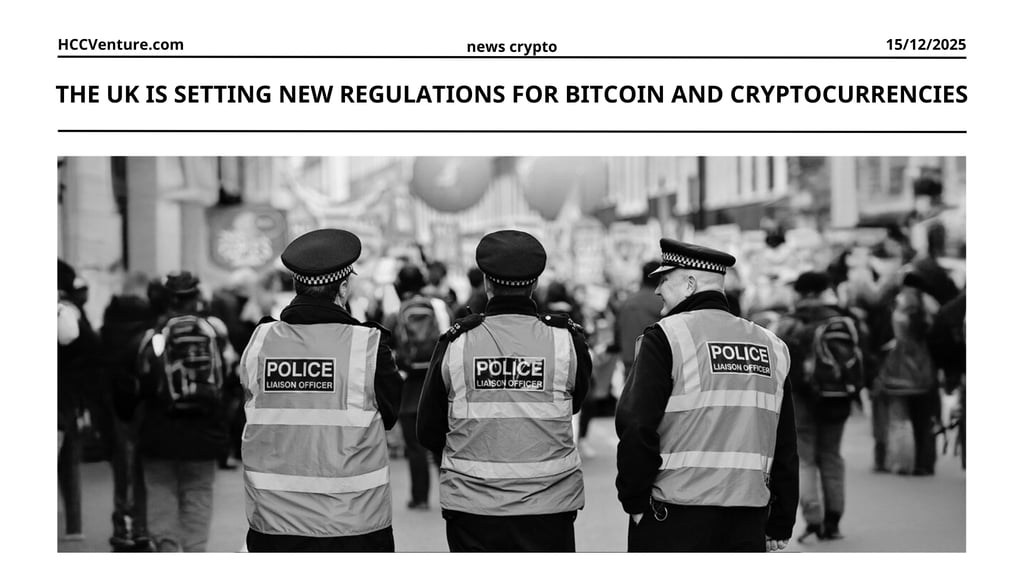
The UK is preparing to enact a new legal framework to regulate Bitcoin and the cryptocurrency market in general, signaling a decisive shift from consultation to enforcement. This move reflects growing concerns among policymakers that the digital asset market has reached a scale where inadequate regulation could threaten consumer protection, market integrity, and financial stability.
Instead of banning cryptocurrency activity, the UK's approach appears to focus on bringing cryptocurrencies into the realm of traditional financial regulation, positioning digital assets as a regulated financial sector rather than a marginal innovation.
A new structure has been established.
The adoption of cryptocurrencies has become widespread. Millions of Britons now own digital assets, while institutions are increasingly engaging with cryptocurrencies through ETFs, custody services, and tokenized instruments. What was once a niche market is now large enough to create risks at both the systemic and consumer levels.
A series of high-profile collapses and scams globally — from exchanges to stablecoins — have led regulators to focus more on market abuse, insider trading, misleading advertising, and inadequate safeguards.
The UK is facing international competitive pressure. The EU has implemented MiCA, the US is pushing for stablecoin legislation and market structures, and Asia is actively attracting cryptocurrency companies. The UK risks falling behind if its legal stance remains fragmented or unclear.
The role of the FCA
The regulatory effort is expected to be coordinated primarily through the Financial Conduct Authority (FCA), with the Bank of England involved in activities of systemic importance such as stablecoins and payments.
The FCA has demonstrated its willingness to take a stricter stance, particularly regarding marketing and licensing requirements. Under the new framework, the FCA will have clearer legal authority to supervise and penalize participants in the cryptocurrency market.
Balancing Innovation and Control
A core dilemma remains: how to regulate the cryptocurrency market without stifling innovation. Critics warn that overly stringent regulations could push startups and investment capital overseas, undermining London's position as a fintech hub.
Supporters argue that without clear oversight, the cryptocurrency market risks becoming synonymous with fraud and speculation, ultimately discouraging serious investors. The UK's challenge is to find a balance between market discipline and competitiveness.
Disclaimer: The information presented in this article is the author's personal opinion in the field of cryptocurrency. This is not financial or investment advice. All investment decisions should be based on careful consideration of your personal portfolio and risk tolerance. The views expressed in this article do not represent the official stance of the platform. We recommend that readers conduct their own research and consult with experts before making any investment decisions.
Compiled and analyzed by HCCVenture
Follow HCCVenture here: https://link3.to/holdcoincventure
Explore HCCVenture group
HCCVENTURE QUANT JSCO
© 2026 HCCVENTURE. ALL COPYRIGHTS RESERVED.


Connect with us
Popular content
Contact to us
Address: 8th Floor, Bach Dang Complex Building, 50 Bach Dang Street, Hai Chau Ward, Da Nang City, Vietnam.
Phone: 1900 1509
Gmail : sp_contact@hccventure.com
Disclaimer: The information on this website is for informational purposes only and should not be considered investment advice. We are not responsible for any risks or losses arising from investment decisions based on the content here.
TERMS AND CONDITIONS • CUSTOMER PROTECTION POLICY
ANALYTICAL AND NEWS CONTENT IS COMPILED AND PROVIDED BY EXPERTS IN THE FIELD OF DIGITAL FINANCE AND BLOCKCHAIN BELONGING TO HCCVENTURE ORGANIZATION, INCLUDING OWNERSHIP OF THE CONTENT.
RESPONSIBLE FOR MANAGING ALL CONTENT AND ANALYSIS: HCCVENTURE FOUNDER - TRUONG MINH HUY
Read warnings about scams and phishing emails — REPORT A PROBLEM WITH OUR SITE.