
The UAE orders the closure of Dubai's financial and stock markets
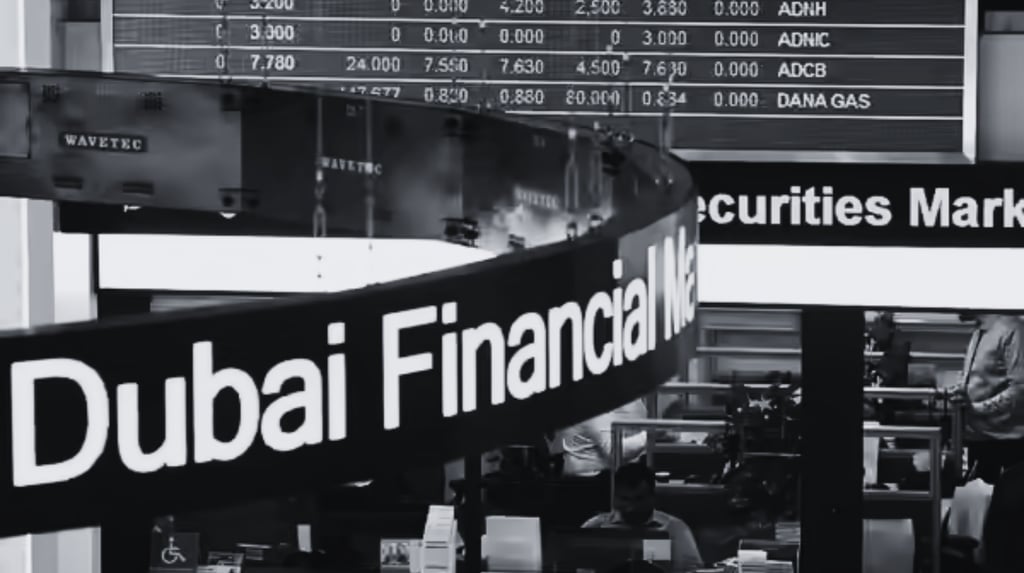
According to sources, authorities in the United Arab Emirates have ordered the temporary closure of the country's two main stock exchanges.
3/2/20262 min read
Tensions in the Middle East have escalated
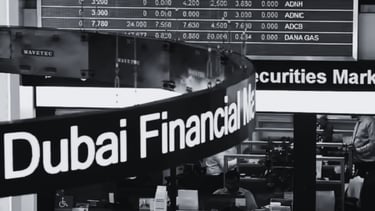
The United Arab Emirates (UAE) has temporarily suspended trading on its two main stock exchanges— the Dubai Financial Exchange (DFM) and the Abu Dhabi Stock Exchange (ADX).
This decision, announced by the UAE Capital Markets Authority (CMA) late Sunday, March 1, is a direct response to Iran's retaliatory missile and drone attacks across the Gulf, following joint US-Israeli attacks on Iran that allegedly killed Supreme Leader Ayatollah Ali Khamenei and targeted military and nuclear sites.
The CMA cited its " supervisory and regulatory role over the country's capital markets " in its closing statement, emphasizing the need to monitor regional developments and prevent chaotic trading amid rising uncertainty. The move was described as unusual—UAE markets typically do not trade on Sundays, making this an extended closure to avoid potential sell-offs or panic-driven volatility.
The regional market is in a state of instability
The UAE's financial market is among the most internationally integrated in the Middle East, with a strong presence of:
Energy companies
State-backed enterprises
Real estate developers
Banking and financial services
Any escalation related to Iran could quickly impact regional oil markets, capital flows, and investor sentiment. Temporarily closing exchanges could help avoid a sudden crash in value caused by geopolitical news rather than fundamental factors.
Impact on the global market
Even a short-term suspension of trading in major Gulf markets could have widespread repercussions for the global financial system. The UAE is home to large sovereign wealth funds and many publicly traded multinational corporations, which means:
International investors may reassess their level of exposure to the region.
The energy market could experience significant volatility.
Emerging market investment funds may adjust their capital allocation.
If tensions escalate further, risk-averse behavior could spread more widely across global stock and commodity markets.
Market resilience ?
The crucial question is how the market will react when trading resumes. If geopolitical tensions ease quickly, the closures may prove effective in preventing chaotic sell-offs. However, if instability persists, reopening could still trigger sharp price corrections. Historically, markets reopening after emergency closures often experience high volatility in the first few trading sessions.
Our review
The UAE's unprecedented two-day trading halt reflects the severity of the escalating situation—prioritizing stability over immediate liquidity in the face of direct attacks on sovereign territory. As explosions continue and damage figures mount, the market closures are a clear signal that regional conflict can quickly disrupt even the most resilient financial centers. Markets will reopen as early as Wednesday (March 4th)—assuming no further developments—but the path ahead remains highly uncertain amid one of the most serious Gulf crises in decades.
Disclaimer: The information presented in this article is the author's personal opinion in the field of cryptocurrency. This is not financial or investment advice. All investment decisions should be based on careful consideration of your personal portfolio and risk tolerance. The views expressed in this article do not represent the official stance of the platform. We recommend that readers conduct their own research and consult with experts before making any investment decisions.
Compiled and analyzed by HCCVenture
Follow HCCVenture here: https://link3.to/holdcoincventure
Explore HCCVenture group
HCCVENTURE QUANT JSCO
© 2026 HCCVENTURE. ALL COPYRIGHTS RESERVED.


Connect with us
Popular content
Contact to us
Address: 8th Floor, Bach Dang Complex Building, 50 Bach Dang Street, Hai Chau Ward, Da Nang City, Vietnam.
Phone: 1900 1509
Gmail : sp_contact@hccventure.com
Disclaimer: The information on this website is for informational purposes only and should not be considered investment advice. We are not responsible for any risks or losses arising from investment decisions based on the content here.
TERMS AND CONDITIONS • CUSTOMER PROTECTION POLICY
ANALYTICAL AND NEWS CONTENT IS COMPILED AND PROVIDED BY EXPERTS IN THE FIELD OF DIGITAL FINANCE AND BLOCKCHAIN BELONGING TO HCCVENTURE ORGANIZATION, INCLUDING OWNERSHIP OF THE CONTENT.
RESPONSIBLE FOR MANAGING ALL CONTENT AND ANALYSIS: HCCVENTURE FOUNDER - TRUONG MINH HUY
Read warnings about scams and phishing emails — REPORT A PROBLEM WITH OUR SITE.