

The surge in IPOs in China signals the opening up of the capital market
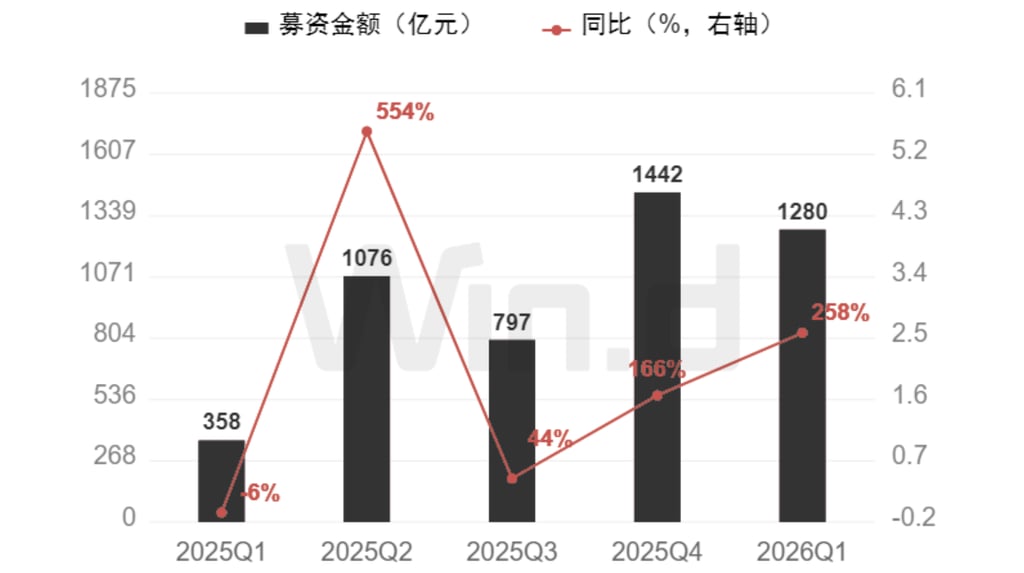
China's initial public offering (IPO) market has rebounded strongly, with the number of new listings increasing 56% year-on-year in the first quarter of 2026.
4/7/20263 min read
A policy change, not a cycle
China's IPO market has rebounded strongly, with the number of listings increasing 56% year-on-year as regulators ease approval processes and boost capital formation in the country's technology sector. This shift marks a notable change in Beijing's perspective, where policymakers are now balancing financial control with economic acceleration. The IPO resurgence isn't simply due to improved market conditions; it's driven by policy.
China's Securities Regulatory Commission has simplified its listing approval process, easing bottlenecks and signaling a more supportive stance toward equity fundraising – particularly for companies aligned with national priorities.
This comes after a prolonged period of many years during which IPOs were restricted by:
Closer regulatory oversight
Tighter controls on platform companies
A broader campaign aimed at mitigating systemic financial risks.
The current shift doesn't reverse those policies. It merely refines them. Beijing is now pursuing selective liberalization, allowing capital formation to continue without relinquishing control over that flow.
Against a backdrop of still uneven growth, reopening equity fundraising channels shows the government's renewed willingness to use the capital market as a tool to support innovation and stabilize market sentiment.
Proposed changes
Regulatory bodies have taken several measures to revive the IPO market:
The approval process has been simplified: China's Securities Regulatory Commission (CSRC) has shortened the review time for eligible technology companies and introduced a "green channel" for companies in strategic sectors (artificial intelligence, quantum computing, high-end chips, renewable energy, and biotechnology).
Listing requirements have been relaxed: Profit thresholds have been lowered for some high-growth technology companies on the STAR (Shanghai) and ChiNext (Shenzhen) stock exchanges.
Encourage domestic listings: Strengthen incentives for Chinese companies to list domestically instead of pursuing listings overseas (especially in the US).
Supporting innovation-oriented companies: Greater flexibility for companies with variable interests (VIEs) and those heavily invested in research and development.
After years of tight control aimed at curbing speculation and financial risks, Beijing is now prioritizing technological autonomy and supporting capital markets for innovation.
Technology is returning to the center of policy
The composition of the new listings reflects this intention. Capital is being directed toward sectors aligned with China's long-term industrial strategy, including semiconductors, artificial intelligence, and advanced manufacturing. These are not just growth industries; they are strategic priorities tied to economic resilience and geopolitical standing.
Within this framework, the IPO market functions less as neutral financial platforms and more as an extension of industrial policy allocating capital to sectors deemed important for national development.
Domestic market is prioritized
Another prominent feature of the current IPO wave is its geographical concentration. Listings are increasingly taking place on mainland exchanges rather than overseas locations, reinforcing Beijing's long-term goal of strengthening the domestic capital market. By keeping listings domestic, regulators maintain closer oversight while reducing reliance on external financial systems.
This reflects a broader trend toward financial autonomy, where capital formation, regulation, and liquidity are increasingly being internalized.
Our review
The 56% surge in Chinese IPO activity is a clear indication that Beijing is actively working to restart innovation momentum in the technology sector through its capital markets. While this move is selective and focused on strategic industries, it represents a significant policy shift from the tighter regulatory stance of recent years. For investors, this creates a more favorable environment for exposure to quality Chinese technology companies, although disciplined stock selection and awareness of policy risks remain essential.
Disclaimer: The information presented in this article is the author's personal opinion in the field of cryptocurrency. This is not financial or investment advice. All investment decisions should be based on careful consideration of your personal portfolio and risk tolerance. The views expressed in this article do not represent the official stance of the platform. We recommend that readers conduct their own research and consult with experts before making any investment decisions.
Compiled and analyzed by HCCVenture
Follow HCCVenture here: https://link3.to/holdcoincventure
Explore HCCVenture group
HCCVENTURE QUANT JSCO
© 2026 HCCVENTURE. ALL COPYRIGHTS RESERVED.


Connect with us
Popular content
Contact to us
Address: 8th Floor, Bach Dang Complex Building, 50 Bach Dang Street, Hai Chau Ward, Da Nang City, Vietnam.
Phone: 1900 1509
Gmail : sp_contact@hccventure.com
Disclaimer: The information on this website is for informational purposes only and should not be considered investment advice. We are not responsible for any risks or losses arising from investment decisions based on the content here.
TERMS AND CONDITIONS • CUSTOMER PROTECTION POLICY
ANALYTICAL AND NEWS CONTENT IS COMPILED AND PROVIDED BY EXPERTS IN THE FIELD OF DIGITAL FINANCE AND BLOCKCHAIN BELONGING TO HCCVENTURE ORGANIZATION, INCLUDING OWNERSHIP OF THE CONTENT.
RESPONSIBLE FOR MANAGING ALL CONTENT AND ANALYSIS: HCCVENTURE FOUNDER - TRUONG MINH HUY
Read warnings about scams and phishing emails — REPORT A PROBLEM WITH OUR SITE.