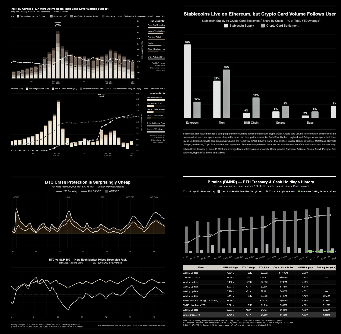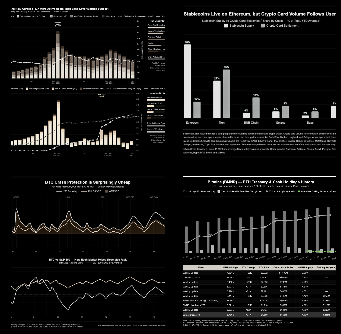


The South Korean Won falls sharply - The Kimchi Index rises again
The South Korean won has fallen, becoming Asia's worst-performing currency, even as a key indicator of cryptocurrencies – the kimchi spread – has shifted to a positive upward trend.
TIN TỨC
1/19/20263 min read


What happened to South Korea?
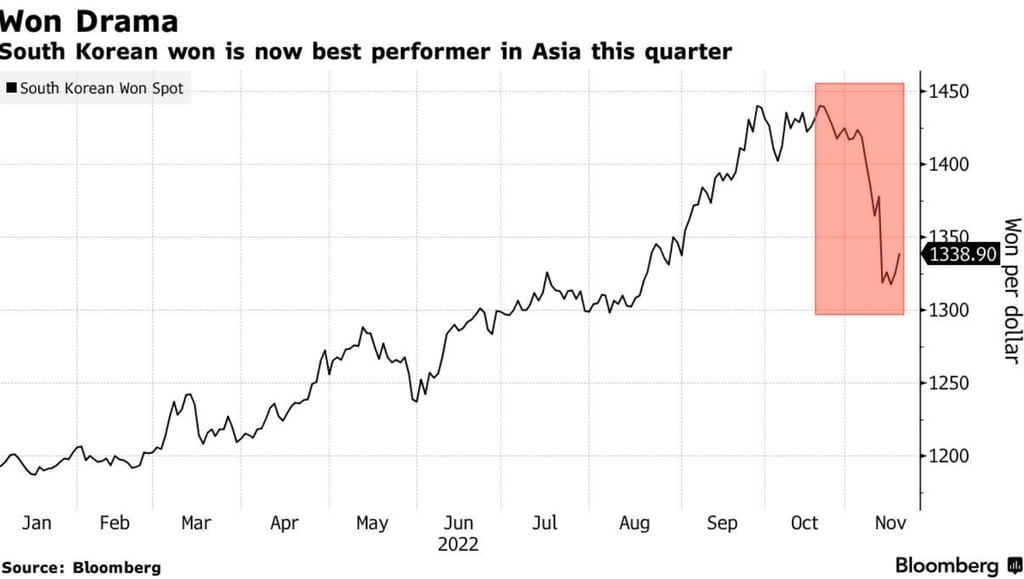
The South Korean won (KRW) has emerged as the worst-performing major Asian currency in the first weeks of 2026, depreciating by about 7.2% against the US dollar year-to-date — significantly less than other currencies such as the Japanese yen (-3.1%), the Chinese yuan (-2.8%), and the Singapore dollar (-1.4%).
The depreciation intensified sharply in mid-January, with the USD/KRW exchange rate touching 1.498 — its weakest level since October 2022 — before recovering slightly to 1.485–1.490.
This renewed pressure on the won has revived one of the cryptocurrency's most popular regional indicators: the Kimchi Premium, which has shifted into a strong bullish trend for the first time since late 2024.
Where does the reason come from?
Several overlapping factors are putting pressure on the currency: Continuous capital outflows — South Korean institutions and high-net-worth individuals continue to seek higher yields overseas amid low domestic interest rates and political instability.
Weak export performance — Semiconductor demand remains weak, and China's economic slowdown continues to hurt South Korean exporters.
Political instability — Ongoing investigations into President Yoon Suk Yeol's administration, coupled with a parliamentary deadlock led by the opposition, has eroded investor confidence.
The difference in policy at the Bank of Korea — While the US Federal Reserve (Fed) has signaled a cautious pause in interest rate cuts, the Bank of Korea (BOK) has maintained a relatively dovish stance, widening the interest rate differential.
Geopolitical risks — New North Korean missile tests and US-China technology tensions are causing risk-averse capital flows to continue moving away from the Won.
The Kimchi Premium Index has turned positive.
The Kimchi Premium Index — the percentage by which Bitcoin (and often Ethereum) is traded higher on South Korean exchanges (primarily Upbit and Bithumb) than the global average — has shifted from a prolonged discount to a higher price level:
Higher price than the current price (January 19, 2026): +4.8% to +6.2% for BTC (Upbit compared to Binance/Coinbase spot average)
Ethereum's higher price range: Similar range, averaging +5.1%
The last time this index consistently turned positive was in Q4 2024 during the previous won weakening cycle, coinciding with strong domestic BTC buying pressure.
This reversal is classic behavior for South Korean retail investors: when the won weakens significantly, domestic investors often shift to hard assets like Bitcoin to hedge against currency devaluation and control capital. This phenomenon is further exacerbated by the high cryptocurrency adoption rate in South Korea (estimated at 15-20% of the adult population owns or trades digital assets) and the cultural trend of viewing BTC as an alternative "digital gold."
Impact on the economy
The coexistence of a weakening won and rising kimchi premiums suggests that risk appetite hasn't collapsed—it's just shifted elsewhere. Instead of completely abandoning risk, South Korean individual investors are reallocating capital into assets perceived as less dependent on domestic macroeconomic outcomes.
This pattern mirrors previous instances where demand for cryptocurrencies surged amid exchange rate volatility, reinforcing the idea that in South Korea, digital assets function as a parallel financial market rather than a fringe form of speculation.
For policymakers, the divergence serves as a reminder that monetary stability and capital market behavior are increasingly influenced by cryptocurrencies. Persistent premiums can complicate monetary signals and raise questions about financial leaks—without necessarily implying illicit money flows.
Disclaimer: The information presented in this article is the author's personal opinion in the field of cryptocurrency. This is not financial or investment advice. All investment decisions should be based on careful consideration of your personal portfolio and risk tolerance. The views expressed in this article do not represent the official stance of the platform. We recommend that readers conduct their own research and consult with experts before making any investment decisions.
Compiled and analyzed by HCCVenture
Follow HCCVenture here: https://link3.to/holdcoincventure
Explore HCCVenture group
HCCVENTURE QUANT JSCO
© 2026 HCCVENTURE. ALL COPYRIGHTS RESERVED.


Connect with us
Popular content
Contact to us
Address: 8th Floor, Bach Dang Complex Building, 50 Bach Dang Street, Hai Chau Ward, Da Nang City, Vietnam.
Phone: 1900 1509
Gmail : sp_contact@hccventure.com
Disclaimer: The information on this website is for informational purposes only and should not be considered investment advice. We are not responsible for any risks or losses arising from investment decisions based on the content here.
TERMS AND CONDITIONS • CUSTOMER PROTECTION POLICY
ANALYTICAL AND NEWS CONTENT IS COMPILED AND PROVIDED BY EXPERTS IN THE FIELD OF DIGITAL FINANCE AND BLOCKCHAIN BELONGING TO HCCVENTURE ORGANIZATION, INCLUDING OWNERSHIP OF THE CONTENT.
RESPONSIBLE FOR MANAGING ALL CONTENT AND ANALYSIS: HCCVENTURE FOUNDER - TRUONG MINH HUY
Read warnings about scams and phishing emails — REPORT A PROBLEM WITH OUR SITE.