

The Indian Rupee rose 1.4%, surpassing its biggest gain since 2018
The Indian rupee surged 1.4%, its biggest one-day gain since December 2018, following news of a trade deal with the United States, signaling a sudden improvement in investor confidence.
2/5/20262 min read
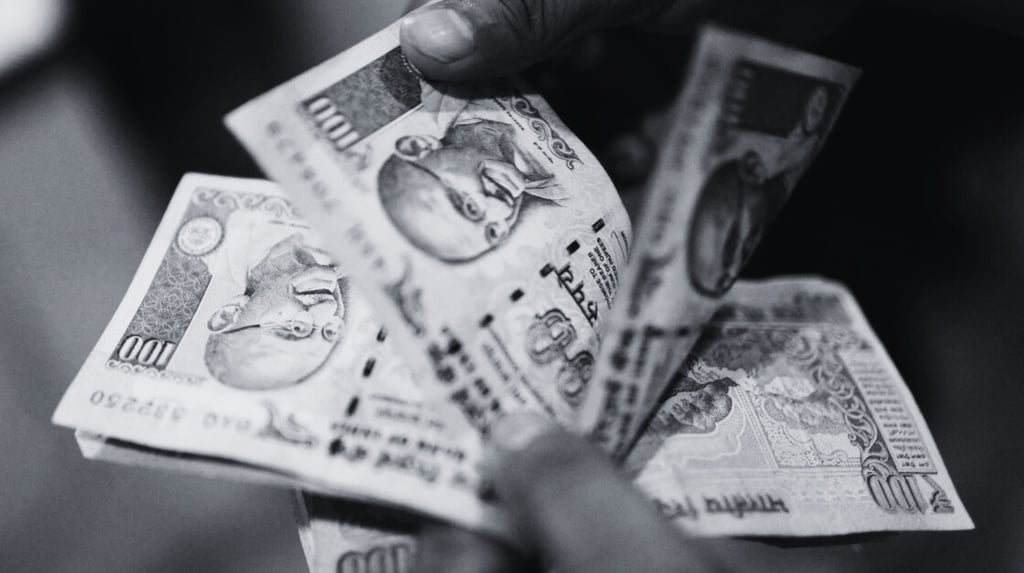
India's foreign market is booming
The Indian rupee (INR) experienced a sharp appreciation on February 3, 2026, surging approximately 1.4% against the US dollar — marking its strongest one-day gain since December 2018. According to Bloomberg and Refinitiv data, the USD/INR rate fell from a daily high near 84.12 to a low of 82.95 before stabilizing around 83.05–83.10 by the end of the Asian/London trading session.
This surge was triggered by the confirmation of the preliminary trade agreement framework between the US and India, announced late on February 2 (US time), which includes:
Significantly reduce or eliminate US tariffs on approximately $20-25 billion worth of Indian exports (textiles, pharmaceuticals, automotive components, IT services).
Expanding market access for U.S. agricultural products and energy exports to India.
Commitment to strengthening cooperation on critical mineral, semiconductor, and clean energy supply chains.
An additional letter addresses digital trade and data location rules (India agreed to gradually ease some restrictions).
This agreement — described by U.S. Trade Representative Jamieson Greer as “ a stepping stone toward a comprehensive bilateral deal ” — is expected to formalize in the second quarter of 2026 and is part of a broader U.S. strategy to diversify supply chains away from China while strengthening ties with strategic partners in the Indo-Pacific region.
Global positioning strategy
The rapid price increase demonstrates the crucial role of market positioning strategy. In recent months, the rupee has been under pressure from the strengthening dollar, energy imports, and cautious global liquidity. When trade news was released, short positions were quickly reversed while new capital inflows poured into Indian equities and bonds, amplifying the price surge.
Such price surges driven by market positioning often generate enormous profits in a single day, as was the case here.
A stronger rupee helps curb imported inflation, particularly for dollar-denominated commodities like oil. This gives policymakers more breathing room in a climate where managing inflation remains sensitive.
Assessment and Conclusion
The rupee's 1.4% single-day rise – its strongest since December 2018 – was a direct market reaction to the US-India trade agreement framework. By removing the heavy tariff burden on India's largest export sectors, the deal provided immediate economic relief and strengthened New Delhi's negotiating position in future bilateral talks.
For cryptocurrency market participants in India (one of the world's largest retail markets), a stronger rupee means greater purchasing power for BTC, ETH, and altcoins – especially important after the late January correction. Combined with Japan's proposed XRP tax cuts and ongoing regulatory adjustments, the strength of Asian fiat currencies and favorable policy factors are quietly creating a supportive backdrop for the next bull run.
Disclaimer: The information presented in this article is the author's personal opinion in the field of cryptocurrency. This is not financial or investment advice. All investment decisions should be based on careful consideration of your personal portfolio and risk tolerance. The views expressed in this article do not represent the official stance of the platform. We recommend that readers conduct their own research and consult with experts before making any investment decisions.
Compiled and analyzed by HCCVenture
Follow HCCVenture here: https://link3.to/holdcoincventure
Explore HCCVenture group
HCCVENTURE QUANT JSCO
© 2026 HCCVENTURE. ALL COPYRIGHTS RESERVED.


Connect with us
Popular content
Contact to us
Address: 8th Floor, Bach Dang Complex Building, 50 Bach Dang Street, Hai Chau Ward, Da Nang City, Vietnam.
Phone: 1900 1509
Gmail : sp_contact@hccventure.com
Disclaimer: The information on this website is for informational purposes only and should not be considered investment advice. We are not responsible for any risks or losses arising from investment decisions based on the content here.
TERMS AND CONDITIONS • CUSTOMER PROTECTION POLICY
ANALYTICAL AND NEWS CONTENT IS COMPILED AND PROVIDED BY EXPERTS IN THE FIELD OF DIGITAL FINANCE AND BLOCKCHAIN BELONGING TO HCCVENTURE ORGANIZATION, INCLUDING OWNERSHIP OF THE CONTENT.
RESPONSIBLE FOR MANAGING ALL CONTENT AND ANALYSIS: HCCVENTURE FOUNDER - TRUONG MINH HUY
Read warnings about scams and phishing emails — REPORT A PROBLEM WITH OUR SITE.