

The FIFA World Cup 2026 generated an estimated $20 billion in on-chain trading volume for predictions
Chainalysis has released a report noting that the FIFA 2026 FIFA World Cup generated $20 billion in trading volume on its blockchain-based prediction market from January until the tournament concluded.
8/4/20264 min read


Total betting activity before and during the tournament.
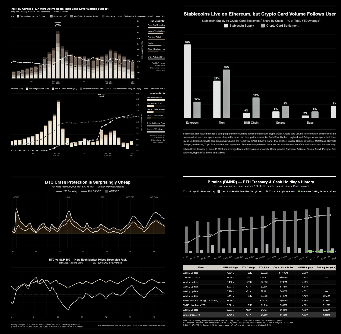
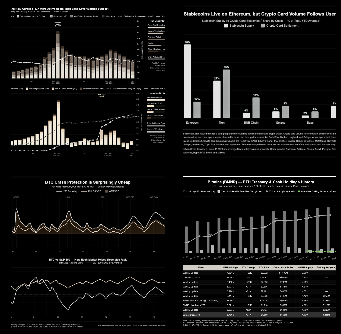
The $20 billion figure requires an interpretation of total revenue versus net revenue similar to any projected market volume statistic. The $20 billion figure includes pre- and in-tournament trading, with bettors placing approximately $5.7 billion in bets throughout the five weeks of the World Cup. Pre-tournament betting volume, representing approximately $14.3 billion wagered from January to the tournament's opening day on June 11th, encompasses the extended period during which markets on qualifying teams, group stage results, and the eventual champion are open and actively traded, often with significantly higher odds than markets on immediate match results.
The $5.7 billion in betting volume over the five weeks of the tournament established a transaction rate of approximately $1.14 billion per week throughout the tournament, a figure consistent with the weekly records that Kalshi and Polymarket reported separately during the same period. World Cup-related markets accounted for approximately 63% of total prediction market activity during that period, suggesting the tournament not merely added volume to an existing market but actually reoriented the entire prediction market ecosystem toward football outcomes throughout the event, while non-World Cup-related markets accounted for only 37% of activity despite the simultaneous presence of other US political, economic, and sports prediction markets.
The US and China lead the way, recording global participation.
Chainalysis noted user participation from every continent except Antarctica. The US and China accounted for the largest trading volumes, followed by Canada, Thailand, and the UK. Geographic distribution offers several key analytical aspects. The US leading in predicted betting volume for a global soccer tournament is counterintuitive, as historically, the US has generally shown less interest in soccer than most countries worldwide, but this reflects the launch of the Polymarket exchange in the US in mid-May, opening the platform to US retail users for the first time, with pent-up domestic demand coinciding with the World Cup. China's second-place presence despite its government restrictions on Bitcoin and cryptocurrency exchanges reflects the persistent reality that foreign access to blockchain-based applications operates via VPNs and offshore wallet infrastructure in volumes that Chinese regulators have yet to eliminate.
Canada and Thailand's inclusion in the top 5 reflects the tournament's host country effect — Canada is one of three host nations alongside the United States and Mexico, and its high per capita cryptocurrency usage is clearly evident in Southeast Asia. The UK's fifth place reflects the concentrated participation in the prediction market from sophisticated London-based financial investors who view political and sports prediction markets as genuine financial instruments rather than entertainment products.
$5.4 million from 400,000 e-wallets
Chainalysis has identified approximately $5.4 million in illicit funds flowing from sanctioned entities or other illicit sources. This $5.4 million illicit amount, compared to a total transaction volume of $20 billion, corresponds to an illicit risk ratio of approximately 0.027% by value—a significantly lower ratio than illicit risk in traditional cash-based betting markets and comparable to compliance rates in well-regulated traditional sports betting markets with established anti-money laundering (AML) frameworks.
The difference between the risk ratio by number of e-wallets (under 1%) and the risk ratio by dollar value (under 0.03%) suggests that the illicit e-wallets involved tend to be individuals with smaller balances rather than large-scale money laundering operations. A large-scale money laundering operation attempting to use a prediction market to conceal the source of funds would face the same transparency constraints that Chainalysis used to determine the $5.4 million figure: every transaction on the public blockchain is permanently recorded and can be attributed to the same e-wallet over time, making the participation of sophisticated illicit entities in the prediction market a counterproductive money laundering strategy. The 0.027% illicit value risk level accurately reflects this deterrent effect, coupled with the KYC implementations that some platforms, including Polymarket US, have undertaken.
Assessment and Conclusion
Chainalysis's report describes the World Cup as a validating moment for large-scale prediction market infrastructure, supported by trading results achieved prior to the report's release. Polymarket surpassed $1 billion in annual revenue just six weeks after launching its exchange in the US, with World Cup activity as a key driver. Kalshi recorded its highest-ever weekly open interest of $810 million throughout the tournament. Both platforms achieved record levels in a broader prediction market, and Chainalysis's $20 billion figure confirms that this market was indeed dominated by the World Cup throughout the tournament.
For regulators evaluating the CFTC's national event contract regulation, Chainalysis' compliance data is likely to be submitted as evidence during the August 27 comment period, the closing date of the public comment window on the regulation. The less than 1% illegal wallet rate and the correlation between identity verification and even lower illegal participation rates at FIFA Collect provide empirical benchmarks for what a market infrastructure geared toward compliance can achieve globally, potentially informing how the CFTC designs a verification and compliance framework for national event contract rules that will govern Kalshi, Polymarket, and future participants.
Disclaimer: The content in this article is for informational, research, data analysis, and reference purposes only regarding the cryptocurrency market. All opinions, assessments, forecasts, or opinions reflect the author's perspective at the time of publication and do not constitute investment advice, solicitations for buying or selling, trading recommendations, advertising, marketing, or promotion of any financial products, services, or cryptocurrencies. Mentions of projects, tokens, protocols, exchanges, wallets, or cryptocurrency service providers (CASPs) are for research, analysis, or informational purposes only and should not be construed as endorsements, recommendations, or guarantees in any way. HCCVenture does not broker, advertise, market, promote, or connect users in Vietnam with any cryptocurrency services from CASPs. HCCVenture does not accept asset custody, investment mandates, manage assets, or execute transactions on behalf of clients. All investment decisions are made entirely through the reader's own research (DYOR), evaluation, and responsibility; HCCVenture is not liable for any losses or damages arising from the use of or reliance on the information presented in this article.
Compiled and analyzed by HCCVenture
Join our information channels: https://link3.to/holdcoincventure
Explore HCCVenture group
HCCVENTURE QUANT JSCO
© 2026 HCCVENTURE. ALL COPYRIGHTS RESERVED.


Connect with us
Popular content
Contact to us
Address: 8th Floor, Bach Dang Complex Building, 50 Bach Dang Street, Hai Chau Ward, Da Nang City, Vietnam.
Phone: 1900 1509
Gmail : sp_contact@hccventure.com
Disclaimer: The information on this website is for informational purposes only and should not be considered investment advice. We are not responsible for any risks or losses arising from investment decisions based on the content here.
TERMS AND CONDITIONS • CUSTOMER PROTECTION POLICY
ANALYTICAL AND NEWS CONTENT IS COMPILED AND PROVIDED BY EXPERTS IN THE FIELD OF DIGITAL FINANCE AND BLOCKCHAIN BELONGING TO HCCVENTURE ORGANIZATION, INCLUDING OWNERSHIP OF THE CONTENT.
RESPONSIBLE FOR MANAGING ALL CONTENT AND ANALYSIS: HCCVENTURE FOUNDER - TRUONG MINH HUY
Read warnings about scams and phishing emails — REPORT A PROBLEM WITH OUR SITE.