

The FBI has issued a warning about fake FBI tokens on the Tron network
The Federal Bureau of Investigation (FBI) has issued a public warning about a series of fraudulent tokens circulating on the Tron blockchain, impersonating the FBI itself.
3/23/20262 min read
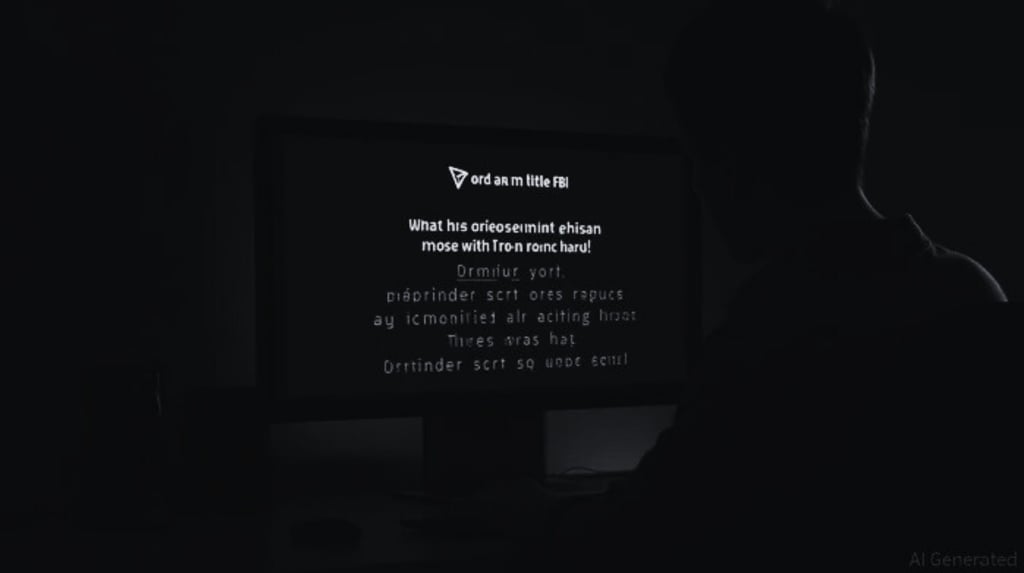
Warning from the FBI
The Federal Bureau of Investigation (FBI) has issued a warning about fake FBI tokens on the Tron blockchain, drawing attention to a growing wave of scams exploiting trust in official institutions . These tokens are designed to appear legitimate, using the FBI's name, branding, or associated narrative—to trick users into believing they are trading a government-backed or endorsed digital asset.
These tokens are usually named something like:
FBI Token
FBI Coin
FBI-TRX
Federal Bureau Token
This incident highlights a broader reality in the cryptocurrency world: scammers are increasingly exploiting credibility, not just anonymity, to target users.
How the scam works
These fraudulent tokens often mimic official entities by using recognizable names like “ FBI ,” combined with professional-looking branding or messaging. Once deployed on the chain, they are promoted through social media campaigns, fake announcements or airdrops, phishing websites, or direct messages to potential victims.
Users can be tricked into buying worthless tokens, connecting wallets to malicious platforms, or signing transactions that result in lost funds. Because blockchains like Tron allow for low-cost token creation, scammers can quickly launch and distribute these assets on a large scale.
Why is Tron a target of attack?
The Tron network is widely used for high-volume, low-cost transactions, particularly those involving stablecoins. Its accessibility and speed make it attractive not only for legitimate payments, but also for fraudulent activities that rely on rapid distribution and minimal fees.
Furthermore, Tron's large user base, especially in emerging markets, provides a broad target audience, increasing the effectiveness of impersonation campaigns.
What makes this type of scam particularly dangerous is its reliance on credibility and trust. By impersonating a well-known organization like the FBI, attackers exploit psychological biases. The shift from purely technical scams to large-scale social engineering marks an evolution in how cryptocurrency fraud operates.
How users can protect themselves.
To avoid becoming a victim of impersonation scams, users should:
Never trust any tokens that claim to come from the FBI, IRS, SEC , or any other U.S. government agency.
Only verify official domains through fbi.gov (no cryptocurrency tokens exist).
Use tools like Tronscan or SunSwap to check the liquidity lock/burn status before buying any new tokens.
Report suspicious tokens directly on Tronscan (mark them as scams).
If you have already made a transaction: Do not send additional funds to “ recovery ” addresses .
Our review
This wave of impersonation scams is part of a broader trend: names of state-sponsored or state-affiliated entities ( FBI, CIA, SEC, IRS, DOJ ) are among the most effective bait for fear-based scams in the cryptocurrency space. Stay safe — if it claims to be from the FBI and involves tokens, it's almost certainly a scam. The Federal Bureau of Investigation (FBI) does not actually issue cryptocurrency, hold pre-sales, or reward people with tokens on Tron (or any blockchain).
Disclaimer: The information presented in this article is the author's personal opinion in the field of cryptocurrency. This is not financial or investment advice. All investment decisions should be based on careful consideration of your personal portfolio and risk tolerance. The views expressed in this article do not represent the official position of the platform. We advise readers to conduct their own research and consult with experts before making any investment decisions.
Compiled and analyzed by HCC Venture
Follow HCCVenture here: https://link3.to/holdcoincventure
Explore HCCVenture group
HCCVENTURE QUANT JSCO
© 2026 HCCVENTURE. ALL COPYRIGHTS RESERVED.


Connect with us
Popular content
Contact to us
Address: 8th Floor, Bach Dang Complex Building, 50 Bach Dang Street, Hai Chau Ward, Da Nang City, Vietnam.
Phone: 1900 1509
Gmail : sp_contact@hccventure.com
Disclaimer: The information on this website is for informational purposes only and should not be considered investment advice. We are not responsible for any risks or losses arising from investment decisions based on the content here.
TERMS AND CONDITIONS • CUSTOMER PROTECTION POLICY
ANALYTICAL AND NEWS CONTENT IS COMPILED AND PROVIDED BY EXPERTS IN THE FIELD OF DIGITAL FINANCE AND BLOCKCHAIN BELONGING TO HCCVENTURE ORGANIZATION, INCLUDING OWNERSHIP OF THE CONTENT.
RESPONSIBLE FOR MANAGING ALL CONTENT AND ANALYSIS: HCCVENTURE FOUNDER - TRUONG MINH HUY
Read warnings about scams and phishing emails — REPORT A PROBLEM WITH OUR SITE.