
The EU is cutting off funding from Russia through new sanctions
The European Union is preparing a new round of sanctions aimed at cutting off Russia's access to international funds, tightening restrictions explicitly on both traditional banking systems and cryptocurrency channels.
2/9/20262 min read
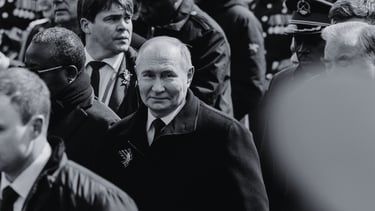
Why should the EU cut off trade with Russia?
The European Union is preparing its 15th package of sanctions against Russia , for the first time explicitly targeting cryptocurrency flows and further restricting access to the EU's financial infrastructure.
The new measures – expected to be formally adopted by mid-February – aim to close remaining loopholes that allow Russia to circumvent existing restrictions on banking, payments, and trade finance. This sanctions package is a direct response to:
The continuous circumvention of regulations through cryptocurrency channels ( estimated $30-50 billion USD to be stolen through stablecoins and Bitcoin by 2025 )
The increased use of Russian proxy forces in the UAE , Turkey , Hong Kong , and Central Asia.
Pressure from G7 partners (especially the US and the UK) to close remaining loopholes ahead of the second anniversary of the full-scale invasion.
The upcoming EU budget negotiations – sanctions linked to providing more funding for Ukraine.
The European Commission aims to finalize the list of entities and legal instruments by February 24, 2026, the anniversary of the invasion.
Impact on the Russian financial system
For Russia, these measures further exacerbate the already strained state of its financial ecosystem. Due to limited access to Western capital markets, Russia is increasingly reliant on alternative payment systems, regional banking partners, and digital assets to maintain trade and liquidity.
By targeting both banks and cryptocurrencies simultaneously, the EU aims to narrow Russia's financing options, increase transaction costs, and reduce flexibility in cross-border payments.
Cryptocurrency companies based in the EU will face a greater compliance burden, including stricter KYC processes, transaction screening, and sanctions reporting. Tolerance for ambiguity—particularly around decentralized or non-custodial services—is rapidly diminishing.
A signal sent to regulatory authorities.
The EU's move sends a strong signal beyond Russia. It shows that major jurisdictions are willing to treat cryptocurrency infrastructure as critical financial infrastructure, rather than a secondary legal issue. This increases the likelihood of further coordination with the US, UK, and allies on cryptocurrency-related sanctions.
In turn, the market must account for higher compliance risks and fragmentation of jurisdiction—especially for globally accessible digital assets.
Despite tighter controls, sanctions are rarely absolute. Peer-to-peer transfers, security tools, and uncooperative jurisdictions remain challenges. However, by increasing friction across both fiat and cryptocurrency systems, the EU increases costs, complexity, and the ability to detect loopholes.
Our review
The EU's decision to explicitly ban cryptocurrency services for Russians and tighten enforcement of the Travel Rule is the strongest signal yet that Brussels views digital assets as a channel for circumventing sanctions that must be eliminated. Combined with existing SWIFT bans and banking restrictions, these measures aim to make it significantly more difficult for Russia to move funds outside of sanctioned channels.
For the global cryptocurrency market, the impact has been largely contained – Russian retail and institutional money has shifted to domestic platforms following previous restrictions. The bigger story is about geopolitics – the G7 continues to tighten its financial noose around Russia, and cryptocurrencies are no longer seen as an untouchable exception.
Disclaimer: The information presented in this article is the author's personal opinion in the field of cryptocurrency. This is not financial or investment advice. All investment decisions should be based on careful consideration of your personal portfolio and risk tolerance. The views expressed in this article do not represent the official stance of the platform. We recommend that readers conduct their own research and consult with experts before making any investment decisions.
Compiled and analyzed by HCCVenture
Follow HCCVenture here: https://link3.to/holdcoincventure
Explore HCCVenture group
HCCVENTURE QUANT JSCO
© 2026 HCCVENTURE. ALL COPYRIGHTS RESERVED.


Connect with us
Popular content
Contact to us
Address: 8th Floor, Bach Dang Complex Building, 50 Bach Dang Street, Hai Chau Ward, Da Nang City, Vietnam.
Phone: 1900 1509
Gmail : sp_contact@hccventure.com
Disclaimer: The information on this website is for informational purposes only and should not be considered investment advice. We are not responsible for any risks or losses arising from investment decisions based on the content here.
TERMS AND CONDITIONS • CUSTOMER PROTECTION POLICY
ANALYTICAL AND NEWS CONTENT IS COMPILED AND PROVIDED BY EXPERTS IN THE FIELD OF DIGITAL FINANCE AND BLOCKCHAIN BELONGING TO HCCVENTURE ORGANIZATION, INCLUDING OWNERSHIP OF THE CONTENT.
RESPONSIBLE FOR MANAGING ALL CONTENT AND ANALYSIS: HCCVENTURE FOUNDER - TRUONG MINH HUY
Read warnings about scams and phishing emails — REPORT A PROBLEM WITH OUR SITE.