


The CLARITY Act achieves an important breakthrough with VASP protection measures
Senator Cynthia Lummis has reached an agreement on the amendment of the CLARITY Act, which both protects software developers and strengthens the authority of law enforcement agencies over crimes related to digital assets.
5/12/20264 min read
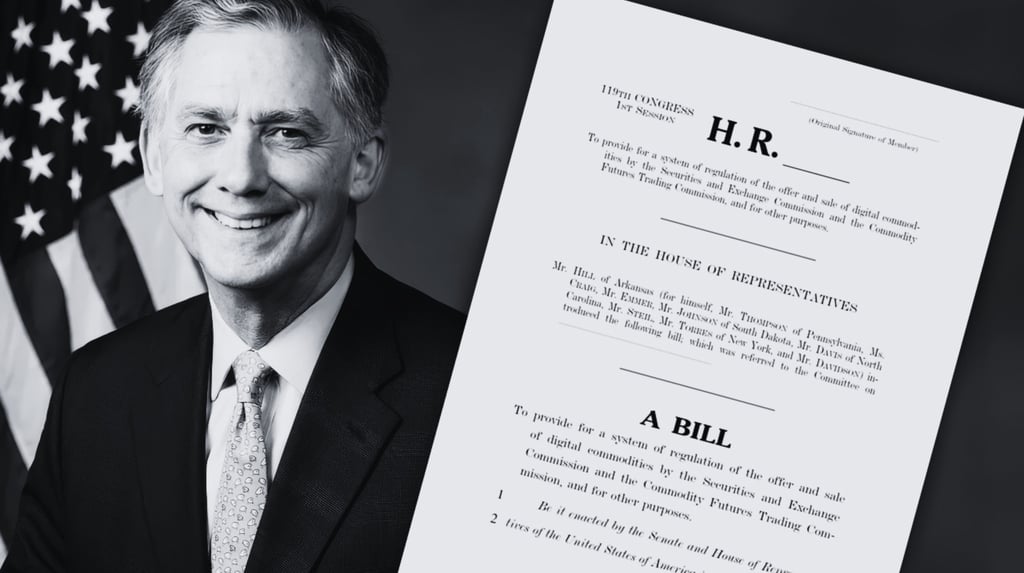
The fundamental contradiction between innovation and execution
The CLARITY Act has faced a core challenge since its inception: how to encourage innovation in decentralized finance (DeFi) while preventing criminals from taking advantage of that innovation to launder money, evade sanctions and other illegal activities.
Developer protection issues:
DeFi developers, validators and network node operators have been operating in a vague legal situation for many years. The current money transfer laws, especially Section 1960 of Title 18, are written for centralized financial intermediaries such as banks, money service businesses, payment processors who hold customers' money and can implement "know your customers" (KYC) and anti-money laundering (AML) controls.
But DeFi protocols work differently: developers write open source code that anyone can use; smart contracts are automatically executed on the blockchain; authenticators and node operators provide infrastructure without controlling the user's money or identity. The application of traditional transfer obligations to these participants creates impossible compliance requirements and legal liability for activities that they do not control.
The deterrent effect was very serious. After Tornado Cash developer, Roman Storm, was convicted of conspiring to run an unlicensed money transfer business in August 2025, developers began to leave US jurisdiction, move projects to more friendly legal environments, or completely abandon DeFi development. The prosecution sent a clear message: writing code that criminals use, will face federal charges regardless of whether you know, control or participate in those crimes or not.
Concerns of law enforcement agencies:
From the perspective of law enforcement agencies, DeFi protocols have become an important infrastructure for sophisticated financial crimes. Mixed services hide the origin of transactions; decentralized exchanges allow to evade sanctions; cross-chain bridges facilitate large-scale money laundering. When prosecutors cannot indemand the developers and operators who built and maintained these systems, crime operates without punishment.
Police and prosecutor groups warn that over-extresting developer protection will create legal immunity for those who intentionally facilitate illegal activities. The concern is not about truly innocent developers testing decentralized protocols, but about operators building special platforms for criminal purposes or continuing to operate despite knowing that their systems primarily serve illegal purposes.
Grassley-Lummis compromise: Solving difficult problems
The agreement announced today seems to have solved this difficult problem through careful distinctions:
Protected operation - Safety terms:
Based on the combined language Section 604 of the Blockchain Regulatory Assurance Act (BRCA), the compromise provides safety protection for:
1 - Developers who do not keep money: Those who create and publish open source software without keeping users' money or controlling how users deploy software.
2 - Uncontrolled node validators and operators: Infrastructure providers verify transactions or operate network nodes without exercising arbitrary control over user's activities or money.
3 - Auxiliary service providers: Those who provide communication protocols, data availability or other infrastructure services that are not related to holding or controlling.
The security clause protects these parties from being classified as financial institutions subject to the obligations of the Banking Security Act, money transfer licensing or related regulatory requirements—unless they cross boundaries defined as holding or controlling.
Unprotected activities - Strengthen enforcement:
Grassley's amendments allow prosecutors to make anti-money laundering charges against subjects:
1 - Intentionally facilitating criminal activity: Developers or operators have a realistic understanding that their platform mainly serves money laundering, evasion of sanctions or other crimes.
2 - Implement effective control: Executives maintain the administrator key, the ability to freeze/confiscate, filter transactions or other forms of actual control over users' money or activities.
3 - Provide custody services: Etities that hold or control users' assets, even when using DeFi protocols on the server side.
4 - Participating in financial intermediaries: Subjects that connect buyers and sellers, provide professional liquidity or operate as traditional financial intermediaries by using cryptocurrency infrastructure.
Bipartisan motivation
This breakthrough took place in the context of a signal of support from the executive branch. Patrick Witt, White House adviser on digital assets, stated earlier this month that concerns about Article 1960 are "very close" to resolution and that the protection of software developers is "essential" to bring developers back to the United States.
Acting Attorney General Todd Blanche previously pointed out that developers who are not involved in the offense will not be prosecuted, which is in line with the Justice Department's priorities towards offenders rather than source code authors. This commitment to the right to prosecute, combined with a statute of immunity, provides double-layer protection: even if prosecutors can theoretically make charges, they have signaled that they would not do so without evidence of involvement in criminal activity. The consensus between Congress, the White House and the Department of Justice represents a rare consensus on cryptocurrency policy, showing that the compromise reflects the real policy convergence rather than the expression of political stance.
CLARITY as a constitutional codification
From this point of view, CLARITY's safety protection provisions do not grant developers immunity from legal prosecution—but they recognize constitutional limits on the prosecution of source code disclosure. Basically, this law codifies the constitutional protections that the courts can eventually demand.
This statement reinforces the argument for the safeguard clause: it is not a special treatment for cryptocurrency developers, but an admission that the prosecution of source code disclosure raises serious concerns about the First Amendment that Congress should address through clear legal boundaries.
Evaluation and conclusion
The Grassley-Lummis agreement on developer protection measures under the CLARITY Act and law enforcement tools is not only a technical legislative compromise, but also proves that even in an era of deep political division, a reasonable policy consensus can still be reached on complex issues when stakeholders engage in goodwill negotiations.
This compromise does not satisfy the absolutists on both sides: some developers want complete immunity regardless of whether they know or control; some law enforcement groups want unlimited prosecution. But it reflects a protectable policy balance: protecting legitimate innovation while maintaining enforcement against real bad guys.
Whether this balance is sustainable or not depends on the implementation. The language of the law must be clear enough so that prosecutors, defense lawyers and judges can apply it consistently. Regulatory guidelines must strengthen, not weaken legislative intentions. Initial enforcement actions must prove that the safe zone is in effect and will not be sued to the point of nonsense.
Disclaimer: The information presented in this article is the author's personal opinion in the field of cryptocurrencies. This is not financial or investment advice at all. Every investment decision should be based on careful consideration of your personal portfolio and risk tolerance. The opinion in the article does not represent the official position of the platform. We recommend that readers do their own research and consult experts before making any investment decisions.
Synthesized and analyzed by HCCVenture
Follow HCCVenture organization here: https://link3.to/holdcoincventure
Explore HCCVenture group
HCCVENTURE QUANT JSCO
© 2026 HCCVENTURE. ALL COPYRIGHTS RESERVED.


Connect with us
Popular content
Contact to us
Address: 8th Floor, Bach Dang Complex Building, 50 Bach Dang Street, Hai Chau Ward, Da Nang City, Vietnam.
Phone: 1900 1509
Gmail : sp_contact@hccventure.com
Disclaimer: The information on this website is for informational purposes only and should not be considered investment advice. We are not responsible for any risks or losses arising from investment decisions based on the content here.
TERMS AND CONDITIONS • CUSTOMER PROTECTION POLICY
ANALYTICAL AND NEWS CONTENT IS COMPILED AND PROVIDED BY EXPERTS IN THE FIELD OF DIGITAL FINANCE AND BLOCKCHAIN BELONGING TO HCCVENTURE ORGANIZATION, INCLUDING OWNERSHIP OF THE CONTENT.
RESPONSIBLE FOR MANAGING ALL CONTENT AND ANALYSIS: HCCVENTURE FOUNDER - TRUONG MINH HUY
Read warnings about scams and phishing emails — REPORT A PROBLEM WITH OUR SITE.