

The CFTC and SEC announce a joint initiative with the “Crypto Project”
The Commodity Futures Trading Commission (CFTC) and the U.S. Securities and Exchange Commission (SEC) have jointly announced “Project Crypto,” a collaborative initiative aimed at enhancing regulatory clarity, oversight, and cooperation.
2/2/20262 min read
The core objective of the Crypto Project
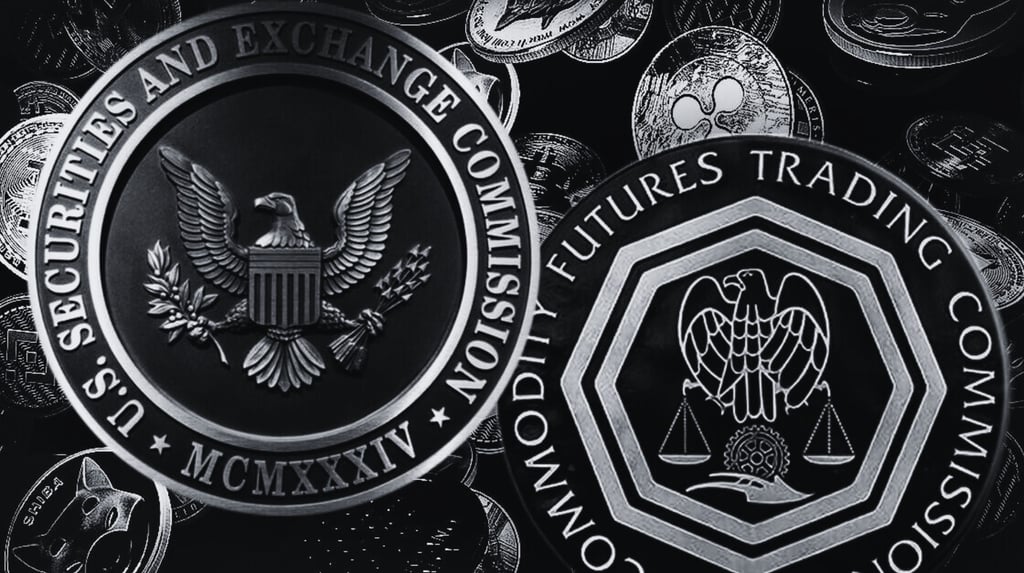
The U.S. Commodity Futures Trading Commission (CFTC) and the U.S. Securities and Exchange Commission (SEC) have jointly announced Project Crypto, a collaborative initiative aimed at developing a unified regulatory approach for digital assets.
Develop a common classification framework to determine whether a digital asset is a security (under the jurisdiction of the SEC) or a commodity (under the jurisdiction of the CFTC), with a particular focus on Layer-1 tokens, stablecoins, and tokenized physical assets (RWA).
Create a “one-stop” registration and licensing portal for cryptocurrency platforms, minimizing duplicate filings and conflicting requirements. Issue common guidance on custody, staking, DeFi protocols, and self-custodialism within the next 12-18 months. Establish a joint enforcement coordination team to handle cross-jurisdictional cases and minimize parallel investigations.
Pilot a “legal framework” for emerging products (cryptographic shares, yield-generating stablecoins, decentralized exchanges with governance tokens).
This announcement marks the most significant collaboration between the two agencies since their 2021 joint statement on the status of equities versus commodities — and comes amid intense pressure from Congress, the Trump administration, and industry groups to resolve long-standing disputes.
Power has been balanced.
Historically, the SEC and CFTC have had differing approaches to cryptocurrencies, sometimes sending conflicting signals to the market. The Crypto project demonstrates the realization that competition between agencies is counterproductive in a continuously operating, global, and multi-asset market.
This consensus doesn't eliminate the differences in jurisdiction—but it reduces the ambiguity, which the market often judges more harshly than the regulation itself.
For exchanges and issuers, this initiative could unlock long-awaited clarity on listing standards, disclosure, custody, and derivative products. Developers could benefit from clearer design constraints, allowing them to build products that adhere to the architecture rather than having to readjust after launch.
The risks remain.
Clearer regulatory coordination is particularly important for institutional adoption. Asset managers, banks, and pension funds need predictable rules for deploying capital on a large scale. A unified stance between the SEC and CFTC would strengthen the argument for regulated cryptocurrency products, including ETFs, tokenized securities, and regulated on-chain markets.
Therefore, the Crypto Project can accelerate the integration of digital assets into mainstream financial infrastructure.
Coordination alone won't solve all the problems. Without legal updates, agencies remain bound by laws written long before digital assets existed. There's also a risk that unification could lead to more effective enforcement without commensurate support for innovation, depending on how it's implemented.
Our review
The Crypto project is the strongest indication yet that the U.S. regulatory environment for digital assets is shifting from confrontational enforcement to structured coordination. While not a complete “21st-century financial framework” (as some industry advocates hoped), it is the most concrete step toward resolving the overlapping jurisdictions between the SEC and CFTC that have paralyzed progress for years.
For Bitcoin and major Layer-1 tokens, this is clearly positive: reduced uncertainty will boost institutional adoption, ETF approvals, and fund allocations. For the broader ecosystem—especially DeFi, staking, and tokenized RWAs—the next 12-18 months will be a do-or-die period: clear rules could unleash trillions of dollars in capital; continued ambiguity could push operations overseas.
Disclaimer: The information presented in this article is the author's personal opinion in the field of cryptocurrency. This is not financial or investment advice. All investment decisions should be based on careful consideration of your personal portfolio and risk tolerance. The views expressed in this article do not represent the official stance of the platform. We recommend that readers conduct their own research and consult with experts before making any investment decisions.
Compiled and analyzed by HCCVenture
Follow HCCVenture here: https://link3.to/holdcoincventure
Explore HCCVenture group
HCCVENTURE QUANT JSCO
© 2026 HCCVENTURE. ALL COPYRIGHTS RESERVED.


Connect with us
Popular content
Contact to us
Address: 8th Floor, Bach Dang Complex Building, 50 Bach Dang Street, Hai Chau Ward, Da Nang City, Vietnam.
Phone: 1900 1509
Gmail : sp_contact@hccventure.com
Disclaimer: The information on this website is for informational purposes only and should not be considered investment advice. We are not responsible for any risks or losses arising from investment decisions based on the content here.
TERMS AND CONDITIONS • CUSTOMER PROTECTION POLICY
ANALYTICAL AND NEWS CONTENT IS COMPILED AND PROVIDED BY EXPERTS IN THE FIELD OF DIGITAL FINANCE AND BLOCKCHAIN BELONGING TO HCCVENTURE ORGANIZATION, INCLUDING OWNERSHIP OF THE CONTENT.
RESPONSIBLE FOR MANAGING ALL CONTENT AND ANALYSIS: HCCVENTURE FOUNDER - TRUONG MINH HUY
Read warnings about scams and phishing emails — REPORT A PROBLEM WITH OUR SITE.