


Tether plans to launch GELT stablecoin with the support of the Georgia government
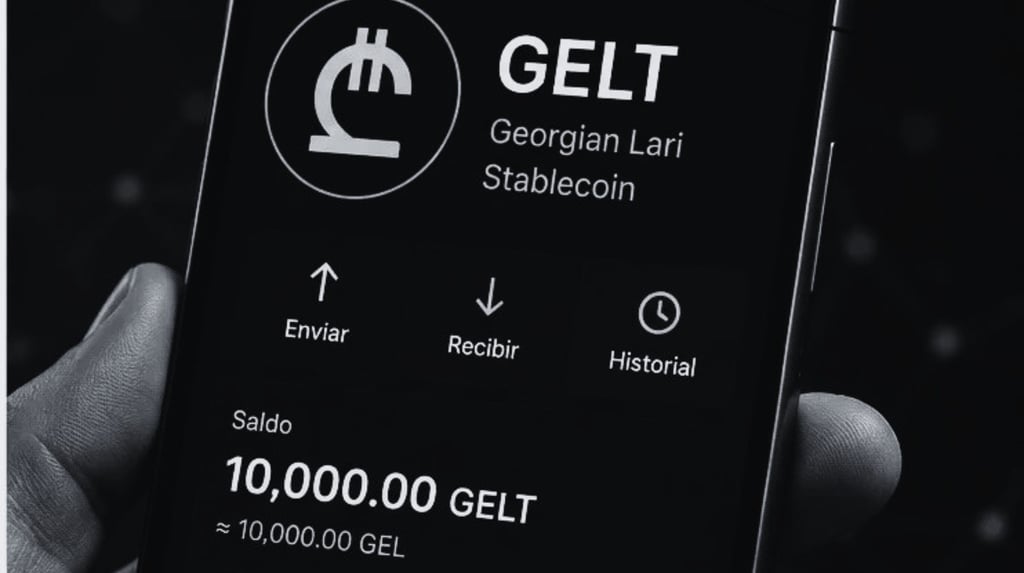
Tether announced plans to launch GELT, a stablecoin pegged to the Georgian lari, with the cooperation of the Government of Georgia and the National Bank of Georgia.
5/27/20264 min read
Georgia's stablecoin regulatory legal framework
The launch of GELT operates under a comprehensive legal framework for digital assets approved by the National Bank of Georgia in March 2026, establishing detailed requirements for the issuance of stablecoins by virtual asset service providers, based largely on the US GENIUS Act, regulations on the European Union's cryptocurrency asset market and the rules of the Dubai Virtual Asset Authority.
This legal framework requires prior written approval from the National Bank before issuing stablecoins, requires adequate reserves with assets with verified liquidity through external audits, forces issuers to prepare offering documents that meet disclosure standards and impose registration requirements on non-VASP entities that want to offer stablecoins in the Georgia market. The legal architecture reflects a deliberate strategy to adjust domestic standards in accordance with the emerging international consensus instead of pursuing an individual approach, facilitating the recognition of future potential and cross-border interoperability.
Tether describes Georgia's regulatory framework as "one of the most advanced in the region", emphasizing provisions that ensure reserve control, anti-money laundering requirements and holder protection mechanisms to address core concerns that regulators around the globe have raised about the operation of stablecoins.
The praise reflects Tether's strategic shift to regulatory compliant products after years of operations mainly abroad with minimal legal oversight. The company realizes that sustainable growth, especially in large markets, requires a willingness to accept comprehensive supervision even if it imposes operational restrictions or disclosure obligations that the company previously opposed. The partnership with Georgia allows Tether to establish a regulatory compliance template for national currency stablecoins, which can be replicated in other smaller jurisdictions looking for blockchain payment infrastructure without the resources to develop complex legal frameworks independently.
Structure and expected use cases of GELT
Tether describes GELT as "the digital form representing the Georgian lari", designed to support lower transaction costs, faster payments and programmable payments across Georgia's digital financial system. However, this announcement does not disclose important technical details, including specific blockchain networks that support tokens, accurate reserve custody agreements, direct exchange rights for token holders and specific launch times.
This sketchy technical disclosure is in contrast to Tether's full documentation for the USDT main product and the recently launched USAT product, which may reflect ongoing negotiations with the Georgian authorities on specific operational details or strategic decisions to announce cooperation before finalizing the implementation mechanism.
The main expected use cases focus on cross-border trade and domestic digital payments, with GELT allowing near-instant payments for transactions that currently take many days to complete through agent banking relationships that connect Georgia's financial system to international payment networks.
For Georgian businesses participating in regional trade, especially with neighboring countries Armenia, Azerbaijan and Turkey, GELT can facilitate faster payments and reduce transaction costs compared to traditional electronic transfers that require many intermediary banks, each of which charges fees. The money transfer corridor has a particularly attractive application because many Georgians work abroad and send money home, while payments based on blockchain technology have the potential to bring outstanding economic efficiency compared to traditional money transfer services that charge a percentage on relatively small transfers.
Blockchain-based currency strategy of small countries
Georgia's GELT partnership represents a broader phenomenon in which smaller countries, lacking dominant international currencies, are looking into whether blockchain infrastructure can enhance monetary sovereignty and economic competitiveness, despite limited traditional financial influence.
Countries including El Salvador with the adoption of Bitcoin, the Central African Republic with the short-term acceptance of Bitcoin before a reversal, and many Caribbean countries learning about the central bank's digital currency have pursued blockchain-based monetary strategies, driven by a different combination of true modernization ambitions, political position, lobbying of the cryptocurrency industry and opportunity efforts to collect attract digital asset businesses through leniency regulation.
The basic question is whether blockchain-based monetary strategies really serve the economic interests of small countries or mainly benefit private cryptocurrency companies when achieving legal validation and market access through partnerships with the government that may not bring the promised benefits to local people.
El Salvador's adoption of Bitcoin has attracted significant international and tourism attention from cryptocurrency enthusiasts, but has not achieved wide acceptance of domestic traders or significantly improved financial accessibility for people without bank accounts, while causing financial costs through the development of compulsory Bitcoin infrastructure and loss of access to IMF loans due to the skepticism of international financial organization on the integration of cryptocurrencies into the national monetary system.
Evaluation and conclusion
The collaboration between Georgia and Tether establishes a potential model for government-certified stablecoin partnerships, which could be replicated in other small countries looking for blockchain payment infrastructure without the resources or technical capabilities to develop central bank digital currencies independently. This model provides the government with regulatory oversight and policy influence while leveraging the private sector's established operational expertise and infrastructure, capable of bringing a risk-profit profile that is superior to fully government-controlled CBDC projects, requiring large investment and ongoing maintenance.
The success or failure of GELT will significantly affect whether other countries pursue similar partnerships with reputable stablecoin issuers, instead of developing domestic solutions or keeping a skeptical distance with cryptocurrency integration. If GELT achieves significant acceptance for cross-border payments and domestic transactions while maintaining stability and regulatory compliance, other small countries may consider government-certified stablecoins as a viable way to modernize currency. Conversely, if GELT does not gain traction, has technical problems or creates regulatory complications, the attractiveness of the model will decrease and countries may return to traditional payment system upgrade methods or wait for central bank digital currency technology to mature.
Disclaimer: The information presented in this article is the author's personal opinion in the field of cryptocurrencies. This is not financial or investment advice at all. Every investment decision should be based on careful consideration of your personal portfolio and risk tolerance. The opinion in the article does not represent the official position of the platform. We recommend that readers do their own research and consult experts before making any investment decisions.
Synthesized and analyzed by HCCVenture
Follow HCCVenture organization here: https://link3.to/holdcoincventure
Explore HCCVenture group
HCCVENTURE QUANT JSCO
© 2026 HCCVENTURE. ALL COPYRIGHTS RESERVED.


Connect with us
Popular content
Contact to us
Address: 8th Floor, Bach Dang Complex Building, 50 Bach Dang Street, Hai Chau Ward, Da Nang City, Vietnam.
Phone: 1900 1509
Gmail : sp_contact@hccventure.com
Disclaimer: The information on this website is for informational purposes only and should not be considered investment advice. We are not responsible for any risks or losses arising from investment decisions based on the content here.
TERMS AND CONDITIONS • CUSTOMER PROTECTION POLICY
ANALYTICAL AND NEWS CONTENT IS COMPILED AND PROVIDED BY EXPERTS IN THE FIELD OF DIGITAL FINANCE AND BLOCKCHAIN BELONGING TO HCCVENTURE ORGANIZATION, INCLUDING OWNERSHIP OF THE CONTENT.
RESPONSIBLE FOR MANAGING ALL CONTENT AND ANALYSIS: HCCVENTURE FOUNDER - TRUONG MINH HUY
Read warnings about scams and phishing emails — REPORT A PROBLEM WITH OUR SITE.