

Spot XRP ETFs currently hold over 1.4% of the total XRP supply
XRP Spot ETFs are believed to currently hold over 1.4% of the total circulating supply of XRP, marking a significant milestone in the institutionalization of this asset.
6/18/20263 min read
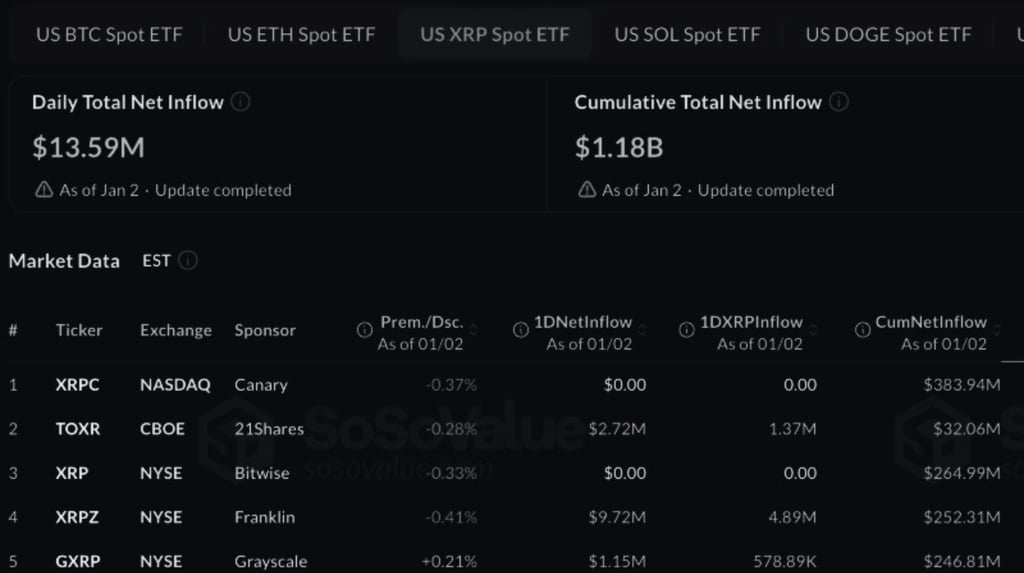
XRP Treasury is receiving a lot of attention.
For many years, the majority of demand for XRP came from individual investors and the crypto-native community. However, the emergence of Spot ETFs has created an entirely new source of demand from investment funds, financial institutions, and traditional asset managers. Notably, the amount of XRP held by ETFs tends to be much more stable than short-term speculative capital flows in the spot market. When investors buy fund units, the ETF is obligated to purchase and deposit a corresponding amount of XRP to secure the underlying asset. This process creates real buying pressure on the market, rather than just derivative trading or leverage.
The total XRP holdings of the largest spot XRP ETFs, led by BlackRock, Fidelity, 21Shares, and Bitwise, now exceed 7.2 billion XRP tokens, worth approximately $18.5–$19.2 billion at current market prices. This makes XRP ETFs one of the fastest-growing institutional products in the digital asset space, second only to spot Bitcoin and Ethereum ETFs in terms of adoption rate since launch.
Rapid accumulation since launch
The dramatic increase in ETF holdings has occurred in just over two months since the first spot XRP ETFs began trading in early 2026. Key factors include:
Strong inflows from institutions such as BlackRock's iShares XRP Trust and Fidelity's Wise Origin XRP Fund have consistently led weekly inflows, attracting capital from hedge funds, registered investment advisors, and family offices seeking diversification in cross-border payments and utility tokens.
The settlement of Ripple's protracted lawsuit with the SEC, coupled with the clearer classification of XRP as a non-securities asset in secondary market trading, has removed a major hurdle and opened the door to broader institutional participation. The increasing practical use of XRP and XRP Ledger for remittances, tokenized assets, and business payments has differentiated it from purely speculative tokens, attracting long-term allocators.
The circulating supply may be restricted.
Bitcoin's history shows that ETFs typically don't just accumulate a small fraction of the supply. As institutional capital flows accelerate, the amount of assets locked in these funds can increase rapidly over time. This reduces the number of tokens available on the trading market, directly impacting the supply and demand structure. If the current trend continues, XRP ETFs could gradually become one of the largest holders of the network, similar to the role Bitcoin Spot ETFs currently play in the BTC market.
Many investment funds are constrained by internal regulations or legal requirements that prevent them from directly holding crypto. ETFs have largely addressed this issue by allowing institutions to access digital assets through the same trading, custody, and reporting systems they have used for decades.
Significance for the XRP ecosystem
The inflow of capital into ETFs provides a stable, regulated trading mechanism, reducing reliance on volatile retail capital flows. This has helped stabilize XRP during periods of general market weakness.
The increased institutional ownership is expected to further drive growth on the XRP Ledger, particularly in tokenized risk assets (RWA), stablecoin payments, and enterprise use cases. Several banks and payment service providers have expressed interest in further leveraging the tool.
The success of spot XRP ETFs strengthens the argument for other key tokens receiving similar treatment, potentially accelerating the approval process for additional products. This development reinforces the narrative of maturing institutional infrastructure and helps connect traditional finance with blockchain-based assets.
Assessment and Conclusion
The rapid growth of spot XRP ETFs, accounting for over 1.4% of the total supply in such a short period, demonstrates potential demand from institutions awaiting legal clarity. As these products mature and more capital flows in, XRP is shifting from a primarily individual investor-driven asset to one with a more solid foundation for institutions. This development could play a crucial role in shaping the next phase of cryptocurrency market development, particularly in the areas of payments, crypto finance, and cross-border payments.
Disclaimer: The information presented in this article is the author's personal opinion in the field of cryptocurrencies. This is not financial or investment advice at all. Every investment decision should be based on careful consideration of your personal portfolio and risk tolerance. The opinion in the article does not represent the official position of the platform. We recommend that readers do their own research and consult experts before making any investment decisions.
Synthesized and analyzed by HCCVenture
Follow HCCVenture organization here: https://link3.to/holdcoincventure
Explore HCCVenture group
HCCVENTURE QUANT JSCO
© 2026 HCCVENTURE. ALL COPYRIGHTS RESERVED.


Connect with us
Popular content
Contact to us
Address: 8th Floor, Bach Dang Complex Building, 50 Bach Dang Street, Hai Chau Ward, Da Nang City, Vietnam.
Phone: 1900 1509
Gmail : sp_contact@hccventure.com
Disclaimer: The information on this website is for informational purposes only and should not be considered investment advice. We are not responsible for any risks or losses arising from investment decisions based on the content here.
TERMS AND CONDITIONS • CUSTOMER PROTECTION POLICY
ANALYTICAL AND NEWS CONTENT IS COMPILED AND PROVIDED BY EXPERTS IN THE FIELD OF DIGITAL FINANCE AND BLOCKCHAIN BELONGING TO HCCVENTURE ORGANIZATION, INCLUDING OWNERSHIP OF THE CONTENT.
RESPONSIBLE FOR MANAGING ALL CONTENT AND ANALYSIS: HCCVENTURE FOUNDER - TRUONG MINH HUY
Read warnings about scams and phishing emails — REPORT A PROBLEM WITH OUR SITE.