

South Korean financial regulators have dealt an unprecedented blow to the Bithumb exchange
The Korean Financial Services Commission (FSC) and the Financial Intelligence Unit (FIU) have officially announced a severe penalty decision against Bithumb, with a fine of up to 41 billion won (approximately $30 million).
3/17/20262 min read
Taking drastic action against a major exchange
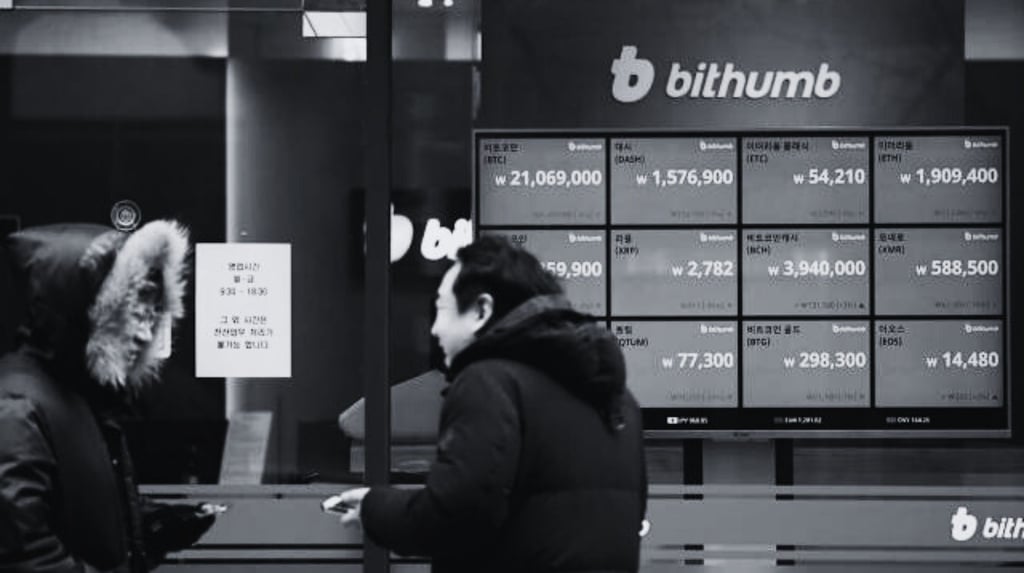
South Korean financial authorities have launched what is being described as an unprecedented regulatory crackdown on Bithumb, one of the country's largest cryptocurrency exchanges.
Total administrative fines: 41.06 billion KRW ( ~30.5 million USD )
CEO Lee Sang-jun and Chairwoman Kang Ji-yeon have been banned from holding leadership positions at any VASP (Virtual Asset Service Provider) for five years.
Bithumb must replace its entire senior leadership team within 6 months (including CEO, CFO, and Chief Compliance Officer ).
Bithumb is prohibited from accepting new shipments for three months (from April to July 2026).
Some services have been temporarily suspended (tools not yet provided, but many sources may be related to high-profit margin trading and staking).
The violations were announced by the Korean FSC Commission:
Manipulating trading volume (wash trading) across multiple coins to create fake high payout symbols.
Deceiving customers about the transparency of reserves (inadequate reserve evidence, indications of mixing customer assets with company assets).
Serious violations of AML/CFT regulations (failure to perform adequate origin checks, allowing transactions from examples linked to crime).
Using customers to compensate for errors from internal investment activities (similar to C tasks, BlockFi).
Failure to report transactions that are expected to occur to FIUs in many cases is related to money laundering activities.
This move is part of a broader effort by regulators to tighten oversight of the digital asset market, particularly regarding compliance, transparency, and investor protection. Authorities are signaling that even top exchanges are no longer exempt from stringent enforcement.
The reasons leading to the crackdown
Although details are still being clarified, actions against exchanges like Bithumb typically involve serious regulatory compliance issues, including:
Violation of anti-money laundering (AML) regulations
Weaknesses in internal control and governance.
Improper handling of users' funds.
Lack of transparency in operations
South Korea is one of the most tightly regulated cryptocurrency markets in Asia, and regulators have historically taken a strict stance against exchanges that fail to meet the necessary standards.
South Korea's legal framework for cryptocurrencies
The tightening of controls reflects the changing role of the Financial Supervisory Authority and other regulatory bodies in overseeing digital assets.
In recent years, South Korea has implemented mandatory real-name trading systems, stringent licensing requirements for exchanges, enhanced anti-money laundering (AML) and know-how (KYC) obligations, along with ongoing audits and compliance checks. These measures are designed to bring the cryptocurrency industry closer to traditional financial markets.
A shock to crypto exchanges
The tightening of controls on Bithumb highlights several structural shifts in the cryptocurrency sector: exchanges are increasingly treated like financial institutions, regulatory compliance is becoming a competitive advantage, and regulatory clarity is being enforced through real-world cases, not theory.
For investors, this could ultimately lead to a safer and more transparent market, although it could also reduce the number of active platforms.
Our review
South Korea's strong action against Bithumb marks a turning point in regulatory enforcement in one of the world's most dynamic cryptocurrency markets. By targeting a major exchange, authorities are sending a signal that no player is too big to escape scrutiny.
As global regulators continue to tighten their oversight, the future of cryptocurrency exchanges will increasingly depend not only on liquidity and innovation but also on compliance, governance, and trust.
Disclaimer: The information presented in this article is the author's personal opinion in the field of cryptocurrency. This is not financial or investment advice. All investment decisions should be based on careful consideration of your personal portfolio and risk tolerance. The views expressed in this article do not represent the official position of the platform. We advise readers to conduct their own research and consult with experts before making any investment decisions.
Compiled and analyzed by HCCVenture
Follow HCCVenture here: https://link3.to/holdcoincventure
Explore HCCVenture group
HCCVENTURE QUANT JSCO
© 2026 HCCVENTURE. ALL COPYRIGHTS RESERVED.


Connect with us
Popular content
Contact to us
Address: 8th Floor, Bach Dang Complex Building, 50 Bach Dang Street, Hai Chau Ward, Da Nang City, Vietnam.
Phone: 1900 1509
Gmail : sp_contact@hccventure.com
Disclaimer: The information on this website is for informational purposes only and should not be considered investment advice. We are not responsible for any risks or losses arising from investment decisions based on the content here.
TERMS AND CONDITIONS • CUSTOMER PROTECTION POLICY
ANALYTICAL AND NEWS CONTENT IS COMPILED AND PROVIDED BY EXPERTS IN THE FIELD OF DIGITAL FINANCE AND BLOCKCHAIN BELONGING TO HCCVENTURE ORGANIZATION, INCLUDING OWNERSHIP OF THE CONTENT.
RESPONSIBLE FOR MANAGING ALL CONTENT AND ANALYSIS: HCCVENTURE FOUNDER - TRUONG MINH HUY
Read warnings about scams and phishing emails — REPORT A PROBLEM WITH OUR SITE.