

Russia has criminalized interaction with cryptocurrency platforms
According to reports, Russia is moving toward criminalizing interaction with foreign cryptocurrency platforms, a move that would significantly tighten state control over digital asset activity and further fragment the system.
1/28/20263 min read

Legal framework from Russia
Russia has just taken one of its most drastic steps ever in regulating cryptocurrencies: a new law criminalizing the use of foreign cryptocurrency platforms by Russian citizens and residents has been signed into law by President Vladimir Putin and will take effect on March 1, 2026. This law, passed by the State Duma in late December 2025 and ratified by the Federation Council in January 2026 , classifies access to unlicensed Russian exchanges as a criminal offense punishable by fines, asset seizure, and – in serious cases – imprisonment.
According to the final text published on the official legal information portal ( pravo.gov.ru ) and reported by news agencies RBC , Kommersant , and international media outlets such as Reuters and Bloomberg, this law targets the following behaviors:
Trade and buy/sell cryptocurrencies directly on foreign platforms ( Binance, Bybit, OKX, Coinbase, Kraken, KuCoin, etc. )
Using VPNs or other circumvention tools to access restricted foreign exchanges is prohibited.
Receiving or sending cryptocurrency to/from wallets linked to foreign services without a license.
Providing intermediary services (e.g., facilitating P2P ) connecting Russian users with foreign platforms.
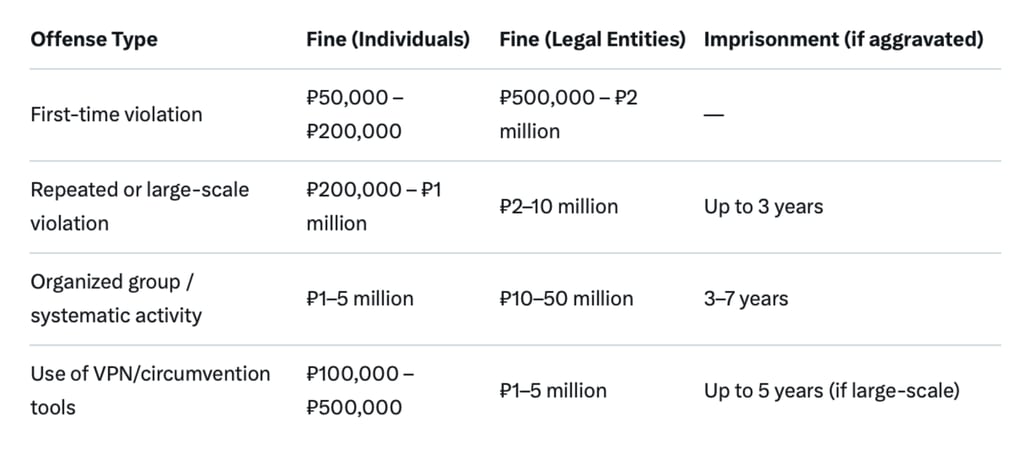
The penalties are clearer.
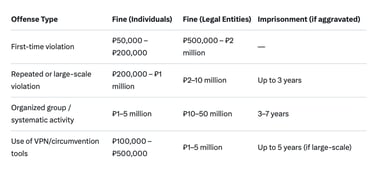
Transactions are conducted through platforms licensed in Russia (approved by the Central Bank of Russia and Rosfinmonitoring).
Cross-border payments within the existing legal framework for the period 2024–2025 (limited to authorized banks and specific trade corridors)
A necessary practical step
Russia's decision needs to be considered in the context of sanctions, capital controls, and geopolitical pressures. Since being largely isolated from the Western financial system, the state has had to balance tolerating cryptocurrencies as a means of transaction and payment while preventing uncontrolled capital outflows and regulatory leaks.
Criminalizing interactions with foreign platforms allows authorities to maintain the utility of cryptocurrencies for state-aligned purposes—such as regulated trade corridors or domestic exchanges—while cutting off unsupervised access to global markets.
Impact on Russian users and businesses
For individual users, the consequences are serious. Access to global exchanges, the broader token market, and abundant liquidity sources will be restricted, increasing costs and reducing choice. For businesses, especially those involved in cross-border payments, this move increases compliance risks and operational friction.
It also increases reliance on domestic platforms, which may lack the depth, tools, or asset range compared to international counterparts.
Russia's move highlights the growing trend of jurisdictional fragmentation in the cryptocurrency space. As countries impose sovereign controls, the idea of a single, borderless cryptocurrency market becomes less realistic. Instead, regional cryptocurrency systems—each with its own rules, platforms, and liquidity—are beginning to emerge.
Assessment and Conclusion
Russia's apparent move to criminalize interaction with foreign cryptocurrency platforms represents a decisive shift toward financial isolation and state-centric digital asset governance. Instead of outright rejecting cryptocurrencies, Russia is reshaping them into a controlled instrument within national policy, tightly bound by domestic laws.
As more and more countries assert their sovereignty over digital finance, Russia's approach may offer a glimpse into a future where cryptocurrencies are no longer a borderless domain – but increasingly shaped by geopolitics, regulation, and state power.
Disclaimer: The information presented in this article is the author's personal opinion in the field of cryptocurrency. This is not financial or investment advice. All investment decisions should be based on careful consideration of your personal portfolio and risk tolerance. The views expressed in this article do not represent the official stance of the platform. We recommend that readers conduct their own research and consult with experts before making any investment decisions.
Compiled and analyzed by HCCVenture
Follow HCCVenture here: https://link3.to/holdcoincventure
Explore HCCVenture group
HCCVENTURE QUANT JSCO
© 2026 HCCVENTURE. ALL COPYRIGHTS RESERVED.


Connect with us
Popular content
Contact to us
Address: 8th Floor, Bach Dang Complex Building, 50 Bach Dang Street, Hai Chau Ward, Da Nang City, Vietnam.
Phone: 1900 1509
Gmail : sp_contact@hccventure.com
Disclaimer: The information on this website is for informational purposes only and should not be considered investment advice. We are not responsible for any risks or losses arising from investment decisions based on the content here.
TERMS AND CONDITIONS • CUSTOMER PROTECTION POLICY
ANALYTICAL AND NEWS CONTENT IS COMPILED AND PROVIDED BY EXPERTS IN THE FIELD OF DIGITAL FINANCE AND BLOCKCHAIN BELONGING TO HCCVENTURE ORGANIZATION, INCLUDING OWNERSHIP OF THE CONTENT.
RESPONSIBLE FOR MANAGING ALL CONTENT AND ANALYSIS: HCCVENTURE FOUNDER - TRUONG MINH HUY
Read warnings about scams and phishing emails — REPORT A PROBLEM WITH OUR SITE.