

Kanga Exchange - Kanga Protocol Technology The Future of Digital Assets
Kanga Exchange is a cryptocurrency exchange founded in 2018 in Poland. Kanga was founded by Polish entrepreneurs with the motto “More than an exchange”.
INSIGHTS
12/1/20256 min read
Kanga Exchange Overview
Since its launch, Kanga has rapidly expanded into a multi-functional platform: incorporating spot trading, futures, staking, a new token launchpad, and even an OTC (over-the-counter) service.
The platform now supports buying/selling over 180 cryptocurrencies directly from the mobile application Kanga Wallet, which supports multiple languages (including Vietnamese). The network operates at 800+ OTC trading points spanning over 20 countries. In short, since its inception, Kanga Exchange has grown rapidly with a global vision, focusing on expanding the market in Central Eastern Europe and Southeast Asia.
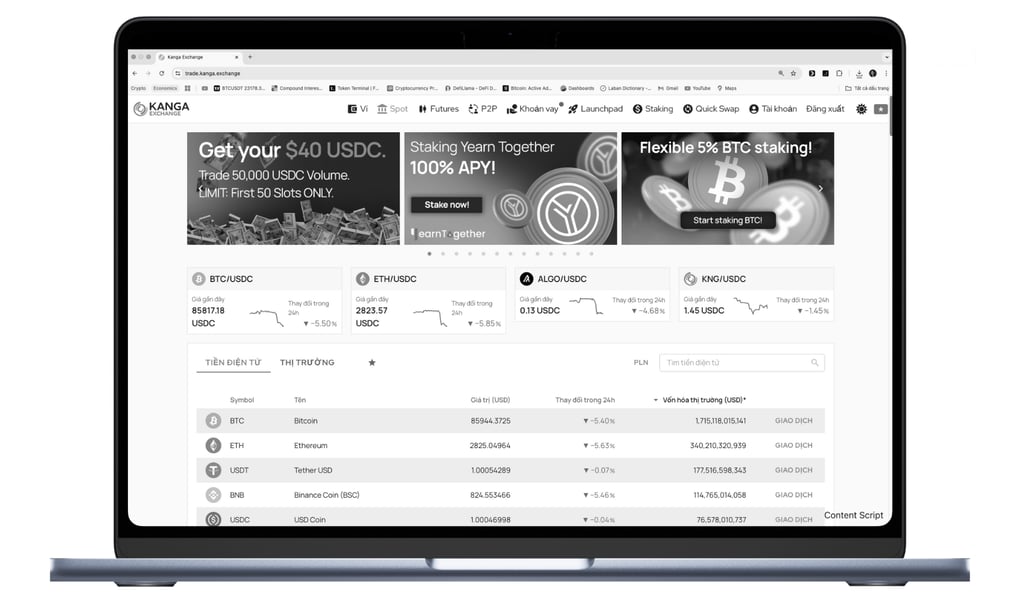
System architecture and platform technology
Kanga operates as a traditional CEX exchange with a microservice architecture: order matching engine, wallet system, KYC server, API. The website uses Cloudflare WAF to prevent DDoS, SSL certificate with A+ score, and security headers at an optimal level. Kanga promotes its “instant matching” engine for instant order matching, suitable for large volumes. Scalability is enabled by the system’s distributed design and parallel processing mechanism.
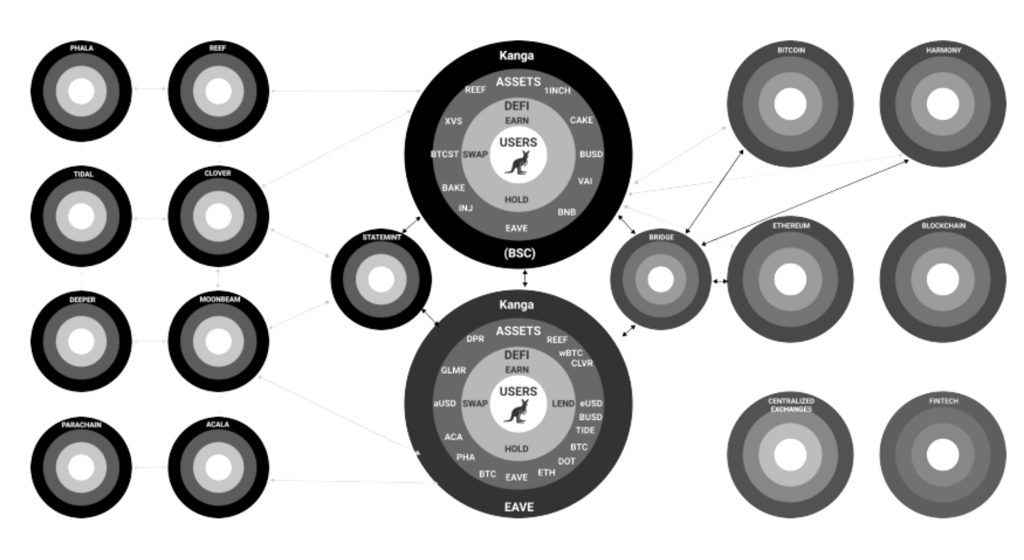
Kanga does not develop its own blockchain but integrates multiple public chains. Note: Omega stablecoin pairs (oPLN, oUSD, oEURO, oGBP), along with USDT and DAI, were withdrawn for EEA users in March 2025 due to MiCA regulations, with the focus shifting to USDC and EURC.
Furthermore, DAI was completely delisted from the exchange on April 30, 2025. Kanga's blockchain technology combines ERC-20 tokens on Ethereum/Polygon with multi-chain support for liquidity management and platform tokens.
Transaction processing system
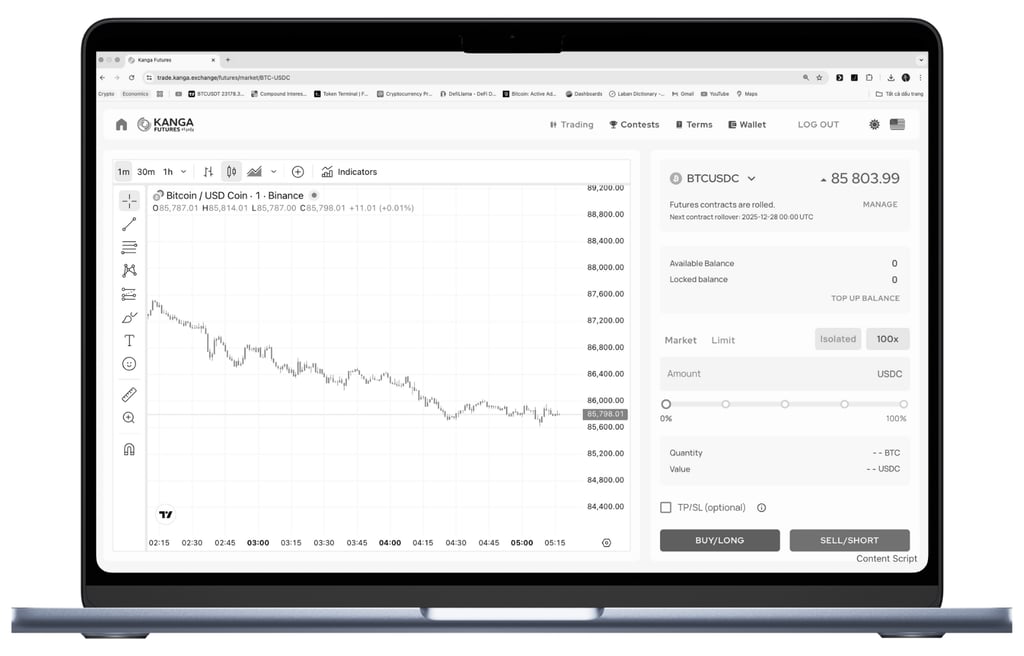
Kanga operates on a typical order-book model. The exchange’s matching engine matches “instantly” to quickly process buy/sell orders. The exchange supports over 180 coins and hundreds of trading pairs. Kanga Futures was officially launched in July 2025, offering margin trading (futures) with up to 100x leverage (using KXT tokens for payment).
Kanga is designed to optimize scalability. The platform also integrates additional trading tools (e.g., in-wallet fast swaps, stop-loss/take-profit orders). Kanga also provides internal P2P functionality.
Technical security and safety
In terms of technical security, Kanga applies current standard measures. The exchange uses Cloudflare WAF for DDoS protection and SSL with an A+ rating. The CertiK Skynet Score is 81.37 (A). The platform supports 2FA, multi-signature wallets, anti-phishing code, withdrawal address whitelist, and new address blocking. All critical issues were fixed as of 17/4/2023.
KYC Requirement: KYC is now generally required to use kanga.exchange, ensuring compliance with MiCA regulations in the European region.
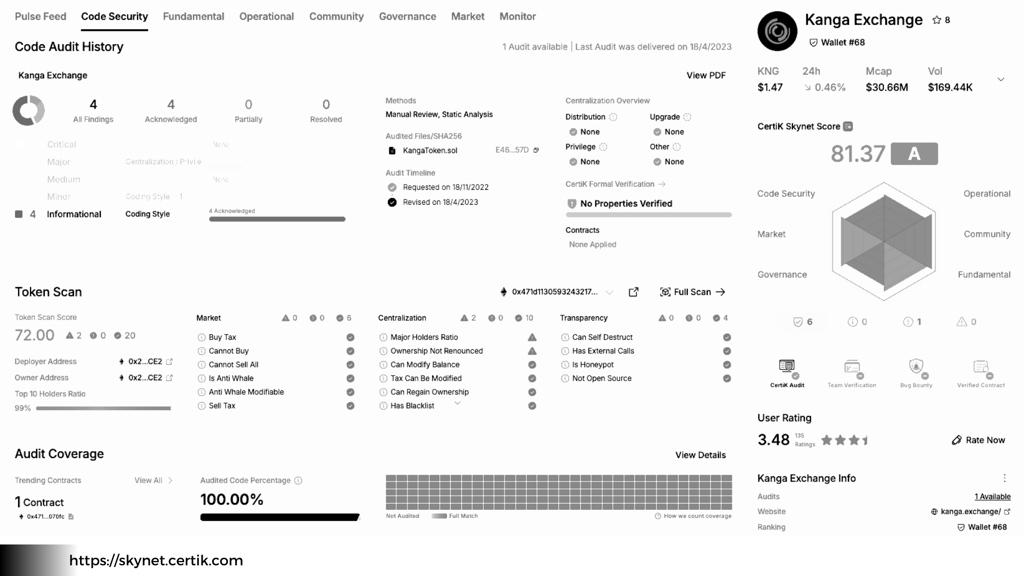
17/4/2023 (all critical issues have been fixed). The platform supports 2FA, multi-signature wallets and advanced protection steps to prevent phishing and unauthorized access.
Kanga Protocol Technology
The Kanga Protocol is being deployed on Binance Smart Chain and can be deployed on any EVM-compatible chain in the future. The protocol is built on top of open-source protocols such as Uniswap v3, SushiSwap, and Balancer v2. Focuses on the following areas:
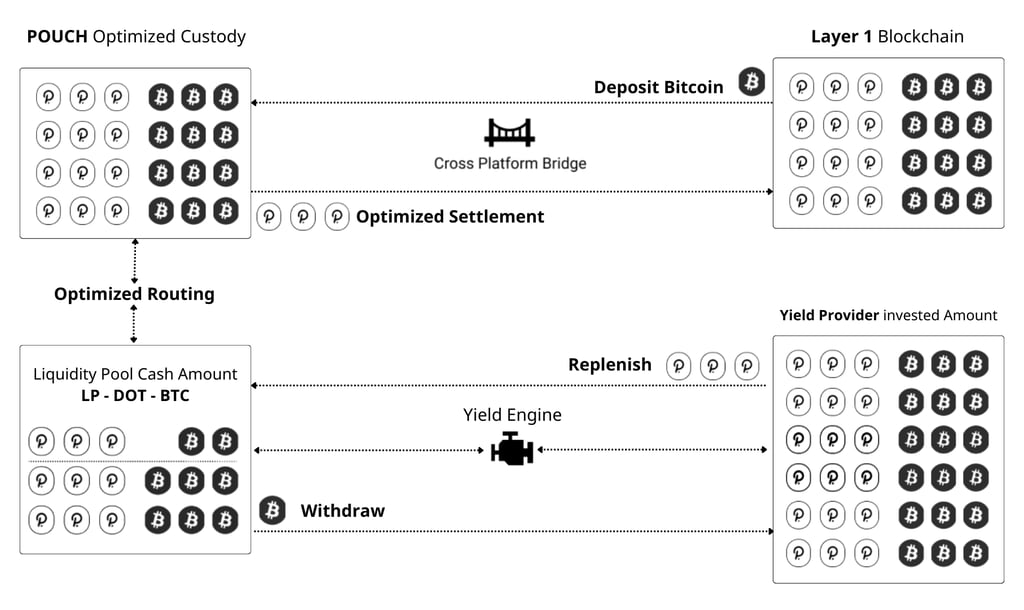
(1) POUCH (Protocol for Optimal United Custody Handling
The Optimized Unified Custody Processing (POUCH) protocol delivers higher liquidity, higher yields, and better gas utilization efficiency.
POUCH holds all Liquidity Pool balances for the protocol. It allows a single point of interface with all liquidity pools and decouples the underlying implementation, creating a gas efficient platform and independent interface for token swapping.
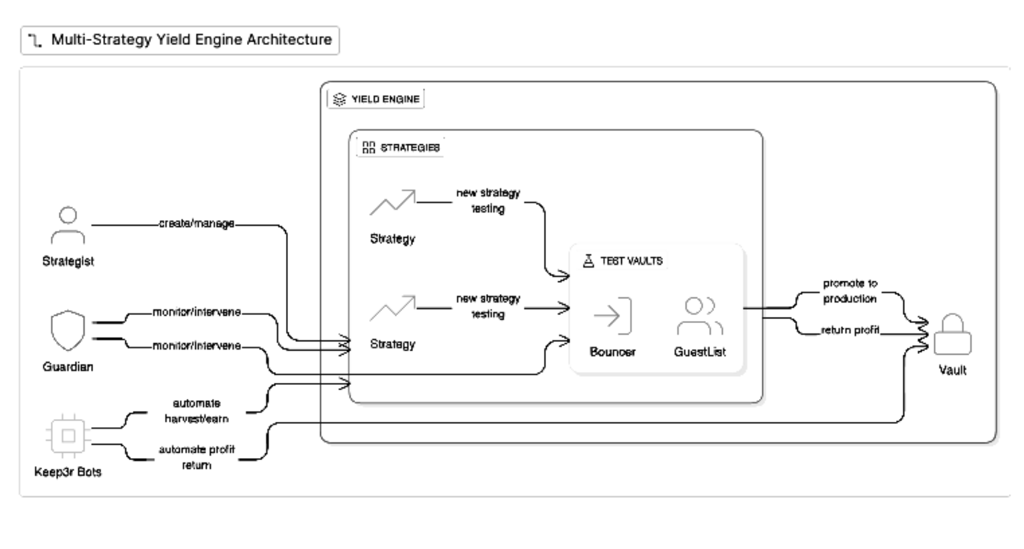
(2) Yield Engine
The Yield Engine connects Liquidity Providers. Yield Providers invest in a liquidity pool. However, instead of depositing all invested tokens into the liquidity pool, it only deposits the minimum amount required for transactions. The role of the Yield Engine is to monitor the balance of the liquidity pools and replenish and rebalance them as needed.
A Yield Provider (e.g. AAVE or Honza) “invests” some tokens into a liquidity pool.
The Liquidity Pool maintains a minimum threshold required for trading, known as the Optimal Liquidity Amount. The remaining "invested" tokens will be held in the Yield Provider, increasing the yield for the Liquidity Pool.
When the token quantity of any token in the pool drops below the Optimal Liquidity Amount, a rebalancing process will be triggered (with the option to use a cross-platform bridge if needed).
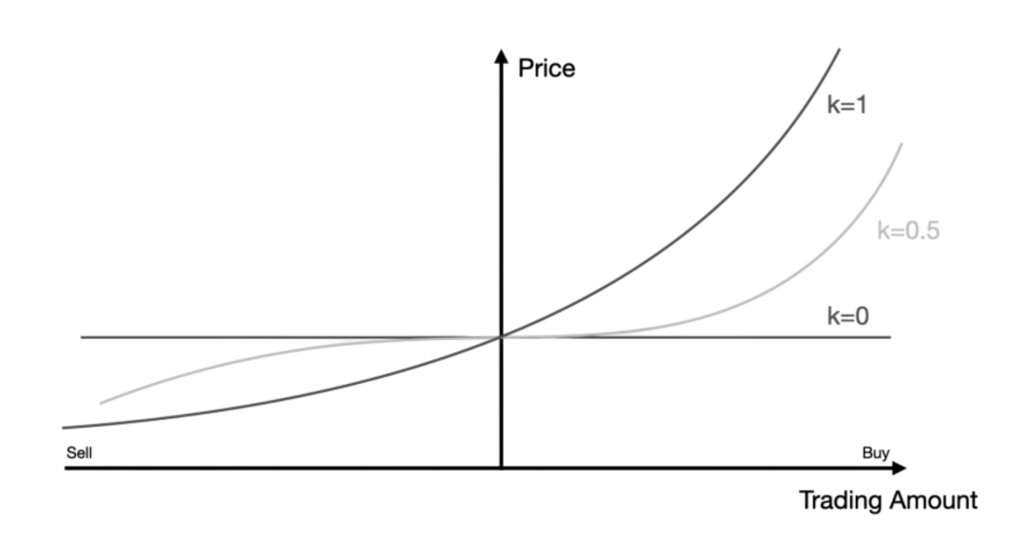
(3) Yield Engine Strategy using Yearn Vaults
Yield strategies similar to those introduced by Yearn and implemented in protocols like sushi swap can be added to the yield engine and increase the returns for the Asset Custodian. Features of the V2 yVault include:
Stablecoin swap: supports trading of pegged tokens.
The active bonding curve, introduced by DodoEX, can be used when there are multiple stablecoins in a liquidity pool pegged to different values.
(4) Liquidity Pool Offerings
At launch, the Kanga protocol will start with a base bonding curve. Later, other bonding curves can be integrated into the POUCH to support different scenarios. These scenarios include:
Stablecoin swap: supports trading of pegged tokens.
The active bonding curve, introduced by DodoEX, can be used when there are multiple stablecoins in a liquidity pool pegged to different values.
Business model and main products
Kanga Exchange is built as a multi-purpose exchange platform . Below are the main products and services of the exchange:
Spot & Futures Trading: Kanga supports buying/selling over 180 cryptocurrencies and offers a futures market with up to 100x leverage.
Staking and Passive Income: The platform offers over 40 staking opportunities. Kanga Exchange offers two staking models: flexible and fixed-term.
Kanga Loan: With Kanga Loan, you can quickly obtain stablecoins valued up to 100,000 PLN/100,000 USDT/100,000 USDC - without selling your cryptocurrency.
Over-the-Counter (OTC) Network: Kanga’s Cash-to-Crypto (Kanga Kantor) system allows customers to buy/sell crypto with cash through physical points. They have 800+ exchange points.
Payments and e-wallets: Kanga offers the Kanga Card debit card and the Kanga Wallet application.
Launchpad: KangaStarter is a launchpad for innovative blockchain startups.
Additional Services: The exchange also introduced AutoBuy, alongside P2P services and the Kanga University educational program.
Tokenomics of Kanga Exchange (KNG)
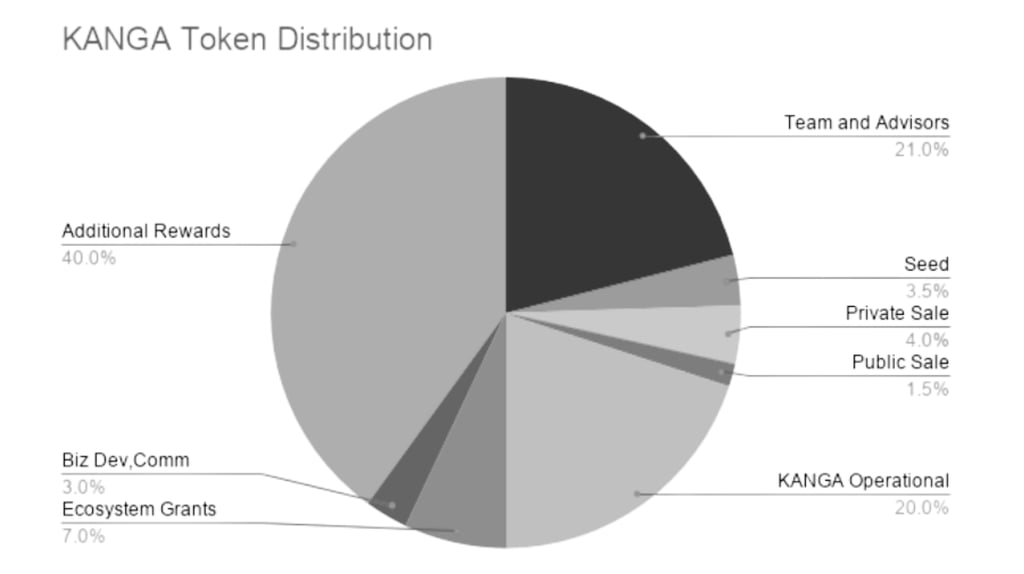
KNG is the core utility token in the Kanga Exchange ecosystem. This token is issued as an ERC-20 on the Ethereum blockchain and has a fixed total supply of 21 million KNG – similar to Bitcoin's cap model to control inflation.
Project name: Kanga Exchange
Token: KNG
Token standard: ERC-20 (Ethereum) & Polygon
Contract: 0x9d4d86fdb1ad3b9e09e2f5b6c8f1c770cf0c0b67 (ERC-20)
Token type: Utility (Transaction fees, Staking, Launchpad)
Total supply: 21,000,000 KNG
Circulating supply: ~12.3 million KNG
KNG token mechanism in the ecosystem
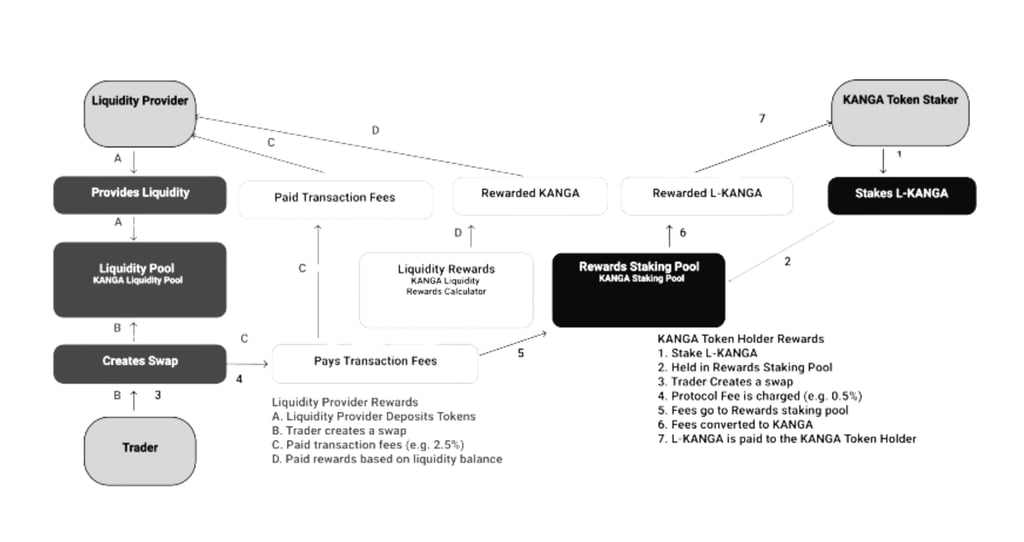
Payment of transaction fees : All fees on the exchange are converted to KNG.
Staking to receive profits : Users stake KNG to receive profit sharing from system-wide transaction fees.
Participate in IEO (KangaStarter) : KNG is the main vehicle to participate in new token sales.
Discounts and Access : KNG also offers trading fee discounts and unlocks higher levels of access within the Kanga ecosystem.
Key Leadership Team
The platform’s leadership includes:
Łukasz Żeligowski – Co-founder and CEO.
Sławomir Zawadzki – Co-founder and Executive Director.
The wider team includes more than 100 members, including technology, fintech, marketing and blockchain experts.
Evaluation and Conclusion
Kanga Exchange builds a unique business model by combining traditional CEX services with a financial agent network (OSM), allowing deposits/withdrawals of cash in a way that most exchanges cannot implement. Together with the POS (Proof of Stake of Sale) mechanism, the project generates real cash flow from merchant and offline user transactions, making the ecosystem less dependent on pure crypto market fluctuations. This is an important foundation for Kanga to form a competitive advantage in highly cash-oriented markets such as Eastern Europe and emerging economies.
Disclaimer: The information presented in this article is the author's personal opinion in the cryptocurrency field. It is not intended to be financial or investment advice. Any investment decision should be based on careful consideration of your personal portfolio and risk tolerance. The views expressed in this article do not represent the official position of the platform. We recommend that readers conduct their own research and consult with a professional before making any investment decisions.
Compiled and analyzed by HCCVenture
Follow HCCVenture here: https://link3.to/holdcoincventure
Explore HCCVenture group
HCCVENTURE QUANT JSCO
© 2026 HCCVENTURE. ALL COPYRIGHTS RESERVED.


Connect with us
Popular content
Contact to us
Address: 8th Floor, Bach Dang Complex Building, 50 Bach Dang Street, Hai Chau Ward, Da Nang City, Vietnam.
Phone: 1900 1509
Gmail : sp_contact@hccventure.com
Disclaimer: The information on this website is for informational purposes only and should not be considered investment advice. We are not responsible for any risks or losses arising from investment decisions based on the content here.
TERMS AND CONDITIONS • CUSTOMER PROTECTION POLICY
ANALYTICAL AND NEWS CONTENT IS COMPILED AND PROVIDED BY EXPERTS IN THE FIELD OF DIGITAL FINANCE AND BLOCKCHAIN BELONGING TO HCCVENTURE ORGANIZATION, INCLUDING OWNERSHIP OF THE CONTENT.
RESPONSIBLE FOR MANAGING ALL CONTENT AND ANALYSIS: HCCVENTURE FOUNDER - TRUONG MINH HUY
Read warnings about scams and phishing emails — REPORT A PROBLEM WITH OUR SITE.