

Hackers are turning Facebook ads into cryptocurrency scams
According to recent reports, cybercriminals are increasingly using paid advertising on Facebook as a weapon to lure cryptocurrency users into sophisticated scams designed to drain their wallets.
2/25/20262 min read
Their attack methods
Cybercriminals have increased their use of malicious Facebook ads (Meta), turning paid ads into sophisticated traps to drain cryptocurrency wallets and steal sensitive data. Recent reports from Malwarebytes, MEXC News, Bitget, and community discussions have highlighted a new wave of attacks in February 2026, in which hackers promoted fake "Windows 11" updates through targeted Facebook ads—luring victims into downloading malware disguised as legitimate Microsoft software.
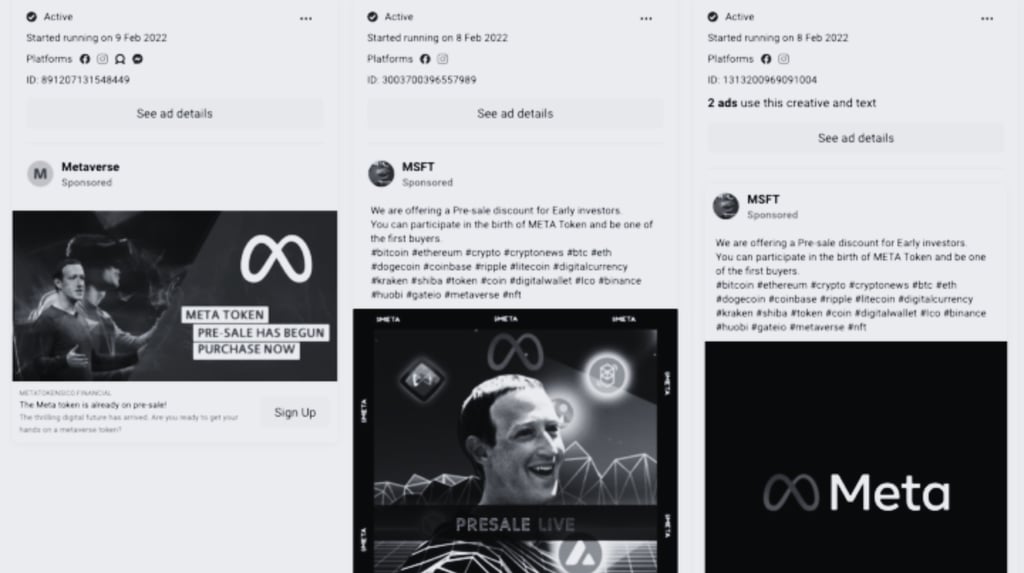
Ad distribution: The attackers ran paid ads on Facebook, mimicking Microsoft's branding or urgent security/Windows 11 update announcements. These ads appeared in news feeds targeting tech-savvy users or those interested in cryptocurrency.
Redirection: Clicks that lead to near-perfect copies of the official Windows download page (e.g., microsoft.com/windows11 or similar phishing domains).
Malicious Download: Users prompted to "Download Now" will receive an installer infected with malware instead of a genuine update. This malware packages Node.js libraries to confine and steal data.
Data Theft & Wallet Withdrawal: Malware scans cryptocurrency wallet files/extensions (e.g., MetaMask, Phantom, Exodus), browser login credentials, and keystroke logs. It can steal seed phrases, allowing attackers to irreversibly transfer funds across blockchains such as Ethereum, Solana, or Bitcoin.
Impact: Victims report losses of up to hundreds of thousands of dollars in some individual cases, although the overall figure remains difficult to quantify. Chainalysis estimates that cryptocurrency scams have siphoned off approximately $17 billion globally by 2025, with malware that steals information and illegally withdraws funds contributing significantly.
This campaign builds on persistent malicious advertising trends documented by Bitdefender Labs (2025 report) and Check Point Research, where ads impersonate Binance, TradingView, MetaMask, and other platforms to promote the use of fake " calculator apps ." Previous variations used celebrity deepfakes (e.g., Elon Musk, MrBeast) to entice people into giving away gifts, while more recent variations have shifted to creating a sense of urgency about operating system updates to attract more users.
Is paying on Facebook effective?
Paid advertising creates the illusion of authenticity. Many users assume that sponsored content has been verified, reducing suspicion. Additionally, ads can be extremely precisely targeted to users interested in cryptocurrencies, DeFi, NFTs, or trading platforms.
The combination of targeted algorithms and professional visual design makes these tactics far more effective than traditional spamming strategies.
Economic and market consequences
These attacks erode individual users' confidence in self-managing cryptocurrencies, potentially slowing adoption amid the current cautious sentiment driven by macroeconomic volatility.
There are increasing calls for platform accountability (Meta is under close scrutiny regarding its ad moderation practices).
There is a need for better wallet security measures (e.g., hardware wallets, multi-signatures, transaction emulation).
There are favorable winds from regulators toward clearer regulations on digital asset privacy and advertising disclosure.
These incidents highlight the persistent risks in the approximately $3-4 trillion cryptocurrency market, where irreversible on-chain transfers exacerbate losses. While not directly related to major tokens, the repeated incidents fuel negative narratives surrounding security—potentially putting pressure on sentiment toward wallet-related or DeFi projects.
Our review
The use of Facebook ads as cryptocurrency scams reflects the increasing sophistication of digital asset fraud. As hackers adapt to popular platforms, the lines between legitimate marketing and malicious scams are becoming increasingly blurred. In an ecosystem where user permission equates to transaction completion, vigilance is not an option but a prerequisite.
Disclaimer: The information presented in this article is the author's personal opinion in the field of cryptocurrency. This is not financial or investment advice. All investment decisions should be based on careful consideration of your personal portfolio and risk tolerance. The views expressed in this article do not represent the official stance of the platform. We recommend that readers conduct their own research and consult with experts before making any investment decisions.
Compiled and analyzed by HCCVenture
Follow HCCVenture here: https://link3.to/holdcoincventure
Explore HCCVenture group
HCCVENTURE QUANT JSCO
© 2026 HCCVENTURE. ALL COPYRIGHTS RESERVED.


Connect with us
Popular content
Contact to us
Address: 8th Floor, Bach Dang Complex Building, 50 Bach Dang Street, Hai Chau Ward, Da Nang City, Vietnam.
Phone: 1900 1509
Gmail : sp_contact@hccventure.com
Disclaimer: The information on this website is for informational purposes only and should not be considered investment advice. We are not responsible for any risks or losses arising from investment decisions based on the content here.
TERMS AND CONDITIONS • CUSTOMER PROTECTION POLICY
ANALYTICAL AND NEWS CONTENT IS COMPILED AND PROVIDED BY EXPERTS IN THE FIELD OF DIGITAL FINANCE AND BLOCKCHAIN BELONGING TO HCCVENTURE ORGANIZATION, INCLUDING OWNERSHIP OF THE CONTENT.
RESPONSIBLE FOR MANAGING ALL CONTENT AND ANALYSIS: HCCVENTURE FOUNDER - TRUONG MINH HUY
Read warnings about scams and phishing emails — REPORT A PROBLEM WITH OUR SITE.