

Gondor v1 introduces the first cross-margin account for Polymarket
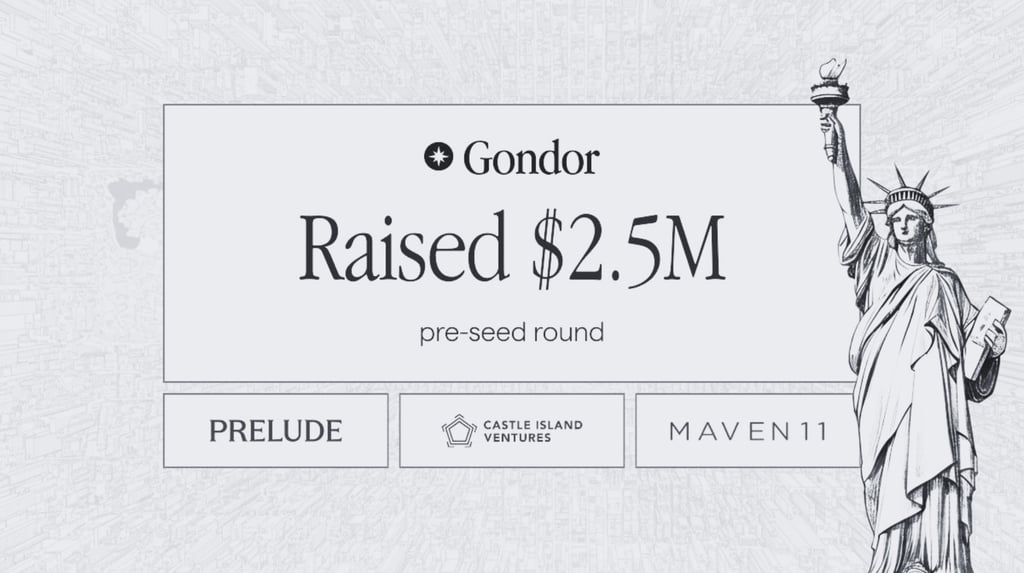
Gondor, a DeFi startup building lending infrastructure for prediction markets, has launched Gondor v1, the first cross-margin account specifically designed for Polymarket traders.
7/14/20264 min read
Why do individual leverage options fail in forecast markets?
Gondor's beta testing experience with individual position lending has revealed a structural incompatibility between traditional DeFi lending mechanisms and the unique risk profile of the prediction market. In standard DeFi lending (Aave, Compound, Morpho), collateral typically consists of persistent assets like ETH or USDC, whose value gradually decreases and is predictable with market fluctuations, allowing liquidation systems time to react before the collateral value falls below the loan value. The prediction market is entirely different: a binary asset trading at 70 cents can plummet to near zero in minutes when new information invalidates the underlying prediction – a gap risk profile that no liquidation mechanism can reliably manage at the individual position level.
The practical consequence is that individual Gondor lending requires extremely cautious loan-to-value ratios for individual positions and can only support a narrow set of highly liquid markets where gap risk is most limited. For lenders, the focus on binary risk means they face asymmetrical downside risk without commensurate returns. For borrowers, the limited LTV ratio and restricted market entry conditions make the capital efficiency benefits small compared to what portfolio-level margin lending could theoretically offer. The 150,000 applicants on the beta program's waiting list demonstrate enormous demand; the limitations of the isolated architecture have limited the ability to meet that demand profitably for both parties.
Main brokerage model for the forecast market
Gondor v1's cross-margin architecture assesses creditworthiness at the portfolio level rather than the position level, following the same conceptual logic as traditional primary brokerage credit extensions, where an entire fund portfolio acts as collateral for leveraged positions. The Gondor team clearly describes the model: "Cross-margin addresses the core problems of individual leverage. It allows for safer margin extensions at lower interest rates, supports more markets, and allows borrowers to hold positions until they are settled. Most importantly, cross-margin is a scalable model: a win-win situation for both lenders and borrowers."
The logic of expansion is simple. A portfolio with diversified positions across sports, geopolitical, economic, and cultural prediction markets has a significantly lower probability of catastrophic simultaneous losses than any single position within it. When a trader holds 15 positions on 15 independent binary events, the probability of all 15 positions being settled simultaneously is much smaller than the probability of any single position being settled badly—the same diversification argument that underpins all portfolio-level credit expansion in traditional finance. Therefore, cross-margin accounts can offer more credit, at lower interest rates, across a wider range of qualifying markets than individual lending, while simultaneously helping lenders minimize actual loss rates through the natural diversification of the collateral pool.
Morpho's decentralized and integrated architecture
Gondor's smart contracts are built on Morpho, a decentralized lending protocol that raised $175 million from Paradigm, a16z crypto, and Ribbit Capital in June 2026 and maintains over $5 billion in deposits audited 34 times by 14 different security firms. The Morpho platform provides Gondor's lending pools with a proven security infrastructure instead of requiring Gondor to build new custody and liquidation mechanisms from scratch. The decentralized structure ensures that only depositors can withdraw collateral after the loan is repaid. Gondor's pools cannot access deposited positions regardless of the company's operational status.
Polymarket staking consists of ERC-1155 tokens on Polygon, each staking granting the holder 1 USDC if the position is settled correctly. This means they are on-chain assets with programmable transferability that Gondor's loan contracts can accept as collateral, algorithmically assess, and liquidate if necessary through on-chain mechanisms instead of requiring centralized operational intervention.
Users can deposit their Polymarket shares regardless of whether their Polymarket account uses wallet login or email login, as both control the ERC-1155 tokens that can be transferred to Gondor's lending pools. The Unified Margin Account holds all deposited positions, calculates the portfolio's net creditworthiness based on Gondor's risk model, and grants a credit line that acts like USDC to purchase additional Polymarket shares directly within the platform, completing the leverage loop without requiring the user to leave the Gondor interface.
Assessment and Conclusion
Gondor's private testing phase, beginning next week, will involve a closed group of users thoroughly researching the cross-margin account mechanism before its public launch. The September public launch timeframe allows the development team approximately two months to identify and address outliers in the risk model – the most critical technical challenge in the cross-margin system, where the liquidation trigger mechanism must reliably protect lenders without prematurely liquidating borrowers in the event of temporary depreciation before settlement.
Specific details that Gondor has yet to disclose include the maximum loan-to-value ratios applicable to different portfolio components, the interest rate model that will govern borrower costs under varying market conditions, the specific set of Polymarkets eligible as collateral from launch, and the mechanism of the recovery process when portfolio value falls near liquidation thresholds. These details will likely be revealed through private testing documents and specifications that Gondor publishes before the mainnet rollout in September.
Disclaimer: The information presented in this article is the author's personal opinion in the field of cryptocurrencies. This is not financial or investment advice at all. Every investment decision should be based on careful consideration of your personal portfolio and risk tolerance. The opinion in the article does not represent the official position of the platform. We recommend that readers do their own research and consult experts before making any investment decisions.
Synthesized and analyzed by HCCVenture
Follow HCCVenture organization here: https://link3.to/holdcoincventure
Explore HCCVenture group
HCCVENTURE QUANT JSCO
© 2026 HCCVENTURE. ALL COPYRIGHTS RESERVED.


Connect with us
Popular content
Contact to us
Address: 8th Floor, Bach Dang Complex Building, 50 Bach Dang Street, Hai Chau Ward, Da Nang City, Vietnam.
Phone: 1900 1509
Gmail : sp_contact@hccventure.com
Disclaimer: The information on this website is for informational purposes only and should not be considered investment advice. We are not responsible for any risks or losses arising from investment decisions based on the content here.
TERMS AND CONDITIONS • CUSTOMER PROTECTION POLICY
ANALYTICAL AND NEWS CONTENT IS COMPILED AND PROVIDED BY EXPERTS IN THE FIELD OF DIGITAL FINANCE AND BLOCKCHAIN BELONGING TO HCCVENTURE ORGANIZATION, INCLUDING OWNERSHIP OF THE CONTENT.
RESPONSIBLE FOR MANAGING ALL CONTENT AND ANALYSIS: HCCVENTURE FOUNDER - TRUONG MINH HUY
Read warnings about scams and phishing emails — REPORT A PROBLEM WITH OUR SITE.