

Dubai's financial markets plunged 5% upon reopening after a two-day trading break
The Dubai stock market fell by about 5% when trading resumed after being closed for two days due to regional tensions and security concerns.
3/5/20262 min read
The Dubai market is still on the brink
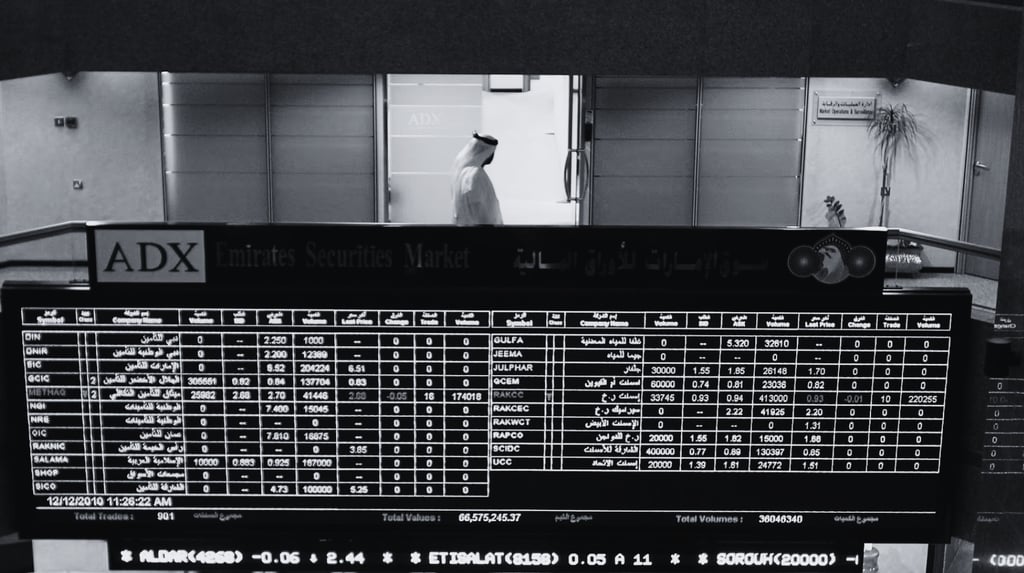
The Dubai Financial Markets (DFM) reopened on Wednesday, March 4, 2026, after a rare two-day trading suspension (Monday-Tuesday) and immediately fell sharply, with the benchmark DFM General Index dropping approximately 4.8–5.2% in early and mid-session trading.
The sell-off wiped out much of last week's gains and reflected heightened investor anxiety following Iranian missile and drone attacks on UAE territory, damage to critical infrastructure (including Dubai and Abu Dhabi airports), and disruptions to energy and logistics flows in the region.
The Abu Dhabi Stock Exchange (ADX) also reopened lower, albeit with a more moderate decline (~2.7–3.4%) due to the larger weighting of state-linked energy companies and sovereign entities perceived as more resilient. Trading volume surged on both exchanges as investors repositioned, with significant selling in real estate, banking, tourism/leisure, and transport/logistics stocks.
Geopolitical risks impact investor sentiment
The drop in the Dubai stock market illustrates just how sensitive regional financial centers are to geopolitical developments. The Middle East sits at the heart of the global energy market and strategic trade routes, meaning political instability can quickly impact investor sentiment.
Stock markets in the region typically react strongly to:
Military escalation
Disruptions to the energy supply.
Currency fluctuations
Withdrawal risk
Even when fundamental economic factors remain stable, perceived geopolitical risks can trigger short-term market corrections.
Impact on regional financial markets
Dubai is one of the most important financial centers in the Middle East, attracting capital from international investors, sovereign wealth funds, and regional institutions. Therefore, fluctuations in the Dubai market can affect broader investor sentiment across the Gulf markets.
The significant drop in the Dubai stock market could spill over to other regional exchanges, particularly in countries closely linked to Gulf capital flows.
Energy prices often play a crucial role in shaping the economic outlook in the Gulf region. Volatility in the oil and natural gas markets can directly impact government revenue, corporate profits, and investor confidence.
If geopolitical tensions continue to impact energy supply expectations, regional financial markets could remain volatile in the short term.
Our review
The 5% drop in the Dubai stock market after two days of closure demonstrates how quickly financial markets can react when trading resumes following periods of instability. While this decline reflects increased geopolitical risk, it also underscores the importance of market stabilization mechanisms during times of tension.
As regional developments continue, investors will be closely watching to see whether this sell-off is merely a temporary correction or the beginning of a broader shift in Middle Eastern market sentiment.
Disclaimer: The information presented in this article is the author's personal opinion in the field of cryptocurrency. This is not financial or investment advice. All investment decisions should be based on careful consideration of your personal portfolio and risk tolerance. The views expressed in this article do not represent the official stance of the platform. We recommend that readers conduct their own research and consult with experts before making any investment decisions.
Compiled and analyzed by HCCVenture
Follow HCCVenture here: https://link3.to/holdcoincventure
Explore HCCVenture group
HCCVENTURE QUANT JSCO
© 2026 HCCVENTURE. ALL COPYRIGHTS RESERVED.


Connect with us
Popular content
Contact to us
Address: 8th Floor, Bach Dang Complex Building, 50 Bach Dang Street, Hai Chau Ward, Da Nang City, Vietnam.
Phone: 1900 1509
Gmail : sp_contact@hccventure.com
Disclaimer: The information on this website is for informational purposes only and should not be considered investment advice. We are not responsible for any risks or losses arising from investment decisions based on the content here.
TERMS AND CONDITIONS • CUSTOMER PROTECTION POLICY
ANALYTICAL AND NEWS CONTENT IS COMPILED AND PROVIDED BY EXPERTS IN THE FIELD OF DIGITAL FINANCE AND BLOCKCHAIN BELONGING TO HCCVENTURE ORGANIZATION, INCLUDING OWNERSHIP OF THE CONTENT.
RESPONSIBLE FOR MANAGING ALL CONTENT AND ANALYSIS: HCCVENTURE FOUNDER - TRUONG MINH HUY
Read warnings about scams and phishing emails — REPORT A PROBLEM WITH OUR SITE.