

Draft Regulations on Stablecoins Will Weaken London's Fintech Position
British MPs argue that the Bank of England's (BOE) draft regulations on stablecoins are too strict, risking capital outflows and undermining London's fintech position.
12/12/20252 min read
Stablecoins are the "Pillar of the Digital Economy".
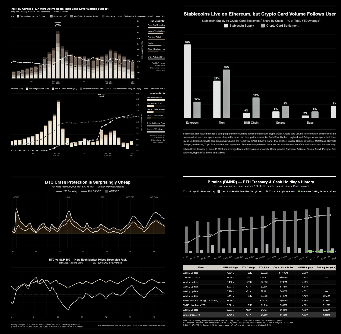
The coalition – including former Defence Secretary Sir Gavin Williamson, Deputy Science and Technology Secretary Viscount Camrose, and former Finance Minister Baroness Verma – emphasized that stablecoins are not just "digital money" but global financial infrastructure, with transaction values reaching $27.6 trillion in 2024, exceeding the combined total of Visa and Mastercard. They warned that the BOE's draft would create a "two-tiered market," where most on-chain activity uses USD (USDC, USDT), weakening the GBP and impacting UK regulation.
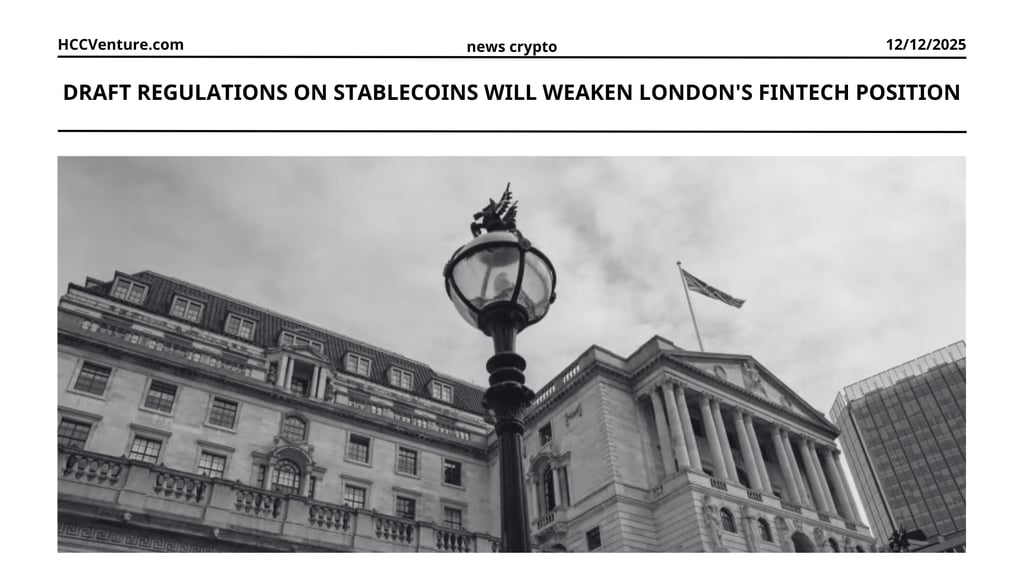
The Bank of England's (BOE) consultation outlines a framework that would place close oversight over stablecoin issues — particularly those cryptocurrencies used for payments within the UK. The proposals include:
The high reserve requirements are met by holding assets that are virtually risk-free.
BOE direct supervision of major releases
Restrict re-mortgaging and profit-generating activities.
Measures to protect and buffer capital are mandatory.
Restrict the large-scale use of foreign-issued stablecoins.
While the BOE argues that these rules are necessary to protect financial stability and consumer safety, critics say they are far more stringent than frameworks applied in other leading fintech markets.
London risks becoming less competitive.
British MPs have warned that if stablecoin issuers face strict restrictions in the UK, they will simply move their headquarters elsewhere. Markets such as the EU (under MiCA), Dubai, and Singapore have established clearer, more innovation-friendly pathways for stablecoin operations.
London has long been a global fintech hub thanks to its clarity and openness in regulation. If regulations on stablecoins become too stringent, the UK could fall behind rivals that are actively attracting digital asset companies.
The UK Treasury has repeatedly emphasized its ambition to make Britain a leading cryptocurrency innovation hub. MPs argue that the Bank of England's (BOE) approach contradicts this political mission, creating inconsistency in regulation.
GBP Stablecoins Have Potential, but FUD is Increasing.
USDC rose 0.1% to $1.0003, with $200 million flowing into Circle's Arc testnet. GBP stablecoins like EURC gained 0.5% to €1.0003 on European hype. UK fintech stocks (LSE: PSN) rose 0.2% to £12.50, reflecting expectations of reform.
The MPs' letter is a timely call to action: With $27.6 trillion in stablecoin transactions by 2024, the UK cannot afford to let London fall behind – where fintech accounts for 12% of GDP (London Stock Exchange). The BOE's limits could cause a capital outflow of $2-3 billion to the US (the Genius Act attracts $50 billion in stablecoins), weakening the digital GBP.
Disclaimer: The information presented in this article is the author's personal opinion in the field of cryptocurrency. This is not financial or investment advice. All investment decisions should be based on careful consideration of your personal portfolio and risk tolerance. The views expressed in this article do not represent the official stance of the platform. We recommend that readers conduct their own research and consult with experts before making any investment decisions.
Compiled and analyzed by HCCVenture
Follow HCCVenture here: https://link3.to/holdcoincventure
Explore HCCVenture group
HCCVENTURE QUANT JSCO
© 2026 HCCVENTURE. ALL COPYRIGHTS RESERVED.


Connect with us
Popular content
Contact to us
Address: 8th Floor, Bach Dang Complex Building, 50 Bach Dang Street, Hai Chau Ward, Da Nang City, Vietnam.
Phone: 1900 1509
Gmail : sp_contact@hccventure.com
Disclaimer: The information on this website is for informational purposes only and should not be considered investment advice. We are not responsible for any risks or losses arising from investment decisions based on the content here.
TERMS AND CONDITIONS • CUSTOMER PROTECTION POLICY
ANALYTICAL AND NEWS CONTENT IS COMPILED AND PROVIDED BY EXPERTS IN THE FIELD OF DIGITAL FINANCE AND BLOCKCHAIN BELONGING TO HCCVENTURE ORGANIZATION, INCLUDING OWNERSHIP OF THE CONTENT.
RESPONSIBLE FOR MANAGING ALL CONTENT AND ANALYSIS: HCCVENTURE FOUNDER - TRUONG MINH HUY
Read warnings about scams and phishing emails — REPORT A PROBLEM WITH OUR SITE.