

Cryptocurrency has surpassed the $1 billion mark on XRPL
The XRP Ledger (XRPL) has quietly become one of the fastest-growing blockchains for tokenized real-world assets (RWAs), with tokenized items surpassing the $1 billion valuation mark on the chain for the first time.
3/16/20262 min read
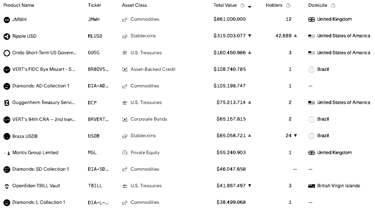
Coded goods reach a significant milestone
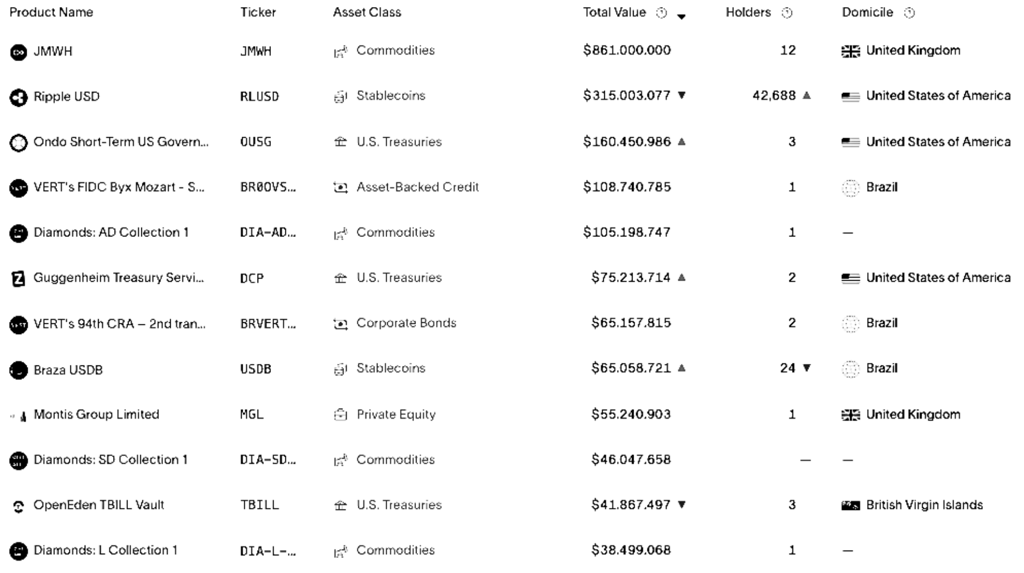
The total value of tokenized goods issued on the XRP Ledger recently exceeded $1 billion, marking a significant milestone in the increasing intersection between blockchain technology and traditional commodity markets.
Gold & silver tokenized: $620–680 million (Sologenic XAU/XAG, Meld Gold, etc.)
Oil & energy credits (coded): $180–220 million
Agricultural products & soft goods: $90–$130 million
Carbon credits & ESG tokens: $60–90 million
This development signals growing interest from organizations in using blockchain infrastructure to represent physical assets such as gold, silver, oil, and other commodities in digital form. By tokenizing these assets on the chain, issuers can create blockchain-based representations that are tradable, programmable, and globally accessible.
For the XRPL ecosystem, this milestone demonstrates the network's growing role in the broader real-world asset tokenization (RWA) movement.
What exactly are coded goods ?
Tokenized goods are digital tokens representing ownership or claims to physical goods stored off-chain. Each token typically corresponds to a specific amount of real-world asset held by a trusted entity.
One token can represent one gram of gold.
Another token could represent one barrel of oil.
or ownership of a portion of the inventory.
By issuing these assets on the blockchain like XRPL, the commodity market gains several advantages such as partial ownership, faster payments, global accessibility, and transparent transaction tracking.
These characteristics make tokenized goods particularly attractive to both individual investors and institutional asset managers.
Why is XRP Ledger becoming a popular platform ?
This network offers very low transaction fees, fast settlement times, and built-in decentralized exchange functionality, making it highly suitable for crypto assets that require frequent trading and settlement.
Furthermore, the ecosystem surrounding Ripple has actively promoted the use of XRPL for tokenized financial instruments and cross-border payments.
This infrastructure provides issuers with the necessary tools to efficiently create, distribute, and trade tokenized goods. While XRPL has surpassed the $1 billion mark, it is not alone in its pursuit of the tokenized goods market.
Other blockchain networks—including Ethereum, Solana, and numerous blockchain platforms for institutions—are also competing to become the primary infrastructure layer for tokenized real-world assets.
Each network offers different advantages in terms of scalability, security, developer tools, and partnerships with organizations.
Our review
While Ethereum still leads in total RWA issuance and institutional-grade products (BlackRock BUIDL, Centrifuge, etc.), XRPL has captured the higher-frequency, lower-value, commodity-specific trading segment — precisely where gold, silver, oil, and tokenized carbon credits operate. If this trend continues (and current momentum suggests so), XRPL could solidify its position as the commodity backbone of crypto finance in 2026–2027 — even as Ethereum dominates broader RWA issuance.
Disclaimer: The information presented in this article is the author's personal opinion in the field of cryptocurrency. This is not financial or investment advice. All investment decisions should be based on careful consideration of your personal portfolio and risk tolerance. The views expressed in this article do not represent the official stance of the platform. We recommend that readers conduct their own research and consult with experts before making any investment decisions.
Compiled and analyzed by HCCVenture
Follow HCCVenture here: https://link3.to/holdcoincventure
Explore HCCVenture group
HCCVENTURE QUANT JSCO
© 2026 HCCVENTURE. ALL COPYRIGHTS RESERVED.


Connect with us
Popular content
Contact to us
Address: 8th Floor, Bach Dang Complex Building, 50 Bach Dang Street, Hai Chau Ward, Da Nang City, Vietnam.
Phone: 1900 1509
Gmail : sp_contact@hccventure.com
Disclaimer: The information on this website is for informational purposes only and should not be considered investment advice. We are not responsible for any risks or losses arising from investment decisions based on the content here.
TERMS AND CONDITIONS • CUSTOMER PROTECTION POLICY
ANALYTICAL AND NEWS CONTENT IS COMPILED AND PROVIDED BY EXPERTS IN THE FIELD OF DIGITAL FINANCE AND BLOCKCHAIN BELONGING TO HCCVENTURE ORGANIZATION, INCLUDING OWNERSHIP OF THE CONTENT.
RESPONSIBLE FOR MANAGING ALL CONTENT AND ANALYSIS: HCCVENTURE FOUNDER - TRUONG MINH HUY
Read warnings about scams and phishing emails — REPORT A PROBLEM WITH OUR SITE.