

Cardano only generates $352,000 network fees in 2026 and the dark side of Defi
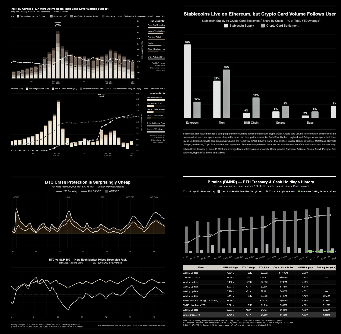
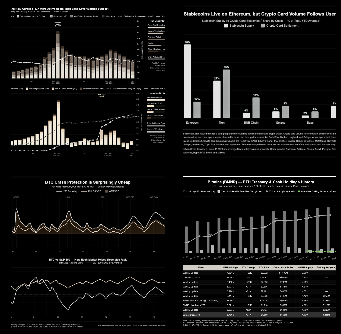
Charles Hoskinson's Cardano blockchain generated a total network fee of about $352,000, a sharp drop from the peak of $4.2 million in network fees in history.
6/2/20264 min read


Revenue disaster and historical decline model
Cardano's network fee revenue so far is $352,000, showing the sum of negligible monthly revenues, including the lowest in the first quarter of $238,000, setting the lowest revenue level since the fourth quarter of 2020, despite the 5 years that have passed, allowing the network to have the potential to grow significantly and develop the ecosystem.
The quarterly decline from a historic 5-year low, despite recent protocol upgrades, including the integration of the oracle Pyth Network and the launch of the Midnight security network, suggests that technical improvements do not generate a corresponding increase in the number of users or transaction volume required to generate meaningful fees.
The comparison with the network's historical monthly peak of $4.2 million shows the extent of revenue decline, where the current annual pace approximates the historical monthly performance at the network's peak, shows either the historical peak represents a difficult unsustainable bubble period, or a fundamental ecosystem failure has occurred, destroying the ability to use the network effectively developed in the the previous application stage.
This difference has great implications for investors' assessment of whether Cardano's recovery is possible in a predictable time frame, or whether the network has experienced a structural decline, limiting the prospects for recovery for years and requiring the restructuring of the entire ecosystem.
Ecosystem performance comparison between networks
The hyper-liquid perpetual futures network has generated $336 million in annual fees as of May 2026, establishing a comparison index showing that the dedicated blockchain, only implementing a single use case, manages about a thousand times more annual fee revenue than Cardano, despite the ecosystem scope and significantly smaller network maturity.
This disparity reflects the fundamental difference between versatile blockchain platforms that are struggling to attract applications and dedicated networks that optimize for a single type of application, create a transaction volume that requires a lot of capital, maintain a fee-dependent economy.
The Tron network run by Justin Sun has generated more than $1.3 billion in annual fees, setting a performance index that proves that the blockchain platform has a reputation for facilitating stable money transfers and illegal transaction settlements that generate significantly higher economic output than Cardano, despite the lack of theoretical technology superiority or equivalent academic development framework.
This comparison highlights the fact that the network's economic success depends more on user adoption dynamics and transaction volume rate than the sophistication of theoretical technology, with the market's practical preference for functional platforms that create trading activity, overwhelming the preference for complex technical systems that require extensive academic validation before deployment.
The collapse of the DeFi ecosystem
Cardano's decentralized financial ecosystem (DeFi) has shrunk to $128 million in total locked value, accounting for about 0.3% of Ethereum's total $43 billion of DeFi assets and establishes a model that shows that years of development and investment in the ecosystem have failed to create a competitive position in the decentralized financial market segment, which is the most important factor for the valuation and use of the cryptocurrency platform. death.
The transfer of the leading position in DeFi, where Ethereum still maintains a clear dominance despite Cardano's theoretical advantages in terms of academic rigor and formal verification methods, shows that market adoption depends more on the pioneer network effect and the dynamics of the developer ecosystem than on theoretical technological superiority.
The historical model shows that Cardano's TVL peaked at many levels higher than the current $128 million before gradually decreasing to the current minimum, indicating user departure and capital redislocation from Cardano's DeFi protocols to other competing platforms that provide better capital efficiency or profit opportunities.
The decline of TVL shows that either Cardano's DeFi protocols have not maintained their ability to generate competitive profits compared to alternative platforms, or users' confidence in the sustainability of the Cardano ecosystem has decreased, leading to the withdrawal of capital to platforms that are considered more stable and sustainable.
Evaluation and conclusion
The combination of minimal revenue, ecosystem collapse, declining user base, and failed application development despite years of technical infrastructure development shows that Cardano is facing structural challenges beyond temporary market cycles or short-term adoption restrictions. The fact that poor indicators persist despite protocol improvements and infrastructure additions shows that fundamental positioning issues prevent this platform from establishing a competitive advantage over alternatives, regardless of specific technical capabilities or development quality.
The market capitalization ratio to revenue is too low and unsustainable for a long time showing the ultimate downward pressure if the underlying elements of the network are not improved, with the market eventually revaluing the token to reflect the actual economic utility created instead of the historical story dynamics. The current disconnection between valuation and fundamentals can only be maintained for long periods of speculative excitement, with the inevitable adjustment risk increasing in proportion to prolonged performance decline.
Disclaimer: The information presented in this article is the author's personal opinion in the field of cryptocurrencies. This is not financial or investment advice at all. Every investment decision should be based on careful consideration of your personal portfolio and risk tolerance. The opinion in the article does not represent the official position of the platform. We recommend that readers do their own research and consult experts before making any investment decisions.
Synthesized and analyzed by HCCVenture
Follow HCCVenture organization here: https://link3.to/holdcoincventure
Explore HCCVenture group
HCCVENTURE QUANT JSCO
© 2026 HCCVENTURE. ALL COPYRIGHTS RESERVED.


Connect with us
Popular content
Contact to us
Address: 8th Floor, Bach Dang Complex Building, 50 Bach Dang Street, Hai Chau Ward, Da Nang City, Vietnam.
Phone: 1900 1509
Gmail : sp_contact@hccventure.com
Disclaimer: The information on this website is for informational purposes only and should not be considered investment advice. We are not responsible for any risks or losses arising from investment decisions based on the content here.
TERMS AND CONDITIONS • CUSTOMER PROTECTION POLICY
ANALYTICAL AND NEWS CONTENT IS COMPILED AND PROVIDED BY EXPERTS IN THE FIELD OF DIGITAL FINANCE AND BLOCKCHAIN BELONGING TO HCCVENTURE ORGANIZATION, INCLUDING OWNERSHIP OF THE CONTENT.
RESPONSIBLE FOR MANAGING ALL CONTENT AND ANALYSIS: HCCVENTURE FOUNDER - TRUONG MINH HUY
Read warnings about scams and phishing emails — REPORT A PROBLEM WITH OUR SITE.