

Brazil requires cryptocurrency exchanges to provide daily asset guarantees
The Brazilian securities regulator, Comissão de Valores Mobiliários (CVM), has finalized new regulations requiring all virtual asset service providers (VASPs) to declare their collateral assets daily.
3/7/20262 min read
Brazil tightens oversight of cryptocurrency exchanges
According to reports, the Brazilian government has just issued a new regulation requiring cryptocurrency exchanges operating in the country to maintain daily asset guarantees. This regulation aims to ensure that trading platforms always have sufficient reserves to fully support customer deposits.
This measure is part of a broader effort by Brazil to strengthen financial oversight in its rapidly growing digital asset market, while also protecting individual investors from the risk of exchange failures.
Daily 1:1 Asset Settlement: Exchanges must keep clients' cryptocurrency and fiat assets separate at a 1:1 ratio at all times. Re-collateralization, lending, or mixing with private funds is not permitted.
Real-time/Daily Proof of Reserves: Virtual Asset Service Providers (VASPs) must publish cryptographic proof of reserves (PoR) daily using Merkle trees or equivalent non-disclosure methods, verifiable by a third party. Monthly independent audits by accredited firms are also required.
Cold storage requirement: At least 95% of clients' cryptocurrency assets must be stored cold/offline (multi-signature, hardware security module). Hot wallets are only to be used for operational needs.
The reality of "Daily Property Security"
Under the proposed legal framework, cryptocurrency exchanges would have to demonstrate daily that they possess assets equal to or greater than their liabilities to users. This acts as a continuous reserve requirement, ensuring that platforms cannot operate with insufficient reserves or undisclosed liabilities.
Those requirements may include:
Verify customer's asset balance
Transparent Depositary Report
Regular audits by independent entities.
Separate user funds from the company's working capital.
The goal is to ensure that customers' funds remain accessible even during periods of market volatility.
Lessons from past failures
The push for stricter reserve requirements reflects lessons learned from past high-profile failures in the cryptocurrency industry, where several exchanges collapsed after operating without sufficient reserves for customer deposits.
Regulatory bodies worldwide are increasingly concerned about the risks posed by opaque balance sheets and inadequate financial safeguards.
The daily asset verification rules are intended to prevent instances where exchanges secretly use client funds for proprietary trading, lending, or other risky activities.
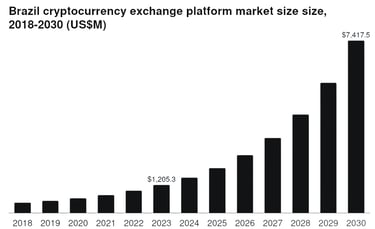
The cryptocurrency market is booming in Brazil
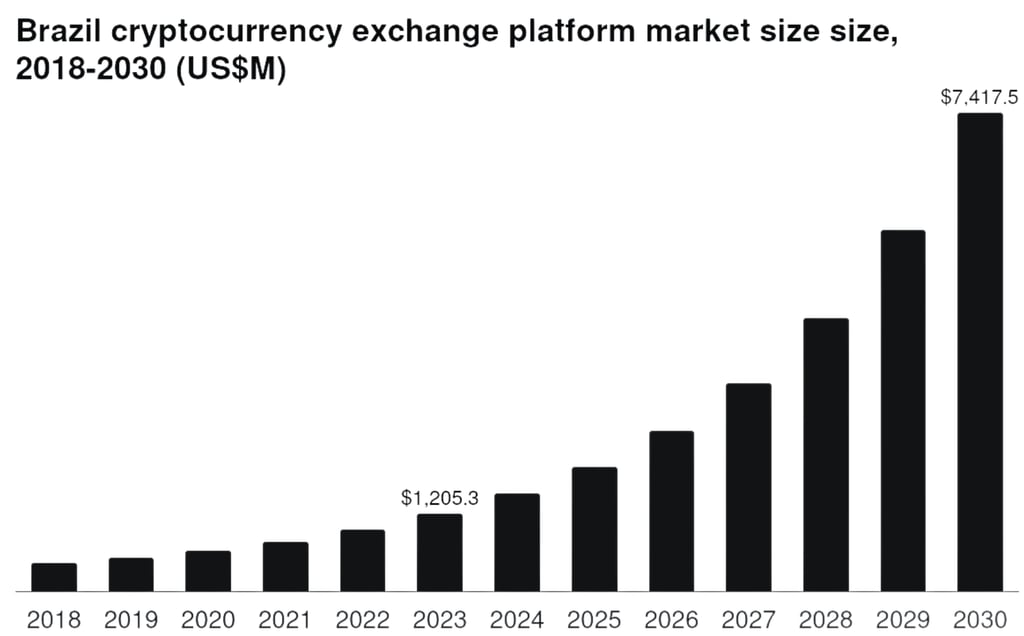
Brazil has emerged as one of the largest cryptocurrency markets in Latin America. Millions of users across the country are actively trading digital assets such as Bitcoin and Ethereum, and several domestic exchanges have built up a large retail user base.
The country's expanding fintech ecosystem, combined with relatively high inflation and currency volatility, has contributed to strong demand for digital assets among Brazilian investors.
Due to this rapid growth, regulators have accelerated efforts to develop a comprehensive legal framework to regulate cryptocurrency service providers.
Our review
Brazil's requirement for cryptocurrency exchanges to provide daily asset guarantees is another step in the global effort to enhance oversight and transparency in the digital asset market. As the cryptocurrency industry matures, regulators are increasingly focused on ensuring exchanges operate with financial safeguards similar to those of traditional financial institutions.
For investors, such measures could improve confidence in regulated cryptocurrency platforms while helping to stabilize one of the fastest-growing segments of the fintech sector.
Disclaimer: The information presented in this article is the author's personal opinion in the field of cryptocurrency. This is not financial or investment advice. All investment decisions should be based on careful consideration of your personal portfolio and risk tolerance. The views expressed in this article do not represent the official stance of the platform. We recommend that readers conduct their own research and consult with experts before making any investment decisions.
Compiled and analyzed by HCCVenture
Follow HCCVenture here: https://link3.to/holdcoincventure
Explore HCCVenture group
HCCVENTURE QUANT JSCO
© 2026 HCCVENTURE. ALL COPYRIGHTS RESERVED.


Connect with us
Popular content
Contact to us
Address: 8th Floor, Bach Dang Complex Building, 50 Bach Dang Street, Hai Chau Ward, Da Nang City, Vietnam.
Phone: 1900 1509
Gmail : sp_contact@hccventure.com
Disclaimer: The information on this website is for informational purposes only and should not be considered investment advice. We are not responsible for any risks or losses arising from investment decisions based on the content here.
TERMS AND CONDITIONS • CUSTOMER PROTECTION POLICY
ANALYTICAL AND NEWS CONTENT IS COMPILED AND PROVIDED BY EXPERTS IN THE FIELD OF DIGITAL FINANCE AND BLOCKCHAIN BELONGING TO HCCVENTURE ORGANIZATION, INCLUDING OWNERSHIP OF THE CONTENT.
RESPONSIBLE FOR MANAGING ALL CONTENT AND ANALYSIS: HCCVENTURE FOUNDER - TRUONG MINH HUY
Read warnings about scams and phishing emails — REPORT A PROBLEM WITH OUR SITE.