

BNB's largest Treasury fund collapses 95% - due to family wealth management
One of the largest reserves holding BNB is believed to have collapsed by 95%, triggering widespread scrutiny across the entire ecosystem.
2/26/20263 min read
The BNB treasury collapsed
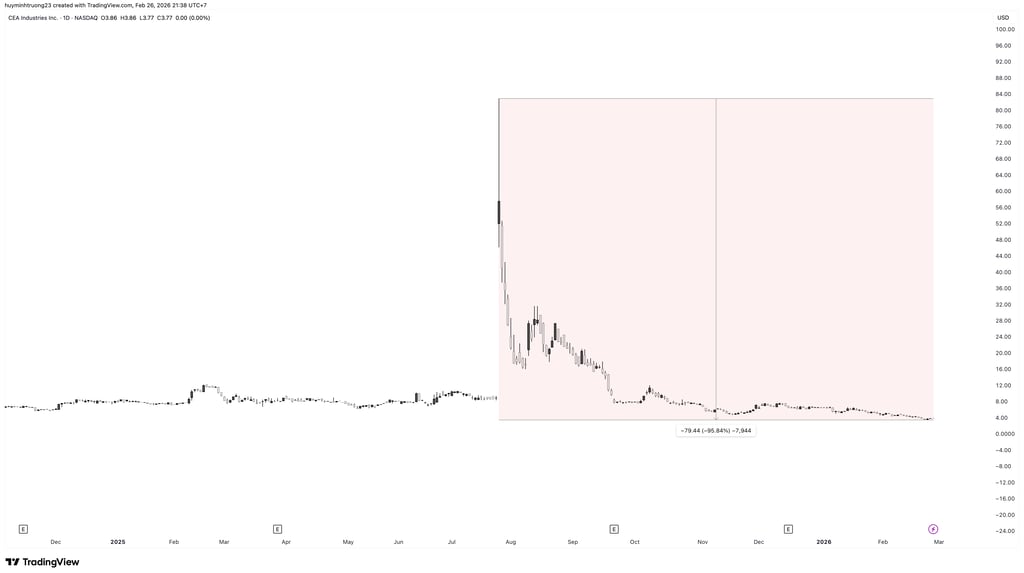
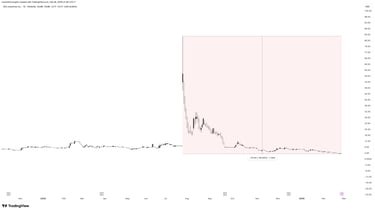
CEA Industries (Nasdaq: BNC), a publicly listed company that positions itself as the world's largest holder of BNB (Binance's native token), has seen its share price plummet 95% from its multi-year high last year. The stock, which peaked at $82.88 during the Private Investment in Public Equity (PIPE) transaction in July 2025, is now trading around $3.88 – a devastating drop that has wiped out almost all of its value since the company shifted to its "BNB treasury" strategy.
In a press release issued on February 24, 2026, the CEA requested YZi Labs – the family office of Binance founder Changpeng "CZ" Zhao – to disclose a full copy of a "confidential sub-agreement" allegedly related to the 2025 PIPE agreement.
The company claims this non-disclosure confidentiality clause, relating to YZi Labs and its principal investor 10X Capital Asset Management, contributed to governance issues, a lack of transparency, and ultimately, a collapse in shareholder value. The CEA alleges that the parties concealed critical information from other investors, exacerbating the stock price plunge.
From Vape to BNB Treasury
CEA Industries initially operated in unrelated fields (its former ticker symbol was VAPE, suggesting traditional business activities) before rebranding and making a major shift in mid-2025 to become a major BNB accumulator.
This strategy is similar to Bitcoin treasury strategies but focuses on Binance's ecosystem token, betting on BNB's utility in transaction fees, staking, and DeFi on the BNB chain.
However, as BNB faced broader market pressures (including volatility from macroeconomic events, regulatory scrutiny of Binance, and competition within the ecosystem), CEA's stock began to fall sharply.
In late 2025 and early 2026, governance tensions escalated: YZi Labs publicly accused 10X Capital of failing to comply with U.S. securities disclosure regulations (e.g., 13D filing for ownership >5%).
CEA's shift in strategy has not yielded sustainable value, as the company still holds a large amount of unexploited BNB amidst falling prices.
The 95% drop reflects not only the volatility of BNB itself but also the execution risks in the company's cryptocurrency treasury management model: low liquidity, concentrated holdings, and the risk of betting on a single ecosystem.
The July 2025 PIPE funding round—supported by YZi Labs and 10X Capital—raised a significant amount of capital to build the treasury, coinciding with the stock reaching an all-time high.
Treasury management models and structural weaknesses
Cryptocurrency treasury management strategies—especially those highly concentrated on a single native token—face significant volatility risks. Unlike diversified reserves, treasuries containing only a single asset can experience exponential declines if:
Token price plummets.
Liquidity decreased.
Partners tighten risk assessment levels.
Market confidence is declining.
A 95% drop indicates extreme leverage, structural insolvency, or a forced liquidation impetus. While BNB remains one of the largest exchange-linked tokens by market capitalization, the repercussions of a treasury collapse could:
Undermining investor confidence.
Strengthening regulatory oversight
Raising questions about the transparency of the ecosystem.
Accelerate the process of shifting capital to alternative supply chains.
Market participants often distinguish between the fundamental elements of a token and ecosystem governance, but perceptions can quickly blur that line.
Our review
The reported 95% collapse of BNB's largest reserve fund is a stark reminder of the risks of concentration and leverage in cryptocurrency-based financial structures. Whether due to market factors, strategic shifts, or governance failures, this event demonstrates how quickly capital can evaporate in volatile ecosystems.
For BNB and its broader network, restoring confidence will depend on transparency, risk management discipline, and a clear separation between Treasury management and influential stakeholders.
Disclaimer: The information presented in this article is the author's personal opinion in the field of cryptocurrency. This is not financial or investment advice. All investment decisions should be based on careful consideration of your personal portfolio and risk tolerance. The views expressed in this article do not represent the official stance of the platform. We recommend that readers conduct their own research and consult with experts before making any investment decisions.
Compiled and analyzed by HCCVenture
Follow HCCVenture here: https://link3.to/holdcoincventure
Explore HCCVenture group
HCCVENTURE QUANT JSCO
© 2026 HCCVENTURE. ALL COPYRIGHTS RESERVED.


Connect with us
Popular content
Contact to us
Address: 8th Floor, Bach Dang Complex Building, 50 Bach Dang Street, Hai Chau Ward, Da Nang City, Vietnam.
Phone: 1900 1509
Gmail : sp_contact@hccventure.com
Disclaimer: The information on this website is for informational purposes only and should not be considered investment advice. We are not responsible for any risks or losses arising from investment decisions based on the content here.
TERMS AND CONDITIONS • CUSTOMER PROTECTION POLICY
ANALYTICAL AND NEWS CONTENT IS COMPILED AND PROVIDED BY EXPERTS IN THE FIELD OF DIGITAL FINANCE AND BLOCKCHAIN BELONGING TO HCCVENTURE ORGANIZATION, INCLUDING OWNERSHIP OF THE CONTENT.
RESPONSIBLE FOR MANAGING ALL CONTENT AND ANALYSIS: HCCVENTURE FOUNDER - TRUONG MINH HUY
Read warnings about scams and phishing emails — REPORT A PROBLEM WITH OUR SITE.