

An early crypto figure has returned to the market with a $58 million ETH purchase order
Erik Voorhees – the founder of ShapeShift, one of the first decentralized exchanges, and a veteran figure from the days when Bitcoin was under $100 – has returned to the market after years of off-chain activity.
3/17/20262 min read
A veteran re-enters the market
Voorhees, known for founding ShapeShift and being an early Bitcoin advocate, has long been considered a strong ideological supporter of decentralized finance. His re-entry—especially on this scale—immediately drew attention from both retail traders and institutional observers. His return to a relatively prominent position:
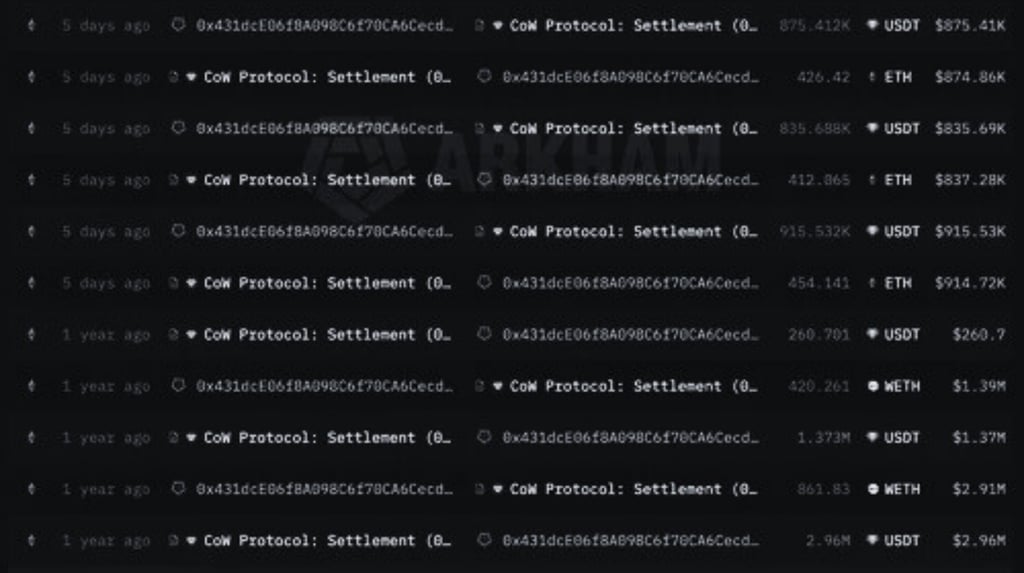
Approximately 35,000–38,000 ETH were purchased between the end of February and the beginning of March 2026.
Estimated average price: ~$1,480–$1,600/ ETH (equivalent to a total value of ~$56–$61 million USD )
Voorhees is known for his " long-term HODL " style and rarely appears publicly in the market. The last time he was known for large-scale buying was during the 2020–2021 period, when ShapeShift accumulated BTC and ETH at very low prices.
This is not just a trade, but a signal from a "seasoned expert in market cycles" who has witnessed many price surges and declines.
Why Ethereum—and why now ?
The decision to allocate significant capital to Ethereum instead of Bitcoin demonstrates a more targeted investment strategy rather than broad market exposure. Ethereum is currently at the center of several structural trends:
Dominance in DeFi infrastructure and stablecoins
The increasing acceptance by institutions through ETFs and staking products.
The growing role of real asset tokenization ( RWA )
Supply is tight due to staking and token burning mechanisms.
With rising staking yields and demand driven by ETFs, Ethereum is increasingly seen as a profitable digital asset, rather than just a speculative token. Voorhees' move may reflect confidence in Ethereum's long-term cash flow characteristics, especially compared to non-profitable assets.
The behavior of smart investors in the late stages of the cycle
Historically, large purchases by cryptocurrency pioneers have typically occurred during market transitions, rather than at the peak of euphoria.
This type of positioning typically reflects accumulation during periods of instability or consolidation, anticipating structural catalysts (ETF inflows, upgrades, institutional demand) and long-term confidence rather than short-term trading.
Unlike individual investors whose money tends to follow trends, seasoned investors often increase their position size before the narrative shifts become clear.
Our review
Erik Voorhees' alleged purchase of $56 million worth of Ethereum is not simply a matter of the amount, but also of the buyer and the timing of the purchase. This reflects a potential shift in the mindset of early cryptocurrency savvy individuals, who are positioning themselves around Ethereum's growing role as a yielding asset and its integration into institutions.
Whether this marks the beginning of a broader accumulation phase or simply a confident personal investment, one thing is clear: smart money is back in action – and the market is watching closely.
Disclaimer: The information presented in this article is the author's personal opinion in the field of cryptocurrency. This is not financial or investment advice. All investment decisions should be based on careful consideration of your personal portfolio and risk tolerance. The views expressed in this article do not represent the official position of the platform. We advise readers to conduct their own research and consult with experts before making any investment decisions.
Compiled and analyzed by HCCVenture
Follow HCCVenture here: https://link3.to/holdcoincventure
Explore HCCVenture group
HCCVENTURE QUANT JSCO
© 2026 HCCVENTURE. ALL COPYRIGHTS RESERVED.


Connect with us
Popular content
Contact to us
Address: 8th Floor, Bach Dang Complex Building, 50 Bach Dang Street, Hai Chau Ward, Da Nang City, Vietnam.
Phone: 1900 1509
Gmail : sp_contact@hccventure.com
Disclaimer: The information on this website is for informational purposes only and should not be considered investment advice. We are not responsible for any risks or losses arising from investment decisions based on the content here.
TERMS AND CONDITIONS • CUSTOMER PROTECTION POLICY
ANALYTICAL AND NEWS CONTENT IS COMPILED AND PROVIDED BY EXPERTS IN THE FIELD OF DIGITAL FINANCE AND BLOCKCHAIN BELONGING TO HCCVENTURE ORGANIZATION, INCLUDING OWNERSHIP OF THE CONTENT.
RESPONSIBLE FOR MANAGING ALL CONTENT AND ANALYSIS: HCCVENTURE FOUNDER - TRUONG MINH HUY
Read warnings about scams and phishing emails — REPORT A PROBLEM WITH OUR SITE.